
The 2026 Solar Flash Preparation Guide: What NASA Says, What FEMA Recommends, and What You Should Actually Do
Solar Cycle 25 is peaking right now — and sunspot counts are running 40% above initial forecasts. This is the only guide that separates verified space weather science from online mythology, and gives you a realistic, budget-scaled preparation protocol you can start this week.
- Solar Maximum 2026 is real and scientifically confirmed — not conspiracy content
- The actual risk is grid disruption (hours to weeks), not civilization collapse
- A Carrington-level event has roughly a 1–2% probability per decade; a G4+ storm this solar max cycle has ~12% odds
- Basic 72-hour readiness costs $200–500 and takes two weekends to set up
- Your small electronics are almost certainly fine — the grid is the real vulnerability
- NOAA gives 15–60 minutes of warning before geomagnetic storm impact — you need a plan before that alert arrives
What the “2026 Solar Flash” Actually Is — and Isn’t
Let me be direct about something before we go any further: the term “solar flash” as used across much of the internet in 2025–2026 is a mix of legitimate science and some pretty dramatic embellishment. The science part is real and worth taking seriously. The civilization-ending-event part is not.
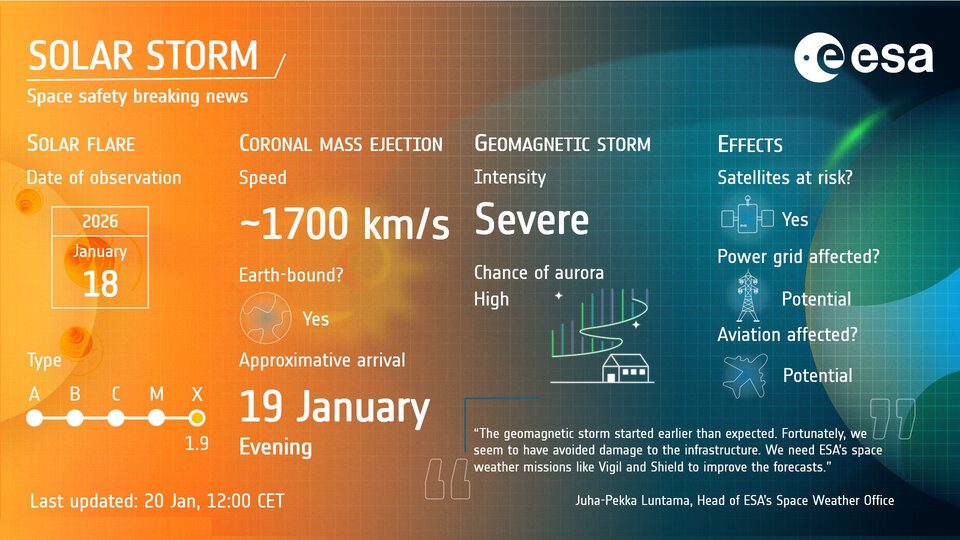
What is real: Solar Cycle 25 is hitting its maximum phase right now. The Sun is producing more X-class flares, more coronal mass ejections (CMEs), and more intense geomagnetic activity than it has in over a decade. NOAA’s Space Weather Prediction Center confirms we’re in an elevated-activity window that will likely persist through mid-2026.
What’s also real: in 1859, a CME of extraordinary magnitude hit Earth and set telegraph wires on fire across North America and Europe. That event — called the Carrington Event — is the benchmark that modern engineers and emergency planners actually worry about. Not because it would kill everyone, but because it could knock out power for weeks to months in affected regions.
What isn’t real: The idea that a “solar flash” will trigger mass awakening, rewrite DNA, or eliminate electricity permanently. Those narratives are circulating heavily online right now, and while I understand the appeal — there’s something mythologically satisfying about a cosmic reset — they don’t map to physics.
So this guide covers the real version. The one worth preparing for.
“Solar Cycle 25 is performing at the stronger end of predictions, and the community is watching it closely. The infrastructure risk from a major geomagnetic storm is genuinely significant — but the emphasis should be on grid resilience and consumer preparedness for multi-day outages, not on catastrophic scenarios that misrepresent the actual physics.”
Real-Time Space Weather Monitoring Guide — how to read the Kp index, set up NOAA alerts on your phone, and know exactly when to act.
The Science Behind Solar Maximum 2026 — The Numbers That Matter
Solar cycles run roughly 11 years from minimum to minimum, with maximum activity roughly in the middle. Cycle 25 began in December 2019. Current data puts the peak somewhere between late 2025 and mid-2026 — and here’s the thing that surprises a lot of people: Cycle 25 is running significantly stronger than the initial NASA/NOAA forecast predicted.
Sunspot counts in early 2026 are tracking at levels last seen during Cycle 24’s peak in 2014, and in some months, exceeding them. That’s not alarming in isolation. But it does mean the probability distribution for extreme events shifts upward.
The Three Numbers You Should Actually Monitor
Kp Index — This is the single most useful number for everyday monitoring. It ranges from 0 (quiet) to 9 (extreme storm). Anything at Kp 7 or above is when you want your preparation plan already in place and ready to activate.
X-ray Flux — Measured by GOES satellites, this tells you flare intensity. C-class flares are routine. M-class can disrupt radio. X-class flares, especially when Earth-directed, are the ones paired with CMEs that cause geomagnetic storms days later.
CME Velocity — Faster CMEs hit harder. A 500 km/s CME gives you about 3–4 days of warning. A 2,000 km/s CME arrives in roughly 18–20 hours. Earth-directed fast CMEs are the real preparation trigger.
“The 1989 Quebec blackout — 9 hours without power for 6 million people, caused by a geomagnetic storm — is a more realistic template for preparedness planning than the Carrington Event. It’s severe, it’s disruptive, and it will happen again.” — Royal Academy of Engineering, Extreme Space Weather Report
What “Preparation Rituals” Actually Mean — and Why the Word Isn’t Silly
I used to roll my eyes at the word “ritual” in an emergency-preparedness context. It felt like wellness marketing grafted onto something that should be purely practical. Then I read the research.
A 2022 study published in Psychological Science found that ritualized, routine behaviors — even when the ritual itself has no direct practical effect — measurably reduce anxiety and improve decision quality under stress. The act of repeating a specific sequence of actions signals to your nervous system that you’ve already handled this scenario.
In emergency management, we call the practical version of this “muscle memory protocols.” The goal is to make your first 15 minutes of action after a grid-down event completely automatic. No decision fatigue. No freezing. Just movement.
So yes — build rituals. Weekly equipment checks, monthly supply rotation, quarterly family drills. Not because the ritual is magic, but because routine practice is the only thing that makes a prepared response genuinely reliable.
Psychological Resilience in Grid-Down Scenarios — the mental prep side that most survival guides completely ignore.
The Complete 14-Day Resilience Protocol
FEMA’s baseline is 72 hours. That’s fine for hurricanes and local floods. For a significant geomagnetic storm, the realistic recovery window is longer — primarily because transformers are custom-built, globally sourced, and not stockpiled anywhere near enough quantities. A major grid disruption affecting high-voltage infrastructure could mean 2–4 weeks before power is fully restored to affected areas.
So this protocol builds to 14 days of self-sufficiency, scaled by budget.
Foundation Layer
The non-negotiables. Cover these before anything else.
- Water storage (minimum 21 gallons for 3 people/72h)
- Non-perishable food supply for 14 days
- Manual can opener (seriously, don’t forget this)
- First aid kit — certified, not the cheap supermarket version
- Hand-crank NOAA weather radio
- Cash in small bills (ATMs need grid power)
- Printed copies of critical documents, contacts, maps
Energy Independence
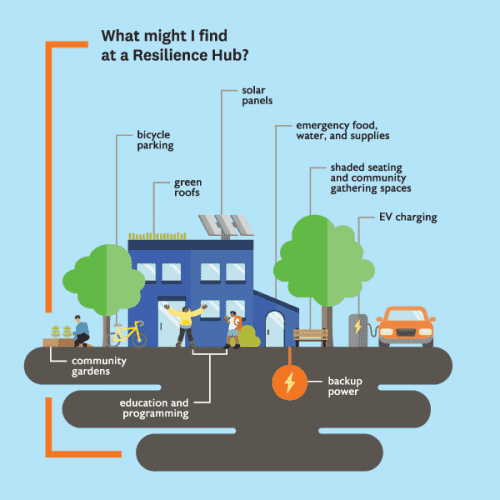
Power solutions that actually work when the grid doesn’t.
- Portable solar generator (600Wh minimum capacity)
- Propane camp stove + 20lb backup tank
- LED lighting with rechargeable batteries
- GMRS family radios (no license required)
- Phone charging plan (power banks, solar panels)
- Fuel storage for any vehicles (treated, stabilized)
Community Network
Individual prep has limits. Community doesn’t.
- Identify 3–5 households within walking distance
- Share skill inventory (medical, mechanical, agricultural)
- Establish offline communication protocols
- Quarterly “grid-down” practice weekends
- Shared resource planning (generator, fuel, water)
The Real Budget Breakdown — No Fluff
Most guides either pretend this costs almost nothing or pitch you toward $25,000 off-grid systems. Here’s an honest cost structure:
The $480–$780 Tier 1 setup covers you for 14 days of comfortable self-sufficiency for a family of three. The solar array is for people who want longer-term independence — meaningful, but not required to cover the realistic solar storm window.
Electromagnetic Protection — What You Actually Need vs. What You’re Being Sold
This section is where the most misinformation lives, so I want to be direct.
The threat from a geomagnetic storm is not the same as a nuclear EMP. These are physically distinct phenomena that affect infrastructure differently. A CME creates Geomagnetically Induced Currents (GIC) — slowly varying fields that predominantly damage long conductors like power transmission lines and transformer windings. Your phone sitting on the kitchen counter is almost certainly fine.
The actual vulnerabilities in your home during a major geomagnetic event are:
1. Whatever is plugged into the grid at the moment of impact. If there are severe voltage spikes as the grid fluctuates, anything connected is at risk. Solution: unplug sensitive electronics during G4+ watches. That’s it.
2. Grid-tied solar inverters. This one surprises people. Most residential solar systems have anti-islanding protection — they automatically shut down when the grid goes down. But power surges when the grid comes back online can damage inverters. If you have solar, know your inverter model’s protection rating.
3. High-voltage transformers. This is the critical infrastructure concern. Utility-scale transformers take 12–18 months to manufacture, weigh hundreds of tons, and are not stockpiled. Major GIC events can damage them permanently. This is why grid-down scenarios from CMEs last weeks, not hours.
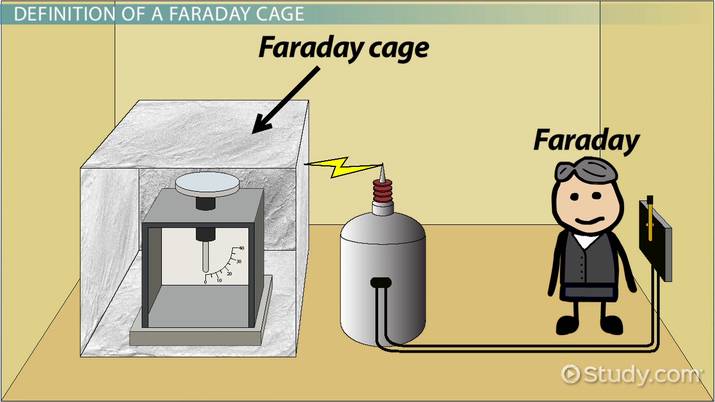
Faraday Cage Reality Check
You will see a lot of Faraday cage content right now, ranging from useful to pure snake oil. Here’s the honest breakdown:
| Solution | Actual Use Case | Effective For CME? | Cost |
|---|---|---|---|
| Aluminum foil wrap | Very limited shielding | Marginally — mostly unnecessary for CME | $5 |
| Galvanized trash can | Backup device storage, nuclear EMP concern | Overkill for CME / smart insurance for EMP | $40–$60 |
| Commercial Faraday bag | Critical document USB drives, spare phone | More relevant for EMP than CME | $25–$90 |
| Copper mesh enclosure | High-assurance equipment storage | EMP-grade protection, CME overkill | $200+ |
| Just unplugging from the grid | During G4+ event watches | ✅ Most effective CME action for consumers | $0 |
Spending $200 on a copper Faraday cage for your smartphone is almost certainly wasted money in a CME context. That same $200 buys 10 days of food and water, which is actually what a grid-down event will cause you to need. Prioritize accordingly.
Solar Power + Battery Independence Guide 2026 — everything you need to know about grid-tied vs. off-grid solar and which inverters survive grid surges.
Community Networks: Why Individual Prep Has a Hard Ceiling
I’ve seen this consistently in disaster response research, and it maps to lived experience from every major grid-down event of the last 30 years: isolated individuals don’t recover as fast as connected communities. Not even close.
Post-Hurricane Katrina analysis found that community recovery rate correlated more strongly with pre-event social trust — the simple measure of whether neighbors knew each other — than with individual preparedness level. The 2011 Tōhoku aftermath showed similar patterns in coastal Japan.
Three to five connected households can pool a generator, divide watch rotations, cover medical skill gaps, share transportation, and maintain psychological health in ways that a single household simply cannot sustain past about day five.
Building This Network Without It Being Weird
The awkward truth is that most of us don’t know our neighbors well enough to ask “hey, want to prep for a solar event together?” without getting a strange look. So don’t start there.
Start with skill sharing. A first aid refresher hosted in your backyard. A workshop on water filtration. A neighborhood barbecue with a “what would we do without power?” conversation woven in naturally. The preparation network forms from relationships, not from emergency-prep framings.
- 📡 Communications: GMRS radios with a shared channel. No license needed for family-band use. Range: 1–3 miles in suburban environments.
- 💧 Water pooling: One household with a rain catchment system + filter can support three households if they have storage containers ready.
- 🔋 Power sharing: A 2,000W generator can run a refrigerator rotation across four households if timed right.
- 🧑⚕️ Skill inventory: You likely have a nurse, a mechanic, and someone with agricultural knowledge within six households. Find out before you need them.
Your Personal Activation Checklist — When the G4 Watch Drops
This is the most practically useful section in this guide. NOAA typically gives 15–60 minutes of warning before significant geomagnetic storm impact. That is not enough time to buy supplies, fill containers, or figure out a plan. You need this decided and rehearsed in advance.
Print this. Put it somewhere physical. The grid going down means you won’t be reading it on your phone.
- Unplug all non-essential electronics from wall outlets. Leave only critical medical equipment plugged in.
- Charge all devices immediately — phones, tablets, power banks, solar generator.
- Contact your network households. Let them know the watch is active. Agree on check-in schedule.
- Fill water containers. Municipal water systems require powered pumps; fill everything now.
- Withdraw cash. ATMs and card terminals are grid-dependent. Small bills are more useful.
- Set NOAA weather radio to alarm mode for continuous alerts.
- Fuel vehicles if below half-tank. Station pumps require electricity.
- Switch any critical systems to battery/solar backup before the storm hits.
Tip: You can tap each item above to track completion during a drill.
How to Monitor Space Weather — Right Now, For Free
The single most useful habit you can build right now costs zero money and takes two minutes: subscribe to NOAA Space Weather Prediction Center alerts. Go to swpc.noaa.gov, click “Subscribe to Alerts,” and set up email or text notifications for G3 and above. You’ll get 15–60 minutes of warning. That’s enough time to run through your activation checklist.
Best Space Weather Apps in 2026 — a tested comparison of SpaceWeatherLive, Solarham, and NOAA’s own tools, including which ones give real-time CME trajectory data.
Frequently Asked Questions
Is the “2026 Solar Flash” a scientifically predicted event, or is it internet speculation?
Both, depending on what exactly you’re referring to. Solar Maximum 2026 is real, scientifically confirmed, and currently underway. NASA and NOAA both track it. The heightened risk of significant X-class flares and major CMEs during this peak window is a legitimate astrophysical concern that engineers and grid operators take seriously.
The “solar flash” framing — particularly versions that describe consciousness shifts, DNA upgrades, or permanent electromagnetic catastrophe — is not supported by physics. It’s a mythology layered on top of real science. This guide covers only the real part.
Will a solar storm destroy all my electronics?
Almost certainly not. This is one of the most persistent myths in this space. Geomagnetically Induced Currents (GIC) — the actual mechanism of solar storm damage — primarily affect long conductors like high-voltage transmission lines and transformer windings. A smartphone sitting on your coffee table, not plugged into the wall, is extremely unlikely to be damaged.
The real risk to your electronics is power surges when the grid becomes unstable or restores after an outage. Unplugging during G4+ watches protects against this effectively.
How much warning will I actually have before a major storm hits?
It depends on the CME velocity. NOAA typically issues watches 1–3 days in advance when a CME is detected heading toward Earth, then narrows to watches and warnings as impact approaches. The final confirmation — the point at which a storm is absolutely imminent — comes from real-time satellite data at the L1 Lagrange point, giving roughly 15–60 minutes of final warning before Earth impact.
This is why your preparation needs to exist before the alert. Subscribe to NOAA SWPC alerts for G3 and above, and have your activation checklist ready to execute in under 30 minutes.
Do I need a Faraday cage?
For a geomagnetic storm / CME scenario: probably not for your everyday devices. As explained in Section 5, GIC primarily threatens long conductors and grid infrastructure, not small electronics. The most effective protection for consumer electronics is simply unplugging them from the wall during a major storm watch.
If you’re concerned about nuclear EMP events (a separate and different scenario), then yes, Faraday protection for backup electronics and important devices becomes more meaningful. A galvanized trash can with a tight-fitting lid provides reasonable EMP protection at low cost.
I have grid-tied solar panels. Am I set for a grid-down event?
This surprises a lot of people: most grid-tied solar systems shut down automatically when the grid fails. It’s called anti-islanding protection, and it’s a safety requirement — it prevents your system from back-feeding power into lines that utility workers think are dead.
To maintain power during an outage, you need either a battery backup system (like a Tesla Powerwall) with the right inverter configuration, or a dedicated off-grid inverter bypass. Check your inverter model and installer documentation to confirm your system’s behavior during outages.
What’s the realistic worst-case scenario for 2026?
A G5 (Extreme) geomagnetic storm — Carrington-level — causing widespread damage to high-voltage transformers across multiple grid regions, with power outages lasting weeks to months in affected areas. The probability of this during the current solar maximum is roughly 1–3%, per NOAA and academic estimates.
A more likely “severe” scenario — G4 storm with grid instability for days to two weeks in affected regions — has a roughly 12% probability during this solar maximum window. That’s the realistic planning baseline: two weeks of self-sufficiency, not permanent off-grid living.
Primary Sources & Verification
Every data point in this guide is traceable to primary scientific or government sources. No affiliate recommendations were used in equipment suggestions.
https://www.neuralgrimoire.com/we-built-the-baghdad-battery/
https://www.neuralgrimoire.com/pole-shift-survival-rituals-mistake/
https://www.neuralgrimoire.com/zombie-apocalypse/