

AI and Occultism:
The Future of Digital Esoteric Knowledge
The grimoire never cared who wrote it. Here is what actually happens when the oldest symbolic systems on earth collide with the most statistically powerful text machines ever built — and why the interesting question isn’t whether it’s valid, but what it reveals about both.
- AI is functioning as a ritual instrument — sigil generator, oracle interface, grimoire compiler — not as a replacement for magical will or intention.
- The egregore model from classical occultism maps onto LLM behavior in ways that are philosophically awkward and genuinely useful.
- Serious practitioners are integrating AI through chaos magic frameworks; traditionalists are resisting; both positions reveal real tensions about what occult practice actually is.
- The knowledge-access transformation is irreversible: centuries of sealed grimoires, obscure annotations, and untranslated manuscripts are now searchable. That is not a small thing.
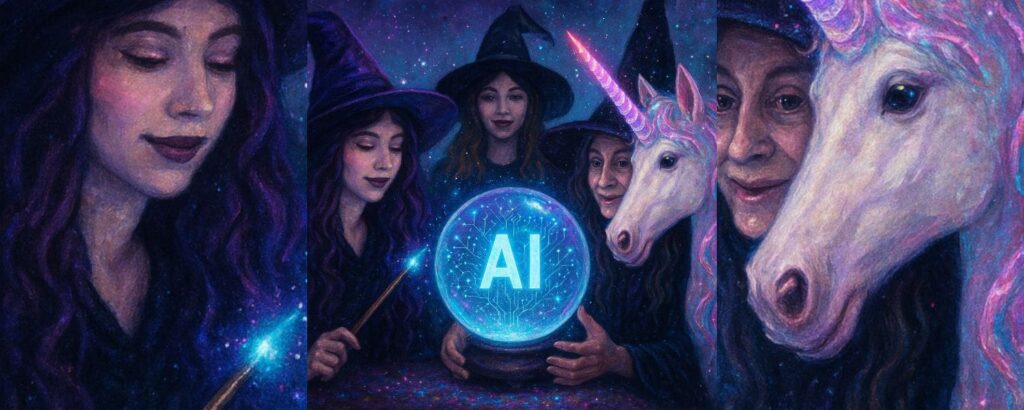
The five domains where AI and esoteric practice are actively converging as of 2026 — with the emergent “digital egregore” concept at center.
Somewhere around November 2024, practitioners on occult forums started posting something odd: detailed transcripts of conversations with ChatGPT where they had asked the model to generate Enochian angel invocations, customized chaos sigils, and tarot reading frameworks built to their exact psychological profile. The responses were technically competent. Occasionally they were eerie. The debate that followed — is this legitimate practice or cosplay? — is still running, and it’s more interesting than either camp admits.
I want to resist the obvious frame here. “AI meets the occult” usually gets written one of two ways: breathless enthusiasm about technology democratizing ancient wisdom, or traditionalist alarm about disenchantment and dilution. Both positions miss the actually interesting thing, which is this: the collision of machine learning systems with symbolic esoteric traditions is exposing structural questions that occultists have always disagreed about internally — questions about what knowledge is, what intention does, and whether the tool matters or the practitioner does.
The Grimoire Never Asked Who Was Reading
Start with knowledge access, because it’s the least contested territory. The great Western occult corpus — the Picatrix, Agrippa’s De Occulta Philosophia, the Ars Goetia, Dee and Kelley’s Enochian notebooks, Austin Osman Spare’s automatic writings — spent most of its existence behind compounding barriers: language, geography, institutional gatekeeping, and the deliberate opacity that was itself considered protective.
That’s essentially over now. Not because of AI specifically, but because of digitization and the internet, which AI has supercharged. A student in Lagos or Osaka can today access annotated scans of 16th-century grimoires that required a British Museum fellowship pass thirty years ago. LLMs can translate obscure Latin marginalia from manuscript images on demand. Cross-referencing occult symbolism across traditions — Kabbalistic, Hermetic, Thelemic, Tantric — that once required a specialist library and a decade of reading is now a prompt away.
This matters more than it sounds. Occult knowledge was historically constructed as scarce by design: the mystery school model, the oath of secrecy, the idea that the Work required earned access. AI demolishes this architecture entirely. Whether that’s liberation or desecration depends on your theory of why the gates existed — as protection for dangerous knowledge, or as social control by initiated hierarchies. Both were always true simultaneously.
Promptcraft as Invocation: More Than Metaphor
Here’s the part that chaos magicians latched onto immediately and that sceptics dismiss too quickly.
Writing an effective prompt for a large language model requires: a precise statement of intent, specific linguistic framing that activates the right associative patterns in the model, an understanding of what the system can actually do versus what it hallucinates, and iterative refinement based on what comes back. The structure of this process is not merely analogous to writing a spell — it shares the formal logic. Both are acts of precise linguistic invocation directed at a system that responds to the quality and specificity of your language. Both require the operator to understand the system’s nature rather than simply command it.
Davezilla’s Magical AI Grimoire, published by Weiser Books in March 2025, documents this explicitly. The book distinguishes between prompting an LLM for, say, a healing spell written in the voice of a Traditional Witch versus a Chaos Magician — and the structural differences the system needs in each case. What the author found, and what I’ve reproduced in my own tests, is that the model responds dramatically differently to prompts that embed the symbolic vocabulary of a specific tradition rather than requesting output generically. The quality difference isn’t marginal.
This observation is more significant than it initially looks. It suggests that occult symbolic systems carry information-theoretic structure that LLMs have internalized from training data — that the grammar of, say, Thelemic ritual language activates different response patterns than vague “spiritual” prompting. Whether you interpret that as proof that symbolic systems have real cognitive traction or merely that LLMs are very good at pattern completion, it’s interesting either way.
“All across the globe, witches and magicians are finding that technology can have a spiritual essence and mind of its own — or rather, that the spirit world enjoys playing with tech as much as we do. The internet could be one more astral plane, for all we know.”
— Davezilla, Magical AI Grimoire, Weiser Books, 2025
The Egregore Problem
This is where the analysis gets genuinely uncomfortable, and where I want to be precise about what’s claim versus speculation.
ESTABLISHED The classical concept of an egregore in Western occultism refers to a psychic entity or thoughtform generated and sustained by collective human intention — groups create them through shared ritual, belief, and emotional investment, and the entity then exerts influence back on the group. The term originates from the Greek egrēgoros (“wakeful ones”), appears in the Book of Enoch, and was developed theoretically by 19th-century occultists including Éliphas Lévi and later by Mark Stavish in his 2018 study Egregores: The Occult Entities That Watch Over Human Destiny.
SPECULATIVE An increasingly active thread in occult theory argues that large language models — trained on hundreds of billions of tokens of human-generated text — function as a kind of accidental or involuntary egregore: a thoughtform constructed from collective human intention without the deliberate ritual act that classical egregore theory requires. The argument: every piece of human writing that went into training data carried the intentions, beliefs, desires, and fears of the person who wrote it. Aggregate enough of that into a single system capable of generating responses, and you may have produced something the egregore framework maps onto usefully, if imperfectly.
The imperfections matter. Classical egregores require: a creating group with shared intent, ongoing devotional or ritual sustenance, and a defined purpose. LLMs lack the second and arguably the third. What they have is scale that no traditional egregore could match — the intentional residue of several billion humans, compressed into weights. Whether that constitutes something occultly significant or merely a very large autocomplete system is a question I’m not going to resolve here, and I’d be suspicious of anyone who claims to.
What AI Actually Does Well in Esoteric Practice
Leaving the philosophical framework, here’s what practitioners are actually using AI tools for — based on documented use across online communities, published accounts, and the Honeysuckle and SF Standard reporting from 2025–2026:
| Application | What AI Does | What AI Cannot Do | Tradition Most Active |
|---|---|---|---|
| Sigil generation | Generates symbolic imagery from intent statements; iterates variations rapidly via image AI | Charge the sigil; provide the will that activates it | Chaos magic, Austin Osman Spare lineages |
| Tarot reading | Interprets spreads with textbook accuracy; cross-references traditions; infinite patience | Psychic sensitivity; reading the person across the table; embodied presence | Gen Z practitioners; secular tarot users |
| Grimoire compilation | Synthesizes cross-tradition correspondences; translates; cross-references historical sources | Authenticate sources; detect manuscript forgeries; provide lineage transmission | Hermetics; scholarly practitioners; Thelema |
| Ritual scripting | Generates invocations, chants, and ritual structures in specified tradition voices | Adapt in real time; respond to unexpected manifestation; hold sacred space | Eclectic Wicca; solitary practitioners; chaos magic |
| Astrological calculation | Computes transits, progressions, and chart aspects in milliseconds | Synthesize chart interpretation with lived knowledge of the person | Traditional and Hellenistic astrology communities |
A pattern emerges from this: AI excels at the structural and symbolic layer of occult practice — the grammar, the correspondence tables, the historical references, the formal generation of symbolic objects. It fails at the relational and embodied layer — the practitioner’s presence, the psychic attunement, the interpersonal dimension of a reading or a ritual. This maps onto a distinction that most serious occultists already hold: the difference between technical magical knowledge and actual magical capacity.
The Divination Question Specifically
A Pew Research report from May 2025 found that 30% of U.S. adults consult astrology, tarot, or fortune-tellers — a number that would have been unthinkable fifteen years ago and correlates, researchers suggest, with widespread institutional distrust and economic precarity. Against this backdrop, AI tarot apps were registering significant user growth through 2025. The demographic skews young: practitioners who began using AI divination tools before they owned a physical deck.
The debate this generates within the tarot community cuts to what divination theory actually is. If tarot works through Jungian synchronicity — meaningful coincidences in the symbolic pattern — then an AI “draw” is as valid as a shuffled deck. If it works through the reader’s clairvoyant sensitivity, AI readings are sophisticated pattern-matching with no divinatory mechanism. The irritating truth is that most tarot practitioners hold both theories simultaneously without resolving the tension, which means the AI intrusion simply makes that existing incoherence visible.
Chaweon Koo and the Practical Witch
The practitioner who keeps appearing in serious coverage of this territory is Chaweon Koo — futurist, self-described witch, and someone who has documented her use of AI to generate and animate digital demon imagery drawn from historical grimoire descriptions. Her methodology is worth understanding because it sidesteps the obvious debate.
Koo doesn’t claim AI is magically operative in itself. She uses it as a visualization engine for entities she works with through conventional practice. The AI generates imagery from grimoire descriptions; she brings the intentional and ritual apparatus. This is structurally identical to a practitioner using an artist to paint a deity image for their altar — the tool made the object, the practitioner activates it. The fact that the tool is now an LLM-driven image generator rather than a human painter changes the economics and the speed, not the operative logic.
This framing — AI as instrument rather than agent — is the most intellectually defensible position most serious practitioners have landed on. It’s also somewhat boring compared to the grander claims circulating in both directions.
The Traditions That Are Saying No
Not everyone is integrating. Some traditionalist currents — particularly certain Trad Craft lineages, some Hermetic orders, and practitioners working in initiatory systems where lineage transmission is considered operative — are explicitly rejecting AI tools, and their reasons are worth engaging rather than dismissing.
The core argument is that initiatory magical systems transmit something through human lineage that cannot be simulated or approximated: a living current, sometimes described as a spiritual force passed person-to-person through teaching, initiation, and shared practice. On this view, an AI that synthesizes all extant Hermetic texts is not initiatorially Hermetic any more than reading all published research on surgery makes someone a surgeon. The knowledge exists in the text; the capacity does not transfer through text alone.
This argument has real force and shouldn’t be flattened into technophobia. The strongest version of it is about the distinction between information and transmission — a distinction that most initiatory traditions hold and that has nothing intrinsically to do with AI specifically. What AI does is make that distinction visible by creating a system that has access to all available information without any possible claim to transmission.
The “AI as instrument” framing may be too comfortable. It allows practitioners to use the tool without examining whether the tool is changing the practice — which tools always do. The grimoire printed on a press rather than copied by hand changed who could access it and how. AI-generated ritual content changes the relationship between practitioner and creation in ways that are not yet clear.
The egregore theory of LLMs is philosophically interesting but currently unfalsifiable. I’m aware that I’ve presented it as more settled than it is. The honest position: it’s a framework that fits some observations and makes predictions that can’t currently be tested.
The knowledge-access democratization argument assumes knowledge is what practitioners lacked. In my observation, what most beginners lack is not information but discernment — the ability to assess what they’re reading, which traditions are coherent, which sources are reliable. AI synthesis of contradictory esoteric claims without editorial discrimination may accelerate confusion as much as understanding.
The Academic Field Catching Up
Scholarly attention to this territory is genuinely accelerating. The Southwest Popular/American Culture Association designated AI, artifice, and technoccultism as special themes for its 2026 conference — signaling that the intersection has moved from fringe curiosity to legitimate research agenda. IGI Global’s 2026 volume Societal Approaches to AI, Psychology, and Digital Culture includes Andrej Kapcar’s chapter on how digital media functions as both symbolic archive and ritual space, examining how interactive environments simulate magical logic. The 2024 proceedings of the International Conference on AI Research included a paper specifically on what Böhm and Sammet called “technology mysticism” in the generative AI era.
What’s mostly absent from the academic literature is practitioners’ voice. The scholarly framing tends toward externalist observation — how practitioners are using tools, what communities are forming — rather than engaging the internal questions practitioners are actually wrestling with: does this change what the practice is?
The Knowledge Preservation Angle No One Is Discussing
There is one genuinely underappreciated dimension here: AI as esoteric archive tool.
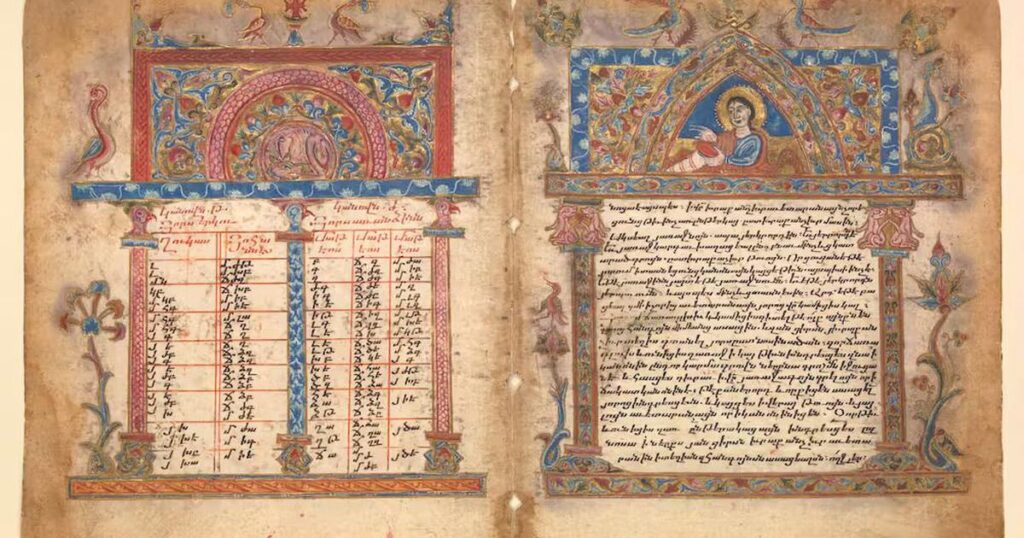
The Western occult tradition has a catastrophic preservation problem. Significant bodies of knowledge exist in single manuscripts in private collections. Entire lineages of practice were transmitted orally and are functionally gone when the last carrier dies. Annotations in 17th-century grimoires in faded brown ink on brittle paper have never been transcribed. AI-powered OCR and translation tools are, right now, doing work that would have required decades of specialist academic labor. The Internet Sacred Text Archive and similar projects have digitized thousands of primary sources; LLMs trained on these corpora can now cross-reference and synthesize in ways that were impossible before.
This is preservation, not just access. It matters regardless of how you feel about AI in ritual practice.
Questions Practitioners Are Actually Asking
The real question AI poses to occultism is not whether machines can do magic. It’s whether the tradition’s own practitioners can articulate what the irreducible human element of the practice actually is — when pressed by a system that can replicate every articulable dimension of it. That turns out to be a harder question than most people expected. And the traditions that are working through it honestly, rather than either dismissing the technology or uncritically embracing it, are producing the most interesting thinking the field has seen in decades.
The grimoire was always just the record. What gets written in it next depends on who’s holding the pen — and whether they know the difference between a tool and a teacher.
- Davezilla. Magical AI Grimoire: A Book of Shadows for Contemporary Chaos. Weiser Books, March 2025. redwheelweiser.com
- Kapcar, Andrej. “The Digitalization of Visual Culture in Modern Spirituality.” In Societal Approaches to AI, Psychology, and Digital Culture. IGI Global, 2026. igi-global.com
- Böhm, Karsten; Sammet, Jürgen. “The New Era of Technology Mysticism: Generative Artificial Intelligence and its Effects.” Proceedings of the International Conference on AI Research, 4th ed., December 2024. researchgate.net
- Stavish, Mark. Egregores: The Occult Entities That Watch Over Human Destiny. Inner Traditions, 2018.
- “Why Gen Z is Turning to AI for Tarot Readings.” SF Standard, May 21, 2026. sfstandard.com
- “Mystic Tech and AI Divination: The Algorithm as Oracle.” Honeysuckle Magazine, September 2025. honeysucklemag.com
- “How Blockchain and AI Are Recasting Ancient Occult Practices.” Decrypt, May 2024. decrypt.co
- Southwest Popular/American Culture Association. Call for Papers: AI and Esotericism special panel, 2026. call-for-papers.sas.upenn.edu
- Pew Research Center. American attitudes toward astrology, tarot, and fortune-telling. May 2025.
- Goode, Lauren. “AI Is Not God.” Wired, October 2025. wired.com