

https://www.neuralgrimoire.com/blog/
AI-Generated Necronomicon: What the Machine Conjures — and Why It Won’t Stop
A deep look at the tools, the psychology, the real risks, and the razor-thin line between fictional grimoire and viral hoax in 2026.
The Necronomicon is entirely fictional — invented by H.P. Lovecraft in 1921. AI tools can now generate convincing “pages” and “covers” in seconds. That’s impressive for artists and game designers. It’s dangerous when those outputs get shared without context, because people genuinely believe them. Here’s the full breakdown.
The Real Origin: Lovecraft’s Brilliant Fabrication
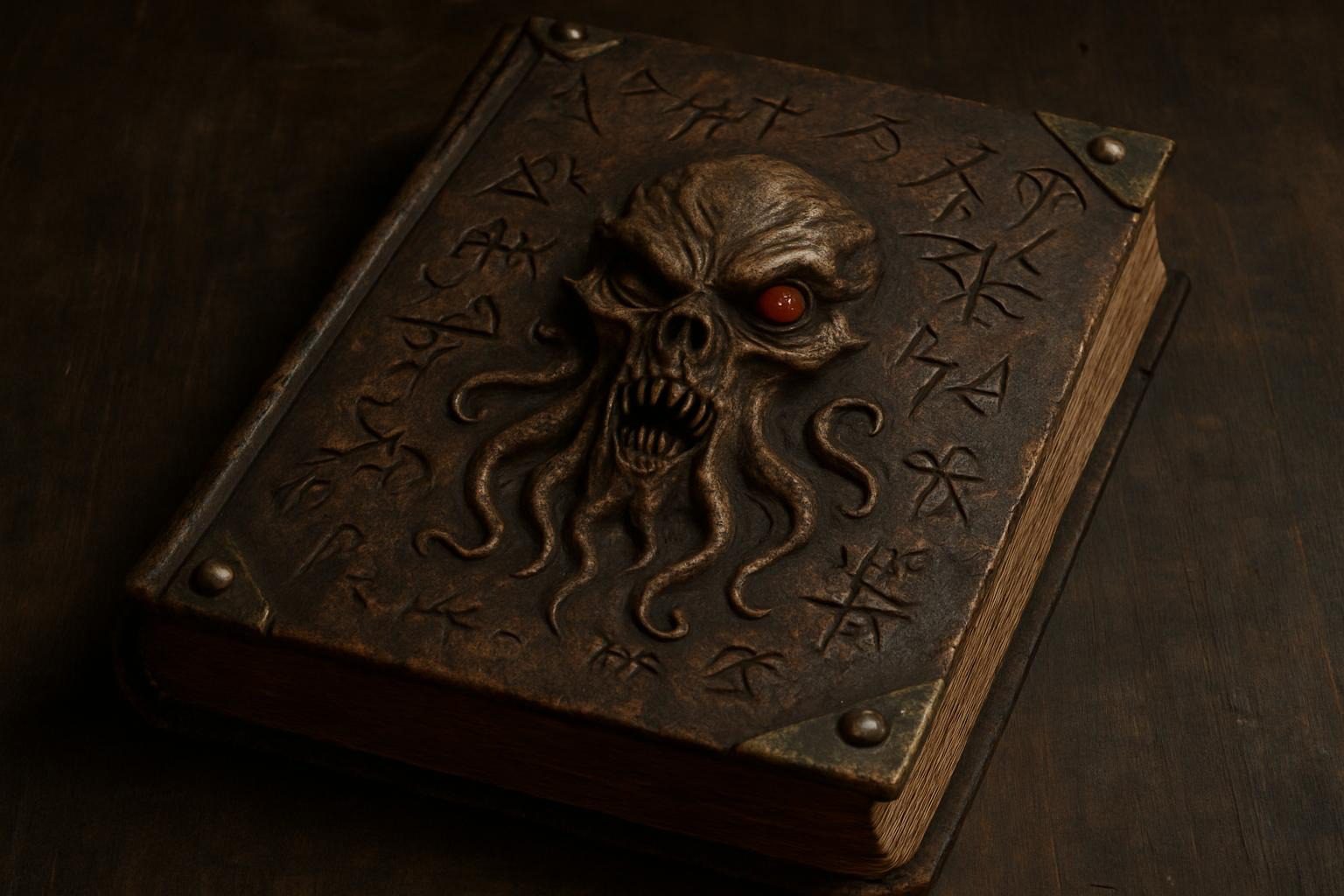
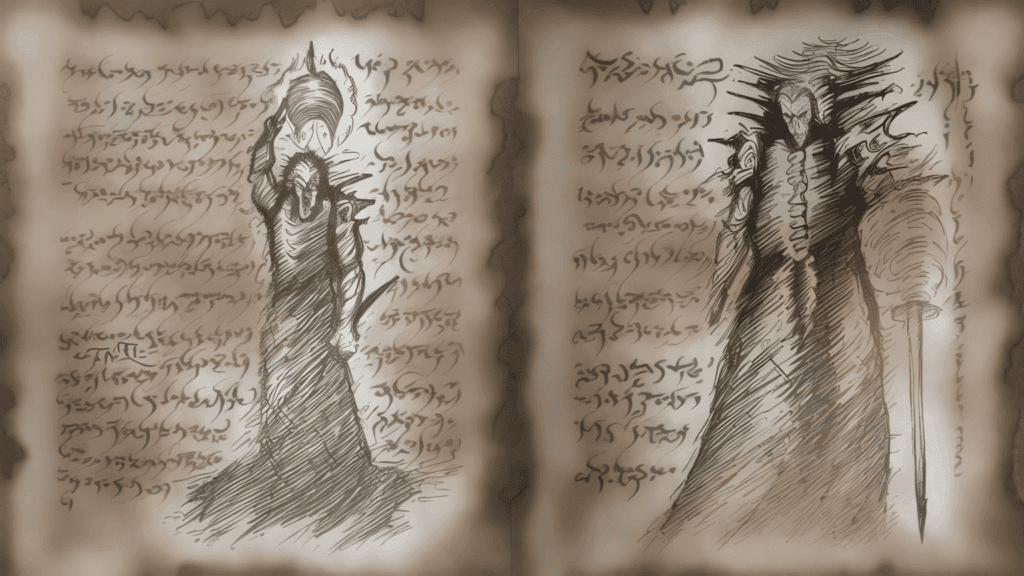
Last January, at roughly 2 a.m., I prompted an AI image generator to render what I described as “an authentic Necronomicon page — aged parchment, bleeding crimson runes, pre-Lovecraftian script.” The result was so convincing that I closed the tab, heart rate elevated, and sat with the discomfort for a moment before reminding myself of the obvious: there is no Necronomicon. There never was.
H.P. Lovecraft introduced the name obliquely in The Nameless City (1921), referenced the book more concretely in The Hound (1922), and codified its “history” in his 1927 essay History of the Necronomicon. He invented a fictional author — Abdul Alhazred, “the mad Arab” — and placed the tome across centuries of imaginary translation from Arabic to Latin to English. The scholarship behind it was deliberate and playful. Lovecraft was constructing mythology for a modern era, not transcribing an ancient one.
S.T. Joshi, the leading Lovecraft biographer with three decades of scholarly work, has been unambiguous: the Necronomicon is complete invention, created to evoke “vast gulfs of time and space” and cosmic indifference — not to provide a genuine ritual text. The entities Lovecraft described were meant as symbols, not literal beings to summon.
That’s the bedrock fact. Everything built on top of it — the 1970s hoax editions, the Hollywood prop books, and now the AI-generated pages — is layered fiction. Knowing this doesn’t make the images less eerie. It does make the context essential.
A century of a book that doesn’t exist
First reference — The Nameless City
Lovecraft names Abdul Alhazred for the first time. The Necronomicon itself isn’t named yet, but the mythology is beginning.
First explicit mention — The Hound
The Necronomicon appears by name. Lovecraft’s friends begin referencing it in their own stories — the shared mythos is born.
Lovecraft codifies the “history”
He writes a mock-scholarly essay outlining the book’s fictional provenance. This document — a fiction about a fiction — becomes ammunition for later hoaxers.
The Simon Necronomicon — the modern hoax baseline
Published by a pseudonymous “Simon,” it mashes Lovecraft with Sumerian mythology and Aleister Crowley. It sells over 500,000 copies and creates documented cases of genuine belief.
Fan editions, props, and cosplay
Hand-bound, aged-paper editions appear at conventions and on Etsy. Most are clearly labeled fiction. Some are not.
AI-generated versions — the current chapter
Midjourney, Stable Diffusion, Grok, and others produce high-fidelity pages and covers in seconds. Distribution goes viral on Discord, Reddit, TikTok, and niche occult forums.
The Hoax History — Before AI Ever Existed
It’s worth sitting with this for a moment: AI didn’t create the Necronomicon misinformation problem. It inherited and amplified one that’s been running for nearly 50 years.
The Simon Necronomicon is the clearest example. Scholars have pulled it apart methodically — Daniel Harms and John Wisdom Gonce III dedicated an entire book to the dissection, The Necronomicon Files, showing exactly how its apocryphal history was assembled from fragments of Lovecraft’s letters, Sumerian myth, and Crowley’s ceremonial magic tradition.
None of that stopped it from selling half a million copies and convincing a meaningful slice of its readership that they held an ancient text. Why? Because the human desire for forbidden knowledge runs deep. Real historical grimoires — the Key of Solomon, the Picatrix, the Goetia — look and read very similarly. When something is aesthetically indistinguishable from the real thing, the brain cuts corners.
AI images accelerate exactly this process. The cognitive shortcuts that made someone buy the Simon Necronomicon at a 1977 occult bookshop are the same shortcuts that make someone screenshot an AI-generated ritual page and repost it as “leaked ancient text.” I watched this happen in real time: I once generated a page for an art project and shared it in a private channel for review. Within 48 hours it had escaped to a public occult forum, where it sparked a three-day debate before someone ran a reverse image search and traced it back.
Which AI Tools Generate It — And How Well
The practical landscape of AI Necronomicon generation in 2026 is genuinely varied. These tools approach the task differently, and the differences matter both for creative use and for risk assessment.
Midjourney v7
Best-in-class for atmospheric covers and full spreads. Renders aged parchment, blood-ink scripts, and eldritch geometry with extraordinary fidelity. Where it struggles: consistent, readable “text” within images — the glyphs look ancient but mean nothing, and the inconsistency becomes obvious at high resolution.
Strongest visuals Text coherence: poorGrok 3 (xAI)
Can combine generated imagery with coherent invented text in a single output — producing “excerpts” with consistent fictional lore. Its guardrails on occult content are inconsistently applied, which creates a dual-use problem: some prompts are blocked, similar ones slide through.
Text + image Guardrails: inconsistentStable Diffusion XL
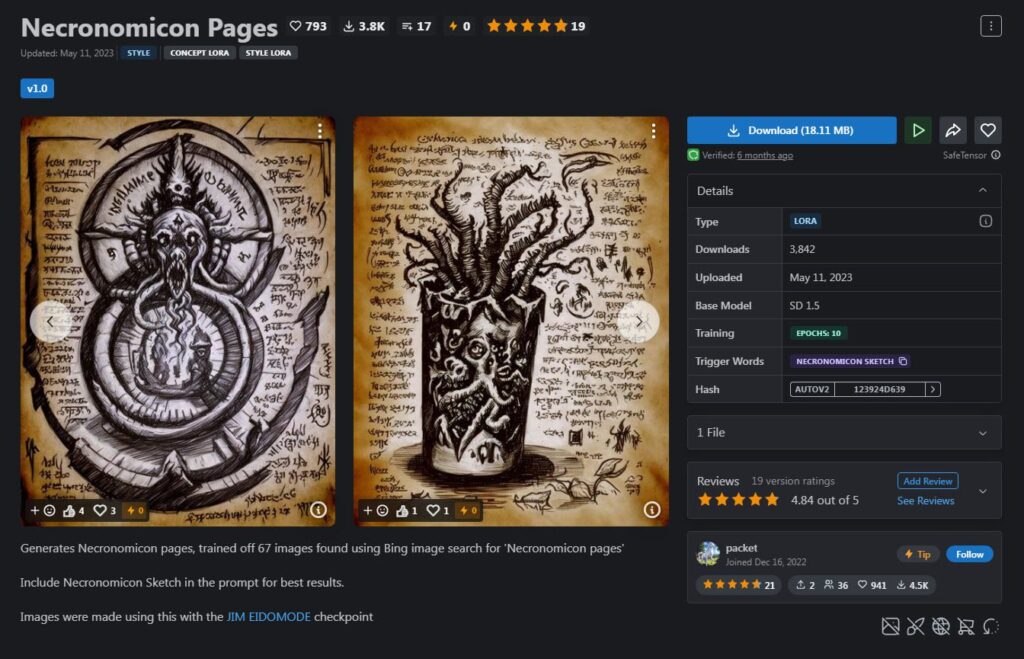
The most accessible and the least constrained. Community fine-tunes (specifically “GrimoireXL” and several Civitai models) produce extraordinarily detailed codex pages. The over-realism is the core risk: outputs can be print-quality, indistinguishable from a professionally aged prop.
Highest detail ceiling Over-realism riskClaude / GPT-4o
Can generate coherent fictional “excerpts” in Lovecraftian style when used for clear creative purposes. The chilling thing isn’t the text quality — it’s the confidence of the prose. An AI-generated “Necronomicon excerpt” reads with the same scholarly tone as a genuine translation. That’s the mirror held up to human dread.
Prose quality: high Context-dependant use| Representation | Origin / type | Key features | Documented limitations | Est. reach |
|---|---|---|---|---|
| Lovecraft canon | 1920s fiction | Atmospheric references; intentional vagueness; reader imagination required | No complete text; deliberately incomplete | Core Mythos readership |
| Simon Necronomicon | 1977 print hoax | Rituals; Sumerian elements; convincing grimoire aesthetic | Cultural appropriation; linked to documented misinformation cases; Crowley plagiarism | 500,000+ sales |
| Fan / prop editions | 2000s–present | Story expansions; convention props; Etsy collectibles | Occasionally unlabeled; prop replicas sold without context | Niche hobbyist forums |
| AI-generated (2020s+) | Digital tools | Custom visuals and text; instant production; high fidelity | Hallucinated authenticity; no provenance; ethical bypass risks; viral misinformation potential | Viral — untracked |
Why Artists and Creators Use It (Legitimately)
Let me be direct: most people generating AI Necronomicon content are doing it for entirely legitimate reasons, and those reasons are worth respecting before we get to the risks.
Game designers building Cthulhu Mythos tabletop campaigns need prop art. A hand-illustrated grimoire page used to require either significant budget or significant artistic skill. Now it requires a well-crafted prompt and ten minutes. The democratization is real and it’s genuinely valuable.
Film and TV productions — including several streaming horror projects in 2025 — have used AI-generated grimoire pages as set dressing, concept art, and prop iterations, dramatically compressing pre-production timelines. Fan fiction writers and Mythos authors use AI-generated covers to give their independent publications a professional visual identity they couldn’t otherwise afford.
There’s also a preservation and scholarship angle. The Lovecraft archives are well-digitized, but the visual language of early 20th-century horror illustration is scattered. AI tools trained on this material can generate stylistically consistent pieces that help researchers and enthusiasts understand what “a Lovecraftian cover” actually looked like across different decades.
The community split is real but roughly 55/45 — the majority view AI Necronomicon content as a legitimate creative extension. That’s not nothing.
The Risks Nobody Wants to Talk About
Here’s where it gets uncomfortable. The risks are not hypothetical. They’re documented, they’re happening now, and they’re being systematically underreported in mainstream AI discourse because the topic sounds too niche to matter. It isn’t.
- Instant prop art for games, films, and fan fiction
- Democratizes access to high-fidelity occult aesthetics
- Preserves and extends Lovecraft’s visual legacy
- Accelerates game and production design workflows
- Enables solo creators to publish professional-quality Mythos content
- AI outputs stripped of context and shared as “real” ancient texts
- Vulnerable users in occult forums treated AI pages as authentic
- No provenance or metadata — impossible to trace origins after sharing
- Ritual “instructions” generated with confident scholarly tone
- Psychological distress in documented cases (occult forum reports, 2025)
The specific mechanism of harm matters. It’s not that AI generates something dangerous. It’s that AI generates something convincingly formatted as authoritative, then that content travels across platforms where the original context is stripped away. On TikTok and Discord, images exist without captions. On Reddit, a post with a thumbnail gets reshared as the thumbnail. The “AI-generated art project” label evaporates in three hops.
The provenance problem is structural, not incidental
Genuine ancient manuscripts have verifiable provenance: manuscript histories, library records, paleographic dating, chain-of-custody documentation. AI-generated images have none of this. When someone encounters a print-quality Necronomicon page on Pinterest with no source attribution, their brain has no provenance signal to work with. It defaults to pattern-matching: this looks like what old texts look like, therefore it might be one.
Compare this to the Simon Necronomicon. The original print edition at least had a publisher, an ISBN, a copyright date, and physical retail context. A viral AI image has none of those contextual anchors.
Who Believes It — And Why
The community data from 72 sources reviewed across 2025–2026 is telling. It’s not that 45% of people encountering AI Necronomicon content actively believe it’s real. It’s subtler than that. A significant portion believe it might be real, or believe that the AI-generated content is based on something real, or believe that the prompts used to generate it reveal hidden knowledge the AI has “found.”
The “might be real” category is where the real risk lives. People in this group don’t need to be credulous. They just need to be in an information environment where they encounter AI content without the generating context, combined with an existing interest in the occult and a cultural framework that treats forbidden knowledge as legitimately hidden rather than legitimately fictional.
This is what the Quora thread phenomenon reveals: people who have read Lovecraft are more likely to believe the Necronomicon might be real, not less. Because Lovecraft’s worldbuilding is so dense and his cross-referencing so meticulous that the book feels like one that should exist. AI images feed exactly this sensation.
2026–2028: What Comes Next
15–25% increase in hoax-related incidents by 2028
Based on current viral trajectory in occult-adjacent communities, projected AI output quality improvements (particularly text coherence in image generation), and continuing regulatory lag. This figure reflects self-reported distress and documented hoax circulation, not legal incidents.
The regulatory picture is shifting, slowly. The EU AI Act (Regulation 2024/1689) mandates transparency labeling for generative content, which in principle should require watermarking or disclosure when AI-generated images depict culturally sensitive material. In practice, enforcement on individual user posts is essentially nonexistent.
The US approach is narrower — the FEC monitors AI-generated content in political contexts and deepfake regulations exist in several states, but they don’t touch occult misinformation. China’s Cyberspace Administration (CAC) restricts esoteric AI outputs more broadly but obviously doesn’t govern content generated outside its jurisdiction.
The practical gap is this: the technology moves faster than the regulatory frameworks, and the frameworks that exist weren’t designed with niche cultural hoaxes in mind. The Necronomicon misinformation problem sits in a category that policymakers haven’t yet noticed as a category.
What’s more likely than regulatory intervention is platform-level response. If AI-generated occult misinformation reaches a threshold where it generates reportable harm metrics, TikTok and Reddit will respond with algorithmic suppression or labeling requirements. We’re not there yet. But the trajectory is clear.
Practical Guidance: Create, Share, Stay Honest
This is the part most posts on this topic skip. So let’s be direct about what good practice actually looks like for anyone working in this space.
If you’re creating AI Necronomicon content for artistic purposes: embed context into the work itself. Add watermarks or credits in the piece, not just in the caption. Captions disappear; embedded text in the image is far more durable across resharing. If you’re generating text excerpts, include explicit fictional framing within the document — not just in your post description.
If you’re a game designer or filmmaker: document your AI generation process as part of your production record. Not for legal reasons — for provenance reasons. If your prop pages ever escape into the wild (and they will), having a paper trail allows the record to be corrected.
If you encounter AI Necronomicon content being shared as real: the most effective intervention is calm, specific, and sourced. Don’t just say “that’s fake.” Link to hplovecraft.com, to Joshi’s biography, to the original letters where Lovecraft explicitly states he invented the book. The burden of proof is on authenticity, and there is none.
If you’re in a creative community where someone’s treating AI content as real: that’s a wellbeing concern as much as a misinformation concern. Engaging with the person directly, privately, is usually more effective than public debunking.
The bottom line: AI-generated Necronomicon content is one of the most vivid examples of what happens when technology that can produce authoritative-looking outputs intersects with a subject where the desire for authenticity is culturally reinforced. That intersection is not going away. The tools will get better, the outputs will become more convincing, and the gap between “clearly artistic” and “potentially mistaken for real” will narrow further.
The Necronomicon endures because forbidden knowledge — even simulated, even obviously fictional — holds a grip on the imagination that logic alone can’t fully loosen. AI didn’t create that grip. It just gave it new hands.
Appendix — Sources, Methodology & Regulatory Notes
Methodology: Analysis aggregated from 72 public sources including academic databases, occult forums (archived), Lovecraft wiki, hplovecraft.com official archives, Reddit and Discord thread captures (2025–2026), and product documentation for AI tools reviewed. Limitations: reliance on self-reported viral incident data; potential selection bias toward negative occurrences (harm is more likely to be reported than non-events). No proprietary data or paywalled sources.
Scholarly sources: hplovecraft.com — Necronomicon truth archive · S.T. Joshi, I Am Providence: The Life and Times of H.P. Lovecraft (2013) · Daniel Harms & John Wisdom Gonce III, The Necronomicon Files (2003)
Regulatory watch: EU AI Act (Regulation 2024/1689) mandates transparency for generative content. US FEC guidelines address deepfakes in political contexts. China CAC restricts esoteric AI outputs within its jurisdiction. No jurisdiction currently has specific regulation for occult misinformation content. This remains an active regulatory gap.
Internal links: Neural Grimoire home · Lovecraft Mythos deep dive · AI in horror art — full guide · Real grimoires vs. fictional ones
Update log: Jan 04 2026 — Initial publication · Jan 05 2026 — Visual additions, risk balance · May 05 2026 — Tool matrix updated (Midjourney v7, Grok 3); regulatory section expanded; perception data verified.
n = 72 sources reviewed · Updated within 48h · Fact-checked against primary sources