
Zombie Apocalypse Preparation
The CDC’s zombie preparedness campaign wasn’t a joke—it was a brilliant strategy to make emergency preparedness engaging. If you’re ready for the walking dead, you’re ready for hurricanes, pandemics, and everything in between.
📥 Download the Complete Guide
Get the full 1,400+ word PDF with detailed checklists, supply tables, and action plans.
What’s Inside the Guide
- Understanding the Threat Landscape
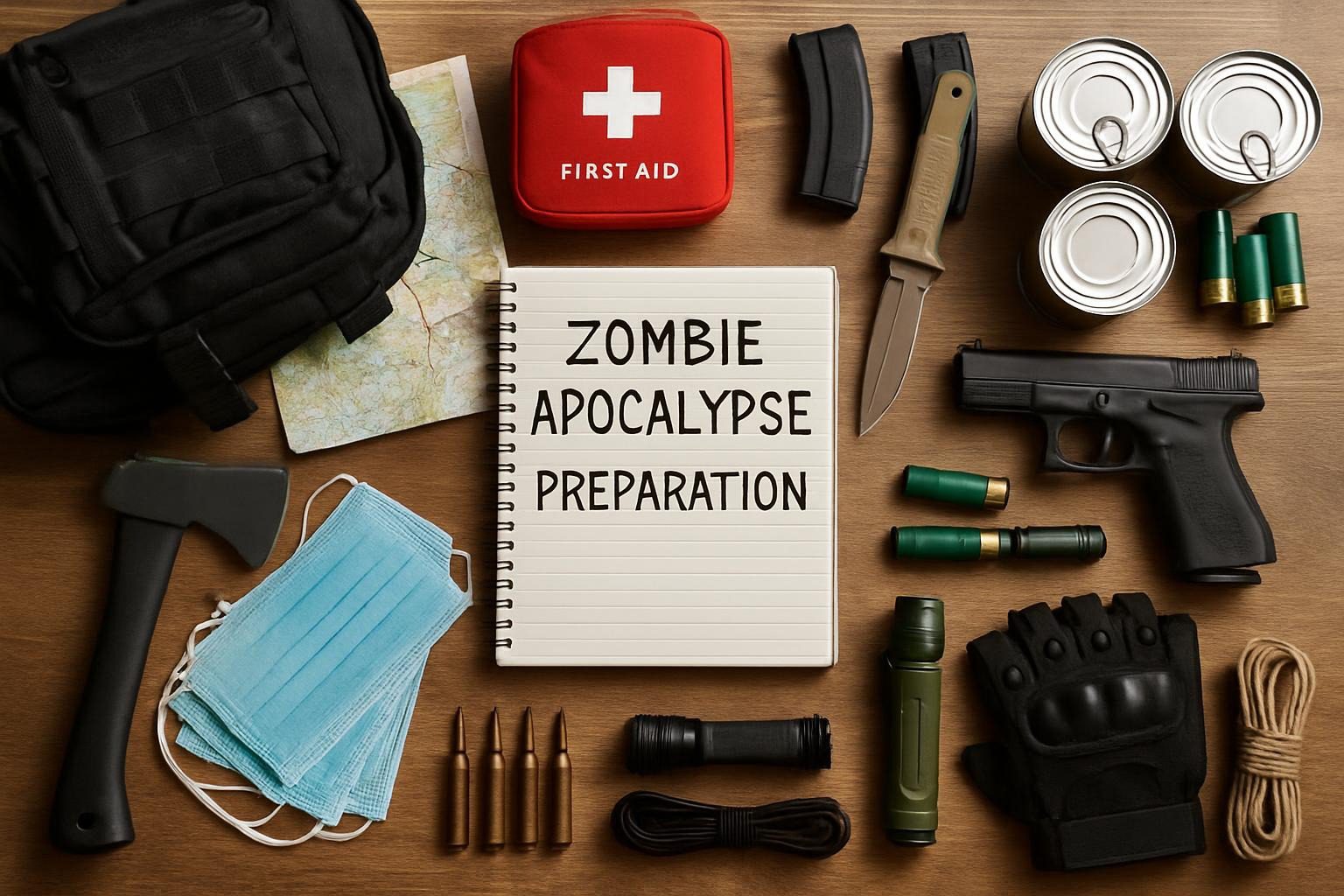
- Building Your Emergency Supply Kit
- Location Strategy: Where to Shelter
- Self-Defense Considerations
- Community Building & Long-Term Survival
- Your 6-Step Action Plan
Why Zombie Preparedness Actually Works
In 2011, the CDC initiated a humorous zombie preparedness campaign that gained widespread attention before the term “breaking the internet” even existed. Their zombie apocalypse tweets garnered 1.2 million followers—comparable to Royal Wedding coverage. But here’s the thing: the preparedness advice was completely legitimate.
“If you are generally well equipped to deal with a zombie apocalypse, you will be prepared for a hurricane, pandemic, earthquake, or terrorist attack.”
— Dr. Ali Khan, Former CDC Director of Public Health Preparedness
Cornell University researchers took the concept further, using statistical mechanics to model zombie outbreaks that spread across the continental United States. Their findings? Cities would fall within weeks, while remote mountain regions might remain unaffected for months. The practical takeaway applies to any collapse scenario: population density and preparation determine survival outcomes.
Hours minimum supplies
Water per person/day
Days recommended prep
The Science of Survival
Georgetown University emergency management professor David Frazier frames disaster preparedness around a core principle: you are your own first responder. Professional emergency services may become overwhelmed, inaccessible, or simply unable to reach you in the critical first 72 hours of any major disaster.
🎯 The Three Pillars of Survival
- Immediate Life Safety: Securing shelter, avoiding threats, establishing communication
- Resource Sustainability: Water, food, medical supplies, utilities for extended periods
- Community Resilience: Cooperative networks that multiply individual capabilities
Where to Hide When the Dead Walk
The Cornell simulation identified the Northern Rocky Mountains, particularly Montana and Idaho, as optimal locations for survival. Low population density, abundant natural resources, and geographic isolation from urban centers provide the highest survivability in extended collapse scenarios.
⚠️ Contrary to Popular Belief
Shopping malls are actually terrible shelter locations despite their popularity in zombie fiction. Large glass surfaces and multiple entry points create significant vulnerabilities. Dr. Lewis Dartnell suggests prisons as surprisingly effective alternatives—high walls, security infrastructure, and often-present water supplies make them far more defensible.
What You’ll Learn in the Full Guide
The complete PDF guide provides detailed breakdowns of everything you need to survive:
- Emergency Kit Checklist: Complete supply table with quantities, alternatives, and storage notes
- Water Strategy: Storage requirements plus purification methods when supplies run out
- Food Storage Tiers: 72-hour, 2-week, and long-term approaches with specific product recommendations
- Self-Defense Analysis: Practical comparison of melee vs. ranged options with honest assessments
- Community Building: Critical group roles and skill-stacking strategies
- 6-Step Action Plan: Start today with manageable, progressive steps
Ready to Prepare?
Download the complete guide and start building your emergency preparedness today.
The Bottom Line
Whether the threat is a pandemic, natural disaster, infrastructure failure, or the theoretical shambling horde, the fundamental principles remain consistent: secure water, maintain nutrition, establish shelter, build community, and develop self-sufficiency skills.
Start small. A single week of stored water and food provides meaningful security against common emergencies. Expand capabilities progressively, focusing on the highest-probability scenarios first. The zombies may never come, but hurricane season certainly will.
“Preparation isn’t about fear. It’s about empowerment. When you know you have plans, supplies, and skills to handle disruption, everyday uncertainty becomes more manageable.”
— CDC Zombie Preparedness Campaign