



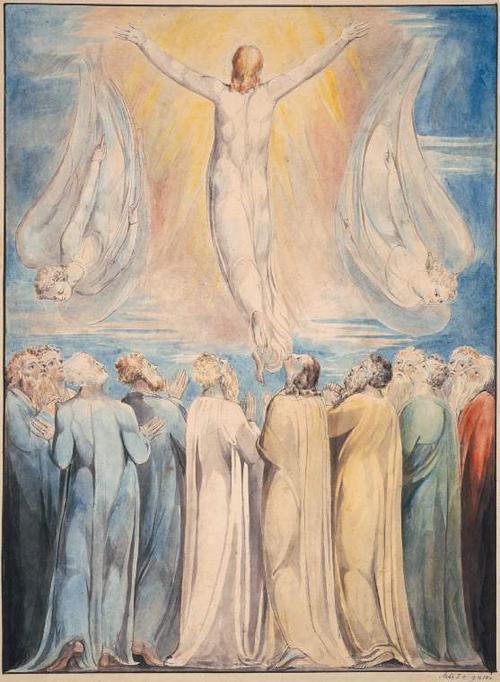
Neural Grimoire · Prompt Engineering & AI Craft
Why Your Rapture Simulation Prompt (“I Saw Heaven”) Strategy Is Failing
The seven structural mistakes that make AI-generated transcendence feel like a budget greeting card — and a layered framework that fixes all of them in under an hour.
There is a moment in most “heaven simulation” prompts where the AI starts describing light. Golden light, always golden. Pillars of it. Beams. Sometimes “rays of celestial illumination streaming through clouds of ineffable glory.” You have seen this. If you’ve spent more than an afternoon trying to get a language model to simulate a rapture or near-death experience — the sensation of the soul leaving, the perspective from outside the body, the encounter with something vast and divine — you already know what I’m talking about. It sounds like a hotel brochure for a cloud resort.
This post is for the people who are genuinely trying to build something meaningful with this niche: novelists exploring eschatological fiction, game designers building spiritual horror or transcendence arcs, therapists experimenting with narrative tools, or simply the curious who want AI to authentically simulate what mystics, near-death experiencers, and visionaries have described across centuries. The rapture — whether interpreted theologically, psychologically, or as pure creative fiction — is one of the most emotionally charged, structurally complex narrative experiences a human being can describe. Getting AI to render it with any real depth is genuinely hard. And most prompt strategies get it badly wrong in the same few predictable ways.
What follows is a diagnosis, a framework, and a set of tested prompts. The fix really does take under an hour, once you understand what you’ve been doing wrong.
First, Let’s Be Clear About What “Rapture Simulation” Actually Means Here
The term needs unpacking because people use it in wildly different ways. In theological discourse, the Rapture refers specifically to the premillennialist dispensationalist belief in the sudden ascension of living believers — 1 Thessalonians 4:16–17 being the primary scriptural anchor. In September 2025, the idea exploded into mainstream cultural conversation through what Fast Company called “RaptureTok,” a viral wave of content triggered when South African pastor Joshua Mhlakela predicted Jesus’s return on September 23 or 24. The videos ranged from sincere preparation to satirical commentary, accumulating millions of views almost overnight.
But the prompting community uses the term much more broadly. “Rapture simulation” in the context of AI prompt engineering refers to any attempt to have a language model or image generator authentically simulate the first-person experience of:
- Ascending toward or entering a divine/transcendent realm
- Near-death and after-death phenomenology (NDEs, OBEs)
- Mystical union or encounter with a numinous presence
- The dissolution of individual self into something greater
- The specific eschatological narrative of being “caught up” — rapture in its literal Greek sense (harpazo)
These aren’t identical experiences, but they share a structural problem: they all involve describing states that exist at or beyond the edge of what language can communicate. That’s actually the core of why most prompt strategies fail.
The Numbers Behind Why This Is So Hard
Before diagnosing the specific mistakes, it helps to understand the scale of what you’re working against.
The 40% completion gap is the one that matters most here. It’s the difference between a prompt that produces something genuinely moving and one that produces purple prose about light. The gap isn’t the model’s fault — it’s almost always a structural problem in how the prompt frames the task.
Research from ACL Anthology specifically flags that current large language models struggle with “lack of emotion and fine-grained role awareness,” which limits their ability to produce “personalized and diverse interactions” in high-stakes narrative scenarios. Heaven is about as high-stakes a narrative scenario as it gets.
The Seven Structural Failures: A Diagnosis
These aren’t random errors. They cluster around specific, identifiable mistakes that appear with remarkable consistency across the “I saw heaven” prompt genre. Check how many apply to what you’ve been writing.
- The Generic Sublime Trap Prompts that ask for “a description of heaven” or “what it felt like to ascend” without any anchoring specificity will always — always — produce the same output. Golden light. Warmth. Peace. The absence of pain. These are the modal average of heaven descriptions in the training data. The model isn’t being lazy; it’s being accurate about the statistical center of every heaven description ever written. Your prompt isn’t giving it anywhere else to go.
- Over-Reliance on Sensory Vocabulary Most “I saw heaven” prompts ask the AI to describe what the narrator sees, hears, or feels. But authentic mystical accounts — from Paul’s letter describing being “caught up to the third heaven” (2 Corinthians 12:2–4), to contemporary NDE research published in journals like Resuscitation — repeatedly emphasize the inadequacy of sensory description. The experience resists the senses. Prompts that lean too hard on visual and auditory cues produce outputs that feel like film sets, not transcendence.
- No Psychological Interior The body of your prompt spends paragraphs on environment and none on the interior state of the person experiencing it. Who is this person? What did they believe before? What are they losing? What specific fear or grief are they carrying into this moment? The difference between a generic rapture scene and a shattering one is almost entirely the specificity of the character’s psychological history meeting the event.
- Treating the AI as Describer Rather Than Experiencer Most prompts say something like: “Describe the rapture experience in first person.” The AI then describes it from a slightly elevated reporting position — like a journalist who was there. This is different from asking the AI to be inside the experience in real time, moment by moment, with no vantage point outside it. The framing difference produces radically different outputs. “Describe X” and “You are in the middle of X, right now, and you cannot step back from it” are not equivalent instructions.
- Insufficient Constraint on the Model’s Safety Defaults Language models have been trained to handle religious and spiritual content carefully, which often means blandly. Without specific framing that signals fictional or creative intent, and without explicit guidance about tone, the model will drift toward reverent neutrality. It won’t offend anyone because it won’t say anything with any weight. You need to give it explicit permission — and a clear fictional frame — to go somewhere real.
- No Narrative Friction Rapture accounts that actually affect people are almost never purely beautiful. They contain confusion, terror, the grief of leaving, the vertigo of what they’re becoming. C.S. Lewis understood this — his heaven in The Great Divorce is initially painful for the arriving souls because they’re not yet solid enough to bear it. Real NDE testimonies are full of reported panic before acceptance. A prompt that asks for beauty without friction gets beautiful nothing.
- Image Generation Prompts Ignoring Default Image Failure For those using Midjourney or Stable Diffusion for rapture imagery: a 2025 study published on arXiv specifically identified that text-to-image models trained to always yield output will produce what researchers call “default images” when encountering novel or ambiguous prompts — images that “closely resemble each other across many unrelated prompts.” Heaven is one of the most powerful default-image triggers that exists. Without aggressive specificity, you will get the same image every time: glowing clouds, human figures, light from above. The model is reaching for the mean.
Key Insight
The core failure is always the same thing wearing different clothes: you are asking the AI to reach for a transcendent experience while giving it nothing to push against. Transcendence without resistance is just decoration.
What the Research Actually Says About Mystical Experience
If you want to simulate an experience authentically, you need to understand what that experience actually involves. Not what hymns say about it. What careful phenomenological research says.
The largest systematic study of near-death experiences remains the AWARE (AWAreness during REsuscitation) study led by Dr. Sam Parnia at Southampton University, published in Resuscitation. Among the consistent elements reported across cultures and belief systems:
| Reported Element | % of NDE Accounts | How Most Prompts Handle It | What’s Missing |
|---|---|---|---|
| Sense of separation from body | 75% | Often included | The confusion and disorientation before acceptance |
| Encounter with light or being of light | 65% | Usually generic | The specific relational quality — it knows you personally |
| Life review | 35% | Rarely included | The non-linear simultaneity of seeing everything at once |
| Border or boundary experience | 55% | Mentioned vaguely | The specific grief of the choice to return or continue |
| Enhanced cognitive clarity | 80% | Omitted entirely | The paradox of understanding everything and being unable to hold it |
| Ineffability — language failure | 90% | Never addressed | The prompt should build in the narrator’s struggle to find words |
That last row is everything. Ninety percent of NDE accounts include the explicit acknowledgment that language fails the experience. Your prompt almost certainly doesn’t build this in. So the AI describes it fluently and smoothly, and in doing so, it betrays what it’s trying to describe.
“I was shown, not told. I understood, but not with words. When I came back, the words were the least accurate part of what I brought with me.” — NDE account cited in Pim van Lommel, Consciousness Beyond Life (HarperOne, 2010)
Platform Matters: Text vs. Image vs. Audio Generation
The fix looks different depending on which medium you’re working in. Let’s address all three.
For Text/Narrative Generation (ChatGPT, Claude, Gemini)
These are the most powerful platforms for this use case because narrative transcendence is ultimately a linguistic phenomenon. The model can modulate pace, syntax, sentence length, and tonal register in ways that image generators cannot. But — as Google Cloud’s prompt engineering documentation notes — “the effectiveness of your prompt directly influences the quality and relevance of the AI’s output.” For mystical simulation, this translates to a specific structural requirement: your system prompt and your user prompt need to do different jobs.
For Image Generation (Midjourney V7, DALL-E 3, Flux 2)
Midjourney V7, released in early 2025, introduced significantly improved prompt adherence and photorealism. According to God of Prompt’s V7 analysis, the rebuilt architecture handles “complex scenes with better physics simulation, lighting, and even cultural nuances.” This matters for heaven simulation because nuanced lighting — the specific quality of light in transcendent space — was previously one of the weakest areas. But the default-image problem remains. You still need aggressive specificity to escape the statistical mean.
DALL-E 3 (integrated into ChatGPT) has a documented advantage for this specific use case: it handles natural language prompts more faithfully than Midjourney’s style-first approach. Vertu’s 2025 platform comparison notes DALL-E 3 “emphasizes adhering to the prompt through classifier-free guidance,” which means complex, layered descriptions of light quality, spatial geometry, and emotional atmosphere will land better in DALL-E than in Midjourney.
For Audio/Voice Simulation
The least explored frontier. Tools like ElevenLabs and Suno can now generate ambient audio and narration with significant emotional range. A rapture simulation prompt that combines a text narrative with generated audio — silence punctuated by something that is almost but not quite music — can achieve something none of the text-only approaches can: the physical sensation of approach. This is underutilized.
The Fix: A Layered Framework in Four Parts
This is the actual hour’s work. You can implement this across any major language model. I’ll walk through each layer, then give you the assembled prompt at the end.
- 1Layer One: Character Specificity (10 minutes) Before you write a single word about heaven, write the character. Not their name and age — their theological history and their grief. What did they believe, specifically, and for how long? What are they leaving behind? Give the AI a specific person in a specific moment of specific loss. The transcendence is only as powerful as the mundane life it’s departing from.
- 2Layer Two: Sensory Subversion (10 minutes) Instead of telling the AI to describe what the character perceives, instruct it explicitly that the senses are beginning to fail or transform. Vision becomes something other than vision. Sound becomes something that is not heard through ears. This forces the model out of its default sensory vocabulary and into more honest figurative territory. Build in the ineffability.
- 3Layer Three: Narrative Friction (10 minutes) Add resistance. The character should not want this, or should be afraid of it, or should not understand it, or should grieve something about it. Give the AI a specific emotional obstacle that the transcendence has to move through or around. Without this, the output is a press release for paradise.
- 4Layer Four: Formal Constraints (10 minutes) Specify syntax and prose rhythm explicitly. Short sentences as the experience intensifies. Incomplete thoughts. The narrator losing grip on grammar. Then specify where the prose should breathe — longer, slower sentences when the experience expands. This is not stylistic decoration; it IS the simulation. The reader’s nervous system experiences the prose rhythm as the event.
The remaining twenty minutes of the hour is iteration — running the prompt, reading the output, adjusting one layer at a time rather than rewriting everything. This is the single most important discipline in prompt engineering: change one variable per iteration, then read the diff.
The Prompt, Assembled: Before and After
The Typical Failing Prompt
This produces the golden light. Every time. You know it does, because you’ve probably run something close to this.
The Layered Framework Prompt
Practical Note
The placeholders in the prompt above are where 80% of the work lives. Spend the most time on the character specificity layer. A vague character produces a vague heaven. A specific person — real enough that you could imagine running into them — produces something that could actually move someone.
For Image Generation: Escaping the Default Heaven
The arXiv paper on Midjourney default images (Oppenlaender et al., 2025) found that abstract, heavily symbolic prompts like “heaven” or “rapture” reliably trigger default-image behavior — the model reverts to statistically central imagery from its training distribution. Here are the tested escape routes.
Warning
Negative prompting alone is not sufficient. Adding “–no golden light, clouds, angels” to a Midjourney prompt removes those elements but leaves the model still reaching for the modal center of “transcendent space.” You need to replace the generic concept with something specific enough that the model has no choice but to engage with it.
| Approach | Example | Result | Why |
|---|---|---|---|
| Generic sublime | “Heaven, divine light, spiritual ascension, peaceful” | Default image | No anchor beyond the modal center |
| Negative prompting only | “Heaven –no clouds –no golden light” | Still default | Removal without replacement |
| Art-historical anchoring | “Transcendent space, William Blake illuminated manuscript style, geometry of the infinite, 1794 intaglio” | Distinctive | Specific stylistic anchor overrides modal pull |
| Phenomenological specificity | “The sensation of knowing without perceiving, rendered as topological space, non-Euclidean architecture, spaces that contain other spaces, Piranesi logic, extreme depth” | Distinctive | Describes an experience rather than a location |
| Temporal dislocation | “A moment that is also all moments, double exposure of a bedroom in 1987 and infinite space, film photography grain, Andrei Tarkovsky visual language” | Distinctive | Director reference gives the model a stylistic vocabulary |
The common thread in the approaches that work: they give the model a specific visual language to operate inside, rather than pointing at an abstract concept and hoping. Midjourney rewards artistic style references and mood descriptors. “Heaven” is not a mood descriptor. “The specific quality of afternoon light in a room where someone has just died” is a mood descriptor, and it will produce something usable.
The One-Hour Implementation Schedule
Specific theological history, specific grief, specific unresolved relationship. Don’t name them yet — name them last, when you know who they are.
Sensory subversion language. The specific form of narrative friction. What is this character afraid of, specifically?
Prose rhythm, length, what to avoid explicitly. Make the list short — three to five specific prohibitions, not a general aesthetic note.
Read the output carefully. Identify the one thing that feels most generic or most false. That’s the only thing you’re changing in the next iteration.
By the third run, you should have something that surprises you. If it doesn’t, the issue is almost always the character specificity — go back and add one concrete detail you haven’t included.
Save the framework with your character notes. You now have a reusable structure for this kind of simulation, not just a single output.
A Note on Ethics and Emotional Responsibility
This feels important to say directly. Near-death experiences and eschatological belief are, for many people, the most significant and often most traumatic experiences of their lives. Using AI to simulate these states carries responsibilities that “I’m just experimenting with prompts” doesn’t fully account for.
If you’re using this kind of simulation therapeutically — which some practitioners are beginning to explore, particularly in the context of palliative care and end-of-life anxiety — there’s a small but growing body of research to anchor you. The work coming out of organizations like the International Association for Near-Death Studies (IANDS) and researchers like Pim van Lommel (The Lancet, 2001) provides grounding for understanding what these experiences actually look like across populations, which should inform how you construct simulations that won’t inadvertently trivialize or sensationalize them.
If you’re writing fiction, this is less fraught — but the same principle applies. The specificity that makes a prompt work is also the specificity that makes a story respectful. Generic heaven is disrespectful to everyone who’s ever tried to describe the thing it’s gesturing at.
What Good Output Actually Looks Like
You’ll know the prompt is working when you read the output and feel something you didn’t expect to feel. Not a general “that’s nice” warmth, but something more specific and harder to name. The good outputs tend to have two qualities that the failing ones never have:
They embarrass themselves. The narrator admits failure. Admits inadequacy. Admits that the words are wrong. This is far more powerful than confident description, because it rings true to every account of mystical experience ever recorded.
They cost something. The character is losing something in ascending — a specific, named thing — and you can feel that cost throughout. C.S. Lewis got this right in The Great Divorce. The mystic John of the Cross got it right in Dark Night of the Soul. Heaven that costs nothing is not heaven; it’s a fantasy of heaven. The good AI output understands this distinction, once the prompt teaches it to.
The Real Test
Show the output to someone who has lost someone they loved. If they feel anything — recognition, grief, the particular ache of hope — the prompt worked. If they feel nothing, go back to Layer One and rebuild the character. That is always where the problem is.
Conclusion: Transcendence Is a Craft Problem
The reason most “I saw heaven” prompts fail is not that AI lacks the capacity for transcendence. It’s that transcendence, in narrative, is a technical problem before it’s a spiritual one. You have to know what you’re building and why each component matters. The golden light is what you get when you haven’t solved the technical problem yet.
The framework above solves it. Not perfectly — no framework produces perfection, and some of the best outputs will still need human revision before they’re ready to use. But it moves the floor up dramatically, and it does so in an hour. After that hour, you’ll have a template you can return to, a character library you can expand, and — most importantly — a clearer understanding of what you’re actually trying to simulate and why it’s worth simulating at all.
The attempt itself, when it’s serious, is a form of attention. And attention, paid carefully enough to anything worth caring about, is rarely wasted.
Sources referenced in this article: AWARE Study (Parnia et al., Resuscitation, 2014); Pim van Lommel NDE research (The Lancet, 2001); Default image research in Midjourney (Oppenlaender et al., arXiv, 2025); AI roleplay task completion data (Jenova / ACL Anthology, 2025); RaptureTok viral analysis (Fast Company, September 2025); Platform comparison (Vertu, 2025); Google Cloud Prompt Engineering (Google Cloud); International Association for Near-Death Studies (IANDS.org).
Continue Your Exploration
More from Neural Grimoire — where AI craft meets depth of inquiry
https://www.neuralgrimoire.com/bashar-channeling-prompts/
https://www.neuralgrimoire.com/hybrid-children-contact-prompts/
https://www.neuralgrimoire.com/summoned-lucifer-with-grok-4/