

Mayan Calendar 2026: Real Science, Myths Debunked & What It Actually Means Today
In 2012, billions held their breath for the apocalypse. Nothing happened. Now 2026 is trending—quieter this time, but with better questions. Here’s the honest, science-backed answer.
The Mayan calendar in 2026 predicts nothing catastrophic. We’re currently in the 14th baktun (Long Count date: 13.0.13.x.x), a cycle that began on December 21, 2012, and runs until roughly October 4772 CE. What is remarkable: a 2025 peer-reviewed study in Science Advances just confirmed the Dresden Codex’s eclipse tables remained accurate for over 700 years — using a self-correcting algorithm that Western astronomy didn’t formalize until much later. That’s the story worth telling.
What the Mayan Calendar Actually Is (And Isn’t)
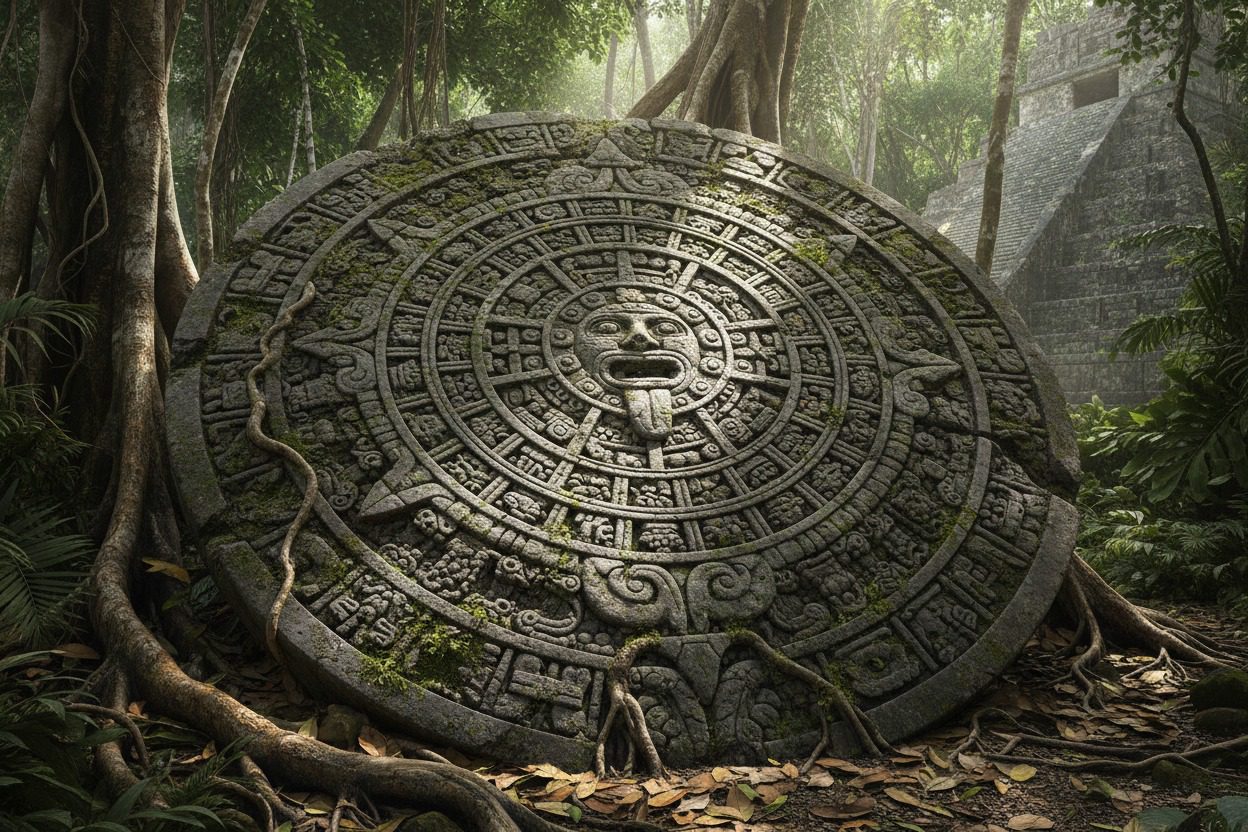
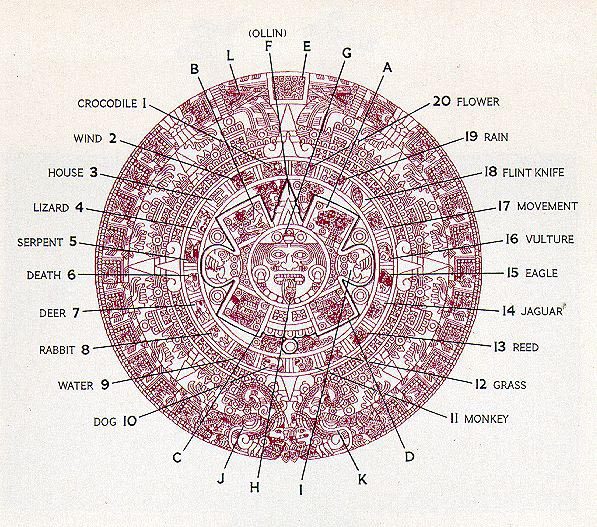
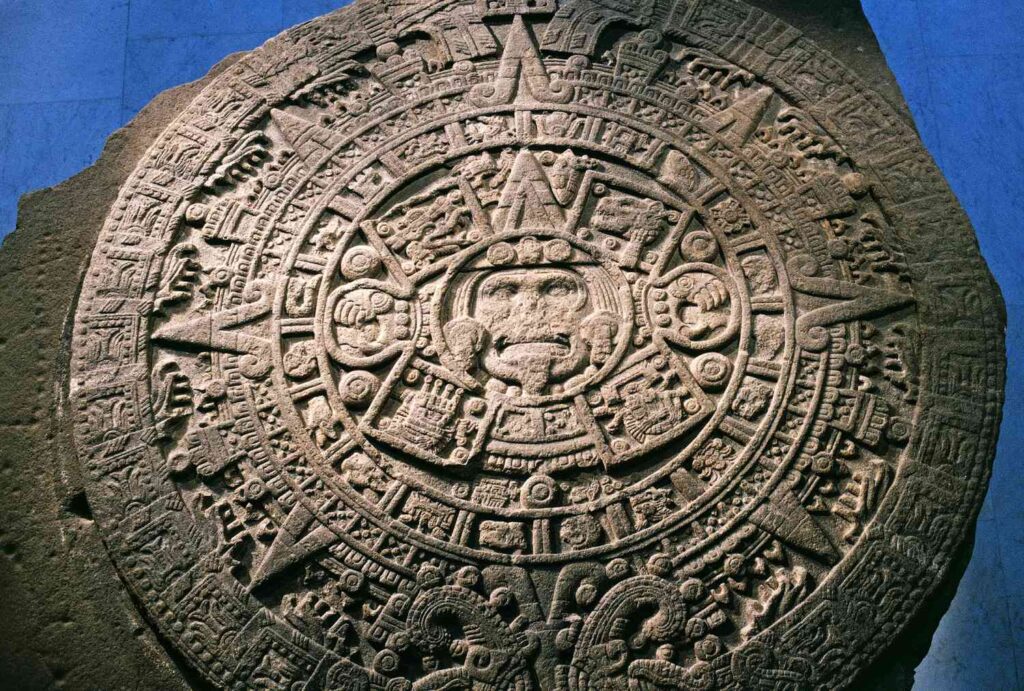
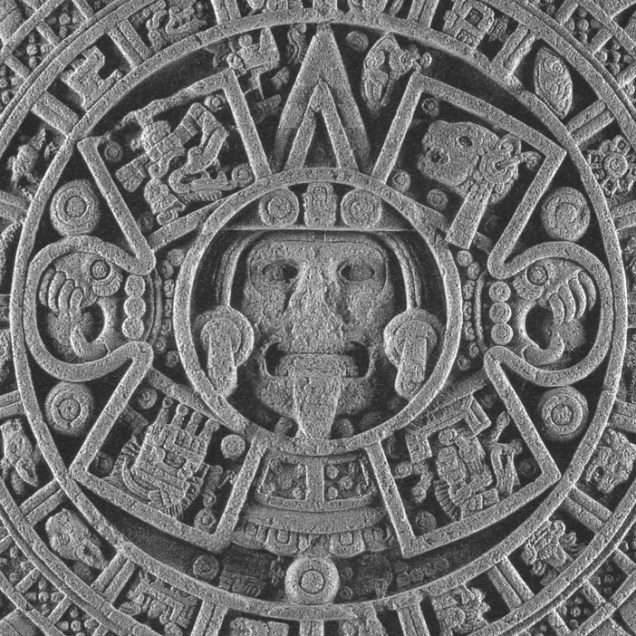
Let’s get one thing straight from the start: there is no single “Mayan calendar.” What most people picture — that circular stone carving — is actually the Aztec Sun Stone, not Maya at all. Easy mistake. The genuine Mayan timekeeping system is something far more intricate: three interlocking calendars operating simultaneously, like gears inside a cosmic clock.
The three primary systems are the Tzolk’in (260-day sacred calendar), the Haab’ (365-day solar calendar), and the Long Count (a linear counter tracking vast stretches of time). Together, the Tzolk’in and Haab’ create the Calendar Round — a 52-year cycle of 18,980 unique day combinations before any date repeats. The Long Count extends this out to millions of years.
| Category | Details |
|---|---|
| Full system name | Mesoamerican Long Count Calendar (one of three interconnected systems) |
| Creation start date | August 11, 3114 BCE (GMT correlation — the scholarly consensus) |
| Current Long Count | 13.0.13.x.x — 14th Baktun, began December 21, 2012 |
| Solar year accuracy | 365.2420 days (actual: 365.2422 — more accurate than the Gregorian) |
| Still in active use? | Yes — Maya communities in Guatemala use the Tzolk’in for ceremonies daily |
| Next major cycle | Current baktun completes ~October 13, 4772 CE |
| The “Sun Stone” confusion | That viral carved circle is Aztec, not Mayan |
Where We Actually Are in 2026
Here’s something almost no popular article bothers to state plainly: we are 13 years into a new baktun. The Long Count rolled over on December 21, 2012 — not to zero, not to some apocalyptic endpoint, but to 13.0.0.0.0, the start of what scholars technically call the 14th baktun. As of April 2026, Wikipedia’s Mesoamerican Long Count article (which cites real-time calculation) places today’s date at approximately 13.0.13.9.x.
Think of the baktun rollover like your car’s odometer clicking past 100,000 miles. You note it. Maybe you take a picture. Then you keep driving. That’s exactly what happened in December 2012 — and exactly what’s not happening in 2026. There is no special Long Count milestone this year. None. The calendar is simply ticking forward, as it has every day since August 3114 BCE.
So why does “Mayan calendar 2026” keep trending in search? Partly residual 2012 anxiety. Partly a broader cultural hunger for meaning-making outside conventional religion. And honestly — partly because the actual story of Mayan astronomy is so remarkable that people keep returning to it.
2026 in the Living Mayan Tradition: The Year of Nahual Kej
Here’s what is actually meaningful about 2026 in Mayan tradition — and it has nothing to do with apocalypse. In the highland Maya communities around Lake Atitlán in Guatemala, where the Tzolk’in calendar remains in daily ceremonial use, 2026 is the Year of Nahual Kej: the Deer.
This is a genuine, living tradition — not some New Age overlay. Ajq’ijab’ (Maya calendar specialists) in highland Guatemala have maintained the Cholq’ij sacred calendar without interruption for centuries, even through the colonial period. Their interpretation of 2026 as a Kej year is internally consistent with the ancient system, ethnographically documented, and has zero apocalyptic connotation.
The 2025 Science Breakthrough Nobody Told You About
While social media was recycling 2012-era myths about 2026, researchers at the State University of New York published a paper that’s genuinely astonishing — and almost entirely absent from popular coverage.
Dresden Codex Eclipse Tables: 700+ Years of Self-Correcting Accuracy
Archaeoastronomer John Justeson (University at Albany) and Justin Lowry (SUNY Plattsburgh) published a groundbreaking reanalysis of the Maya eclipse table in the Dresden Codex — one of only four surviving pre-Columbian Maya manuscripts.
Their finding: the eclipse table wasn’t just a static prediction chart. It was a self-correcting algorithm. Maya daykeepers reset the table at 223- or 358-lunar-month intervals (corresponding to the saros and inex eclipse cycles that Western astronomy formalized centuries later), allowing their predictions to remain accurate for over 700 years.
“These tables weren’t static — they were self-correcting. That’s not just empirical astronomy. It’s an adaptive system.” — Barbara Tedlock, anthropologist, University at Buffalo, quoted in The Daily Galaxy (2025)
Let that sink in. Without telescopes. Without written algebra. Without formal trigonometry. Working entirely through careful naked-eye observation, Maya scribes built an astronomical model that adapted over generations — essentially an empirical feedback loop encoded into bark paper. The full study is published in Science Advances (DOI: 10.1126/sciadv.adt9039).
The key mechanism, as Justeson and Lowry show, was linking lunar cycles to the 260-day Tzolk’in — the sacred calendar. Sky & Telescope reported that 55 of the 69 new moon dates in the Codex served as genuine eclipse warning windows. The other 14 were structural scaffolding to maintain the table’s integrity. This is engineering logic, not mysticism.
🔬 What the Research Actually Shows
Solar year accuracy: Maya calculated 365.2420 days. Modern figure: 365.2422 days. Their number is marginally closer to reality than the Gregorian calendar’s 365.2425.
Venus tracking: Dresden Codex Venus tables track the planet’s 584-day synodic cycle to within a fraction of a day across centuries of data.
Eclipse prediction window: The Codex’s self-correcting table could generate reliable eclipse warnings across more than 700 years — confirmed by the 2025 Science Advances study.
Mathematical foundation: The Maya independently developed the concept of zero — one of only two civilizations in history to do so. (The other was India.)
Myths vs. Verified Facts: The Definitive Breakdown
The Mayan calendar predicts something big happening in 2026.
No known Maya inscription or scholarly source connects 2026 to any prophesied event. The calendar is continuous and cyclical.
The Mayan calendar “ended” in 2012, and now we’re in uncharted territory.
The Long Count rolled to 13.0.0.0.0 on Dec. 21, 2012 — then continued to 13.0.0.0.1 the next day. No ending. The calendar projects comfortably to 4772 CE and beyond.
That circular sun-stone image represents the Mayan calendar.
The famous carved stone disk is the Aztec Sun Stone, currently in the National Museum of Anthropology in Mexico City. Mayan and Aztec are distinct civilizations.
The Maya predicted the “end of the world” and were wrong.
The Maya never made this prediction. It was a 20th-century Western misreading, amplified by Hollywood and media. Actual Maya scholars said as much, repeatedly, before 2012.
The Mayan calendar is purely mystical and religious — not scientific.
The 2025 Science Advances study confirms the Dresden Codex contains a working empirical astronomical model with built-in error correction. Science and ritual were unified, not separate.
How the System Actually Works
The Three Calendars
The Tzolk’in is 260 days. Twenty day-names cycle against thirteen numbers, producing 260 unique combinations. Scholars believe the 260-day count may relate to the human gestation period (roughly 260 days from last menstruation to birth), the agricultural maize cycle in highland Guatemala, and the interval between zenith passages of the sun at certain latitudes. It’s the calendar Maya communities in Guatemala still use actively for ceremony and divination.
The Haab’ is 365 days: eighteen 20-day months plus Wayeb’, a five-day “nameless” period considered dangerous and liminal. It’s a purely solar calendar — note the absence of leap years, which is why it slowly drifts against the actual solar year over centuries.
When these two mesh together — 260 and 365 days — they create the Calendar Round: a 52-year, 18,980-day cycle before any date combination repeats. Completing a full Calendar Round was a major cultural milestone.
The Long Count: Time Engineering at Scale
| Unit | Days | Approx. Duration | Notes |
|---|---|---|---|
| K’in | 1 | 1 day | Base unit |
| Winal | 20 | ~3 weeks | Vigesimal (base-20) |
| Tun | 360 | ~1 solar year | 18 Winals — approximates the year |
| K’atun | 7,200 | ~19.7 years | Used for historical records |
| Baktun | 144,000 | ~394.3 years | The “great cycle” unit |
| Piktun | 2,880,000 | ~7,885 years | Rarely inscribed; exists in the system |
The current baktun — baktun 13 in common usage, though technically the 14th — runs for 144,000 days (roughly 394 years), ending around October 13, 4772 CE. If history rhymes, someone will probably predict the end of the world then too. Don’t hold your breath.
The Maya didn’t just build a calendar. They built a time machine that runs backward and forward with equal precision. The Palenque inscription at the Temple of Inscriptions projects a date 4,000 years into the Maya’s future — which is still 1,500 years from now. They were planning for a civilization that would outlast anything we can imagine. Whether it did or not is archaeology’s saddest open question.
Neural Grimoire editorial observation, 2026Why Base-20? Why 260 Days?
The Long Count uses a vigesimal (base-20) number system — probably because humans have 20 fingers and toes. The one exception is the Winal (20 days × 18 = 360, not 400), which appears designed specifically to approximate the solar year. The Maya clearly noticed the solar year was close to 360 days and built their system around that observation deliberately.
The 260-day Tzolk’in is harder to explain definitively. The leading theories — human gestation, maize cycle, zenith sun interval — all have genuine archaeological support. The honest answer is that it may encode all three simultaneously, since Mayan cosmology treated human biology, agriculture, and astronomy as aspects of the same underlying order.
Your Questions, Answered Honestly
No. There is no Maya inscription, codex, or scholarly interpretation linking 2026 to any predicted event. The Long Count date this year is approximately 13.0.13.x.x — well into an ordinary stretch of the current baktun. This isn’t hedging: the calendar is simply not pointing at 2026 in any meaningful astronomical or calendrical way.
The Long Count rolled over from 12.19.19.17.19 to 13.0.0.0.0 — a major cycle completion, comparable to an odometer hitting all nines. The Maya themselves viewed such rollovers as cosmological renewal, not destruction. The apocalypse narrative was fabricated almost entirely by Western popular culture, not by any Maya source.
In at least one measurable sense, yes. The Maya calculated the solar year at 365.2420 days. The Gregorian calendar uses 365.2425. The actual astronomical value is 365.2422 days — making the Mayan figure slightly more accurate. Their Venus cycle calculations were similarly precise. That said, “accuracy” depends on what you’re measuring: modern atomic clocks make any ancient calendar look rough by comparison.
Yes — the Tzolk’in (or Cholq’ij, in K’iche’) is actively used by Maya Ajq’ijab’ (daykeepers) in highland Guatemala for religious ceremonies, personal guidance, and agricultural timing. The calendar has been in continuous use there without interruption. It’s not a historical artifact: it’s a living tradition.
According to highland Maya practitioners, 2026 is the Year of Nahual Kej — the Deer. Kej years are associated with stability, natural reconnection, and grounding. It’s a meaningful cycle designation within a living tradition, but carries no apocalyptic weight whatsoever.
Centuries of disciplined naked-eye observation, meticulous record-keeping across generations, and a mathematical framework that allowed accumulated errors to be identified and corrected. The 2025 Science Advances study shows the Dresden Codex eclipse tables were actively updated — a self-correcting empirical system, not a fixed set of predictions. That’s the real genius: they built error-correction into the methodology.
Final Verdict: What the Mayan Calendar Actually Teaches Us in 2026
“The Maya achieved this precision by embedding mathematical reasoning within their ritual calendar system. Their science was inseparable from their cosmology.” — Dr. Laura Cardenas, archaeoastronomer, UNAM (quoted in Anthropology.net, 2025)
Here’s the take I’ll defend: the doomsday obsession with the Mayan calendar isn’t just wrong — it’s actively insulting to one of humanity’s most sophisticated intellectual achievements. We took a system that predicted eclipses with self-correcting accuracy across 700 years and turned it into a Netflix disaster premise.
In 2026, the Long Count is doing exactly what it’s done since 3114 BCE: ticking forward, day by day, with a precision that makes modern people reach for superlatives. There’s no catastrophe scheduled. There’s no cosmic reset coming. What there is — if you bother to look — is a genuinely extraordinary record of human ingenuity: a civilization that unified biology, agriculture, astronomy, and mathematics into a single coherent system, maintained it for millennia, and had the foresight to inscribe dates that would remain meaningful thousands of years into their own future.
That’s not a warning. That’s a standard.
The Real Mayan Calendar Story Is Better Than the Myth
Stop waiting for the world to end. Start appreciating what it took to understand it. The Maya calendar in 2026 isn’t pointing at destruction — it’s pointing at what sustained observation, rigorous mathematics, and generational collaboration can achieve.
The next “big date” in the Long Count? October 13, 4772 CE — when the current baktun completes. Set a reminder. Bring snacks. And don’t let anyone tell you the world is ending.
Sources & Further Reading
- Justeson, J., & Lowry, J. (2025). “The design and reconstructible history of the Mayan eclipse table of the Dresden Codex.” Science Advances, 11(43), eadt9039. doi:10.1126/sciadv.adt9039
- Smithsonian National Museum of the American Indian — Living Maya Time: The Calendar System
- Wikipedia: Mesoamerican Long Count Calendar (includes real-time Long Count date; accessed April 2026)
- Sky & Telescope: “Maya 260-day Calendar Provides Key to Solar Eclipse Predictions,” November 2025. Read here
- Earth.com: “1,000-year-old Mayan calendar accurately predicted eclipses for centuries,” January 2026. Read here
- Eagle’s Nest Atitlán: “Nahual Kej: Meaning, Energy & How to Work with the Deer Spirit in the Mayan Calendar,” April 2026. Read here
- Mayan.org: The Mayan Calendar — Complete Guide
- Dr. Diane Davies, Maya Archaeologist: The Maya Calendar System