

Reincarnation Planning: What Actually Happens Between Lives
The soul’s alleged agency over its next incarnation — examined across four traditions, one controversial database, and the hard questions nobody in spirituality wants to answer.
- Reincarnation planning is the idea that consciousness exercises some degree of choice over its next life — selecting lessons, relationships, and challenges before birth.
- Four major traditions (Tibetan Buddhism, Hindu Vedanta, Michael Newton’s regression work, and the Michael Teachings) describe this process in striking structural detail — and broadly agree on more than you’d expect.
- Ian Stevenson’s 2,500+ documented cases at UVA are the closest thing to empirical evidence — verifiable, anomalous, and deeply inconvenient for both pure believers and pure skeptics.
- The hardest critique: cultures that believe in reincarnation produce almost all the cases. Draw your own conclusions from that.
- Whether literally true or not, the framework of “chosen life lessons” measurably changes how people relate to suffering. That part is documented.
Let me tell you why I started taking this seriously.
I’d spent years writing about metaphysical topics while quietly filing reincarnation under “comforting mythology.” Then I read Stevenson’s actual case files — not summaries, the cases themselves. A three-year-old in Lebanon who named his murderer, led investigators to the body, and identified the weapon. Cross-cultural verification. No prior access to the information. I’m not saying it proves anything. But it made me stop being lazy about the question.
What follows is what I actually found when I stopped treating “reincarnation planning” as either doctrine to accept or nonsense to dismiss, and started asking what the evidence actually looks like.
What “Reincarnation Planning” Actually Means
Not soul-level goal-setting. Messier than that.
The popular New Age version of reincarnation planning sounds like a divine HR process: you sit in a waiting room between lives, review your résumé, pick your next challenge from a catalog, and dive in. Tidy. Comforting. Almost certainly wrong in its specifics.
The actual traditions that describe this process are considerably stranger — and more interesting. What they share is the idea that consciousness retains some degree of intentionality across the break of death. The mechanism, the degree of control, and what gets chosen vary dramatically by tradition. Here’s what each one actually says:
The Four Frameworks That Take This Seriously
1. Tibetan Buddhism: The Bardo as Navigation Space Established Doctrine
The Bardo Thodol — known in the West as the Tibetan Book of the Dead — describes the after-death state not as a passive waiting room but as an active navigational challenge. The deceased consciousness (the rigpa) moves through a series of experiences — vivid light, deity visions, karmic projections — and the quality of its response determines the next rebirth.
Crucially, preparation in life directly shapes what’s possible in the bardo. Advanced practitioners train for decades specifically to maintain clarity at the moment of death. Tulkus — reincarnated lamas like the Dalai Lama — reportedly exercise deliberate choice over where and to whom they’re reborn. This isn’t mythology in the distant past: the 17th Karmapa was identified in 1992 using a letter the 16th Karmapa left describing his next rebirth in precise detail. Names, location, parents.
The implication: the capacity for intentional reincarnation exists on a spectrum, and most people are at the low end of it — carried by karma rather than directing it.
2. Hindu Vedanta: The Soul That Doesn’t Forget It’s the Ocean Established Doctrine
In Vedantic thought, the individual soul (jiva) accumulates samskaras — deep impressions from thought, action, and desire — that pull it toward particular conditions of rebirth. The Bhagavad Gita’s image of the soul changing bodies like worn-out clothes (2:22) suggests continuity of identity, not dissolution.
Here’s the interesting twist: Vedanta doesn’t frame this as “planning” so much as momentum. Karma isn’t punishment or reward — it’s accumulated force with a direction. You don’t sit down and choose your next life; your previous life’s unresolved energies choose for you, unless you’ve cultivated enough awareness to interrupt the automatic pattern.
Liberation (moksha) is specifically the state of ending the cycle — which implies the cycle itself is driven by unconscious compulsion, not deliberate selection. Planning, in this framework, is only available to the awakened. For everyone else, it’s more like falling in a direction you didn’t consciously choose.
3. Michael Newton’s Between-Lives Regression: The Controversial Dataset Probable — Requires Verification
Newton was a California hypnotherapist who, starting in the 1970s, developed a protocol for regressing subjects into what he called the “between-lives” or “superconscious” state — beyond past-life recall, into the period between death and rebirth. Over 30 years he conducted more than 7,000 sessions, publishing his findings in Journey of Souls (1994) and Destiny of Souls (2000).
What he found — or what his subjects consistently described — was a structured society of souls, organized into groups by level of development. After death, souls reportedly undergo a review of their life with guides, then progress through various stages: healing, learning, recreation, and eventually a “life selection” stage where they view potential upcoming incarnations and choose among them.
- ◆ A “life selection” stage where potential incarnations are previewed like holographic scenarios
- ◆ Soul groups of 3–25 members who incarnate repeatedly together in different roles
- ◆ “Elder” guides who counsel but don’t dictate choices
- ◆ Pre-selected “exit points” — moments in a life where death is available if the soul chooses it
- ◆ Amnesia at birth as a design feature, not a flaw — maintaining the authenticity of the incarnation
The consistency across thousands of subjects from different backgrounds is genuinely striking. The problem — and it’s a real problem — is that hypnotic regression is not a reliable method for accessing truth. It’s an excellent method for generating vivid, emotionally real narratives. Whether those narratives correspond to actual events is a separate question entirely.
4. The Michael Teachings: The Most Elaborate Map Speculative
The Michael Teachings (channeled material originating in 1970, elaborated by scholars like José Stevens in Transforming Your Dragons) posit a detailed developmental system: souls evolve through five stages — infant, baby, young, mature, and old — each requiring multiple lifetimes. Each soul belongs to an “essence twin” pair and a larger cadre, with specific pre-life agreements about what lessons to work through together.
I include this not because I’m endorsing channeled material, but because the Michael Teachings describe a cosmology of reincarnation planning in more operational detail than any other source, and some of that detail harmonizes oddly well with Newton’s independently derived regression findings. Both describe soul groups. Both describe staged development. Both describe pre-agreed scenarios. Neither set of researchers knew about the other when they began.
That convergence is either meaningful or coincidence. File it where you need to.
Ian Stevenson’s Cases: The Evidence You Can’t Easily Dismiss
Peer-Reviewed ResearchNot proof. But not nothing, either.
Ian Stevenson spent 40 years as chairman of the psychiatry department at the University of Virginia documenting cases of young children — typically ages 2–5 — who spontaneously described memories of previous lives. His methodology was rigorous by the standards of the field: he investigated before verifying, documented statements before checking them against records, and tried to rule out normal explanations first.
By the time of his death in 2007, he had documented over 2,500 cases. His colleague Jim Tucker has continued the work; the database now exceeds 2,800 cases.
The 70% violent-death figure is the most repeated statistic from this research — and it matters for the question of planning. If consciousness returns more readily when death was sudden and traumatic (the previous personality “unfinished,” in a sense), it suggests that something — call it momentum, call it soul will, call it karma — drives return more forcefully under certain conditions. That’s not neutral.
Three cases that still stop me when I go back to them:
The Druse boy, Lebanon (Stevenson, 1968): A two-year-old identified his killer, led investigators to the body buried in a field, and described events from a life that ended violently before he was born. No family connection to the deceased. The details checked out.
Ravi Shankar, India: Claimed to be the reincarnation of a murdered boy, with a birthmark corresponding to the wound on the previous child’s throat. The murderer was named. The claim was made before investigators verified the details.
Patrick Christenson, USA (documented by Tucker): Born with a series of physical anomalies — a nodule on his scalp, an opacity in his left eye, small marks on his right shoulder and side — that corresponded precisely to the medical history of an older half-brother who died of cancer twelve years before Patrick’s birth. Patrick had never been told about this brother.
These aren’t anecdotes. They’re documented cases with independent verification. What they don’t tell us is why or how — and they don’t prove pre-birth planning. But they make the question considerably less dismissible.
What the Traditions Agree On (And Where They Split)
| Question | Tibetan Buddhism | Vedanta | Newton’s Research | Michael Teachings |
|---|---|---|---|---|
| Is there conscious choice? | For advanced practitioners only | Only for the awakened; others follow karma | Yes — souls choose from options | Yes, with guide input |
| What gets chosen? | Circumstances; parents; location | Not chosen — attracted by karma | Lessons, relationships, challenges | Specific “agreements” with other souls |
| Is there amnesia at birth? | Yes; intentional forgetting | Yes; the veil of maya | Yes; by design | Yes; for immersion |
| Can you opt out of rebirth? | Yes — liberation (nirvana) | Yes — liberation (moksha) | Eventually; souls “graduate” | Yes; at the “old soul” stage |
| Is the process fair? | Karmic — not punitive | Karmic — not punitive | Guided by growth need | Chosen for development |
The remarkable convergence: all four frameworks agree that amnesia at birth is a feature, not a bug. The forgetting is necessary for the life to be lived authentically. If you remembered the plan, you’d be an actor reading lines instead of someone actually experiencing things. This detail, consistent across traditions that developed independently, is either a profound truth or a very human rationalization for why we can’t access the memories. I genuinely don’t know which.
The Mechanism: How Planning Is Said to Work
Speculative — Tradition-DependentSynthesizing across frameworks while flagging where they diverge:
Phase 1: The Life Review
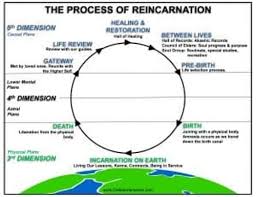
Across virtually every tradition, something like a review of the just-completed life occurs before the next begins. In Tibetan Buddhism this happens in the bardo; in Newton’s regression accounts it’s described as watching a holographic replay, with emotional content — regret, recognition, satisfaction. The emphasis isn’t on judgment but on understanding consequences. What did your choices cause? What remained unresolved?
Phase 2: Assessment of Developmental Status
The soul’s current “level” — whether described as karmic weight, soul age, or stage of development — determines what’s available in the next life. A soul carrying heavy unresolved trauma has fewer options than one that completed its previous life with clarity. This isn’t punishment; it’s more like: you can only choose as freely as your current state allows.
Phase 3: Selection of Challenges
This is the part most people mean when they say “reincarnation planning.” Newton’s subjects describe viewing potential lives like scenarios — multiple options, each with different challenges and relationships. The soul doesn’t pick the easy one. In fact, Newton noted that souls consistently choose challenges slightly beyond what they’re currently comfortable with — the way a good coach pushes you to the edge of your capability, not to failure.
Phase 4: Soul Contracts
The concept of “soul contracts” — pre-agreed arrangements between souls to play specific roles for each other — comes primarily from Newton’s research and the Michael Teachings, though it echoes the Hindu concept of karmic relationships (karmic bonds that must be resolved). The disturbing implication: the person who hurt you most may have agreed to play that role for your growth, and vice versa. This framework has enormous psychological impact. It also has no independent verification.
⚠ What Could Be Wrong
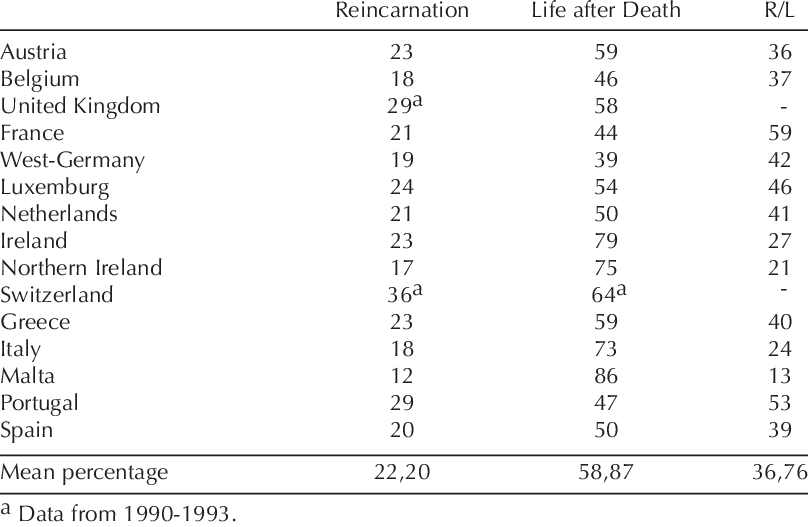
- Cultural contamination in Stevenson’s cases. Approximately 85% of cases come from cultures that already believe in reincarnation (India, Sri Lanka, Lebanon’s Druse community, Thailand, Burma). Cultures that don’t believe in it rarely produce cases. This doesn’t disprove the phenomenon — but it raises serious questions about whether belief systems are generating the experiences, not the other way around.
- Hypnotic regression is unreliable. There is strong scientific consensus that hypnosis does not improve memory accuracy — it increases confidence in memories, including false ones. Newton’s 7,000 sessions may be documenting a consistent human capacity for narrative imagination under altered states, not actual between-lives experience. The consistency across subjects could reflect shared cultural narratives, therapist expectation, or convergent confabulation.
- Selection bias in case documentation. Stevenson investigated cases where something verifiable was claimed. Cases where a child claimed past-life memories that turned out to be false weren’t documented as part of the database — creating an inherent selection bias toward hits.
- The comfort-seeking motive. Reincarnation planning is an extraordinarily comforting idea. Every tragedy becomes a lesson. Every pain was chosen. Every abuser was a soul contract partner. Psychology has documented extensively that humans are highly motivated to find meaning in suffering — and will construct it when it’s not there. The appeal of this framework should make us more suspicious of it, not less.
- No mechanism proposed. None of the traditions or researchers offer a coherent physical mechanism for how consciousness persists between lives, how it selects future conditions, or how birthmarks corresponding to past-life wounds could be physically produced. “Consciousness is non-local” is not a mechanism — it’s a placeholder for one.
- Tucker’s more recent cases are mostly Western. Jim Tucker’s continuation of the work at UVA has included more American cases — but critics note these cases are generally weaker on verification than Stevenson’s cross-cultural field research. It’s unclear whether this reflects methodological changes or genuine cultural differences in case quality.
The Psychological Evidence: What Believing This Does to People
Probable — Limited StudiesHere’s where I’m more confident: regardless of whether reincarnation planning is literally true, the belief has measurable psychological effects — and most of them are positive, with some important caveats.
A 2019 study in the Journal of Humanistic Psychology found that individuals who held a belief in karma and personal soul agency across lifetimes scored significantly higher on measures of meaning-in-suffering and post-traumatic growth than those who held a fatalistic or random view of life events. They were also more likely to engage in active coping rather than avoidance.
The practical implication is real. When people frame their most painful experiences as “chosen challenges for growth,” something shifts. Not magically — but the difference between “this happened to me” and “I chose this at some level” is the difference between victimhood and agency. Whether the latter is literally true is almost beside the point from a therapeutic standpoint.
There’s also a version of this belief that becomes passive. If everything is chosen and planned, the impulse to change what’s wrong — in your life, in your society — can drain away. “It’s my karma” becomes a reason to accept rather than resist. Buddhism itself has wrestled with this tension: the doctrine of karma can function as social control, justifying inequality as the natural result of past lives.
How to Work With These Ideas (Without Losing Your Critical Mind)
Assuming you find this topic worth engaging — and you’re still here, so presumably you do — here’s how I’d approach it honestly:
Start With Stevenson, Not With Newton
Read the primary cases before reading the frameworks. Stevenson’s Twenty Cases Suggestive of Reincarnation is available in full. Jim Tucker’s Life Before Life is the more accessible summary. Form your own view on the evidence before you read anyone’s theory about what it means. Most people do this backwards — they encounter the inspiring framework first, then treat the evidence as confirmation.
Use Past-Life Regression as Inner Work, Not History
If you do past-life regression, treat whatever emerges as psychologically meaningful imagery — which it genuinely is — rather than literal historical fact, which you cannot verify. Regression can produce profound insight into present patterns, fears, and relationship dynamics. Whether the imagery is “real” memory or constructed metaphor matters less than what it illuminates about your current life.
Apply the Framework to Meaning, Not Blame
The most productive use of reincarnation planning concepts is not “my cancer was planned” or “my father’s abuse was a soul contract.” It’s: what is this situation asking me to develop? The framing shifts you from victim to learner without requiring metaphysical claims you can’t support.
Hold It Loosely
The honest position — the one I’ve arrived at after a lot of time with this material — is that we don’t know. The evidence is anomalous enough that dismissal feels intellectually cheap. The explanatory frameworks are compelling enough to take seriously. But certainty in either direction is unjustified. Sitting comfortably with “I don’t know, and that’s okay” is underrated.
Frequently Asked Questions
Sources
The soul that planned nothing still lives a life worth examining — but the soul that suspects everything was chosen arrives at suffering with a different posture entirely.