
No, AI Didn’t “Hack” the Vatican
The real story involves 120 high school students, a Roman university, and the most ambitious archival project in 700 years. It’s better than the conspiracy theory. Much better.
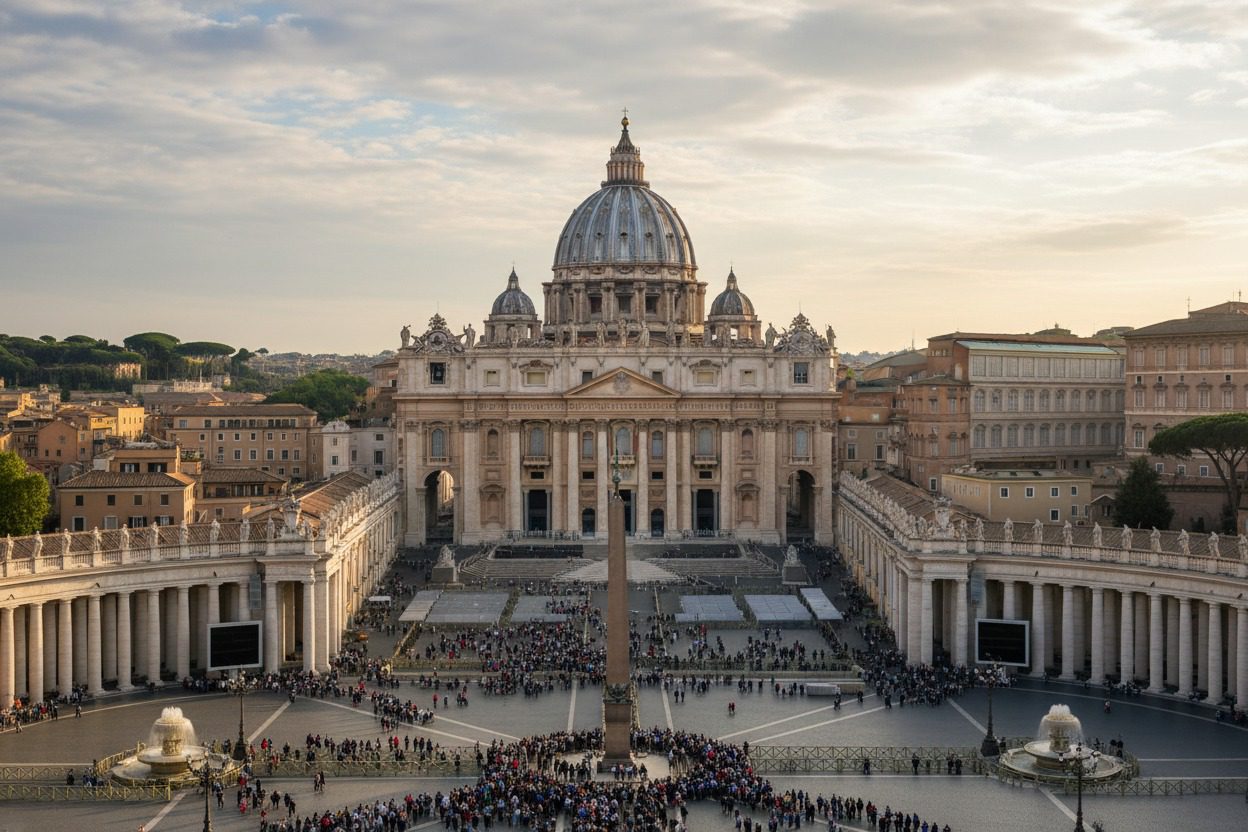
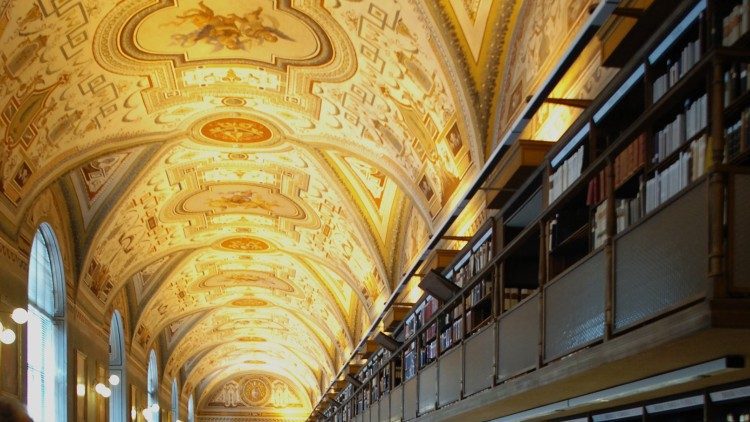
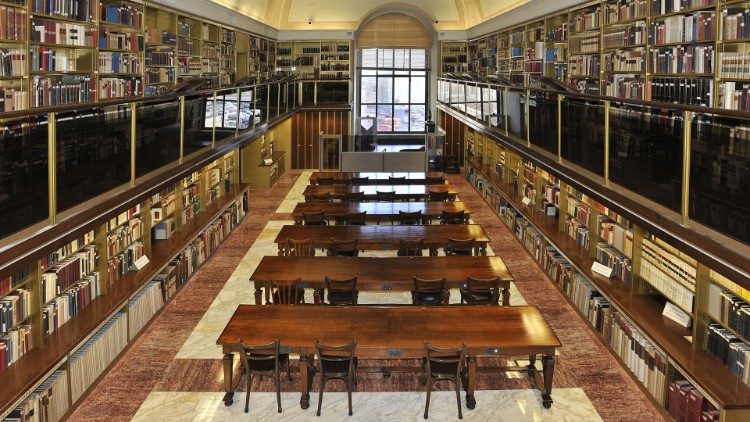
The Vatican Apostolic Archive reading room. Open to qualified scholars since 1881. Approximately 1,500 visit annually — pencil only, no photography, five documents per session. Image: Vatican News / Wikimedia Commons
A team of university researchers partnered openly with Vatican archivists, trained a neural network using crowdsourced student labor, and published everything at a top machine learning conference. No leaks. No forbidden secrets. No rogue AI. Just a clever solution to a 700-year-old transcription bottleneck — and a viral myth built on a single Latin word being lost in translation for four centuries.
Every few months, a headline resurfaces claiming AI has “cracked,” “leaked,” or “hacked” the Vatican’s forbidden archives. The videos get millions of views. The self-published books sell briskly. And every single time, the actual story — far richer and more interesting than the conspiracy — gets drowned out by the noise.
I spent several weeks tracking down every primary source, every co-author, every institutional document behind this claim. What I found wasn’t a cover-up. It was the opposite: a beautifully transparent academic project that the researchers wanted the world to know about, posted openly to arXiv and presented at one of the most selective machine learning conferences on earth.
Here’s what actually happened. And here’s why the real story deserves far more attention than the myth.
The “Secret” That Isn’t — One Latin Word, Four Centuries of Confusion
For four centuries, the institution bore a name that would eventually prove to be its biggest PR problem: Archivum Secretum Apostolicum Vaticanum. The Vatican Secret Archive. The word secretum is where everything went sideways.
In 17th-century Latin, secretum meant private or separate — specifically, the Pope’s personal records, distinct from the Vatican Library. The semantic root is the same as “secretary,” meaning someone who handles private correspondence. There was no implication of forbidden knowledge, suppressed gospels, or anything resembling a conspiracy vault.
As Latin faded from common use and the modern meaning of “secret” calcified around ideas of deliberate concealment, the name started reading like a Dan Brown novel. By the time Dan Brown actually wrote a novel, the association was already decades old.
Pope Francis fixed this in October 2019 with a formal motu proprio — a papal directive issued on his own initiative — renaming the institution the Vatican Apostolic Archive. The archive didn’t change. The holdings didn’t change. Only the branding did, and for exactly the reason you’d expect: the old name had become a misinformation engine.
What 85 Kilometers of Shelving Actually Holds
Before getting to the AI project, it’s worth understanding the scale of what we’re talking about. Because the archive really is extraordinary — just not in the way the conspiracy theory imagines.
Eighty-five kilometers of shelving. More than 600 distinct collections. Documents spanning the 8th century to the present. Not suppressed secrets — preservation nightmares. The real barrier has always been fragility and scale, not conspiracy.
Some of what’s actually in there:
- Henry VIII’s 1527 annulment request — the one that launched the English Reformation when Clement VII refused it
- Galileo’s 1633 heresy trial transcript — handwritten, complete, including his famous recantation
- Michelangelo’s wage complaints — letters demanding back pay for the Sistine Chapel ceiling, in his own hand
- Civil War correspondence — both Lincoln and Jefferson Davis lobbied Pope Pius IX for recognition; both letters survive
- Mary Queen of Scots’ plea — the letter she wrote to Pope Sixtus V days before her 1587 execution
None of this is hidden. Researchers have published extensively on all of it. The archive has been open to qualified scholars since 1881. The constraint isn’t access policy — it’s the sheer impossibility of reading millions of handwritten medieval pages before the documents deteriorate further.
In Codice Ratio: What the AI Project Actually Did
In 2016, researchers at Roma Tre University — computer scientists Donatella Firmani and Paolo Merialdo — approached Vatican archivist Marco Maiorino with a specific problem: medieval Latin manuscripts cannot be read by standard OCR software, and there aren’t enough specialist paleographers in the world to transcribe the existing backlog in any reasonable timeframe.
The project they launched, In Codice Ratio (Latin for “The Code System”), had a deceptively simple goal: build a neural network that could learn the visual patterns of individual character shapes from a relatively small number of labeled examples, then use those patterns to generate draft transcriptions that human experts could then verify and correct.
Why standard OCR fails on medieval manuscripts
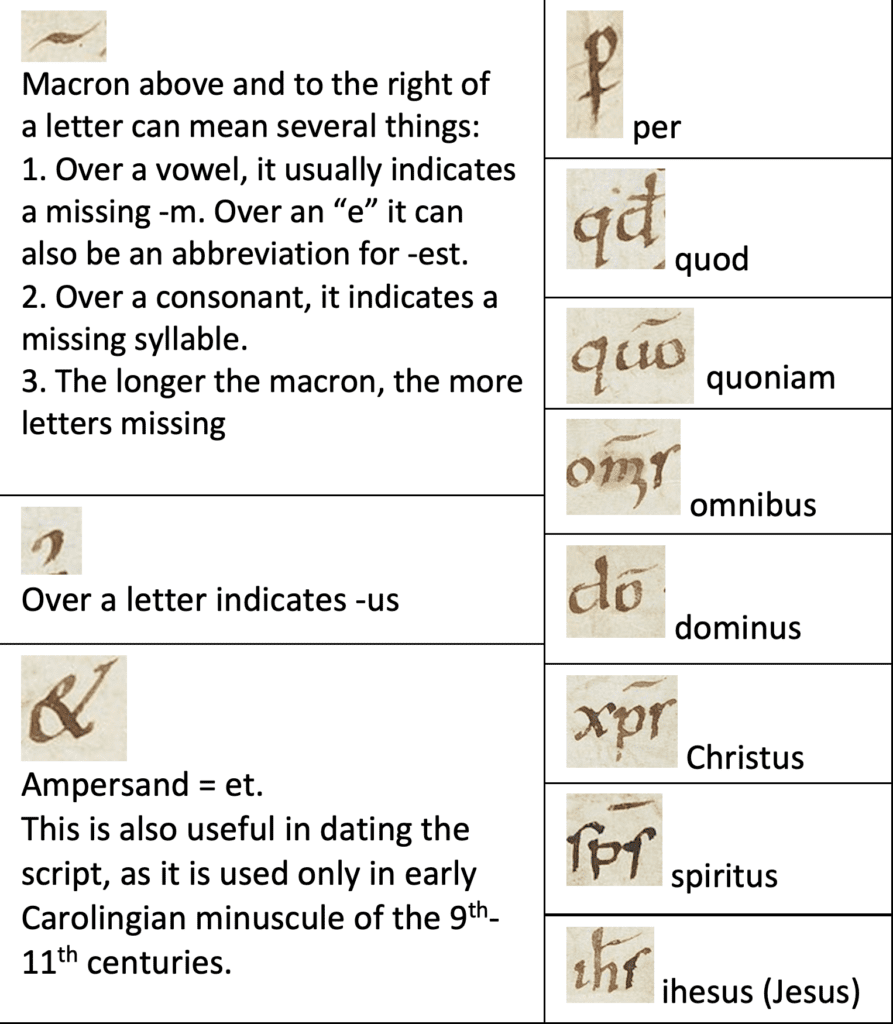
Commercial OCR software is trained on fixed, separated letter shapes in known fonts. Medieval Latin scribes wrote in flowing cursive, used ligatures (fused characters), and deployed idiosyncratic abbreviation systems that varied by scribe, century, geographic region, and document type. A system trained on printed text fails almost immediately when confronted with a 13th-century papal register.
The In Codice Ratio solution was a deep convolutional neural network that learns underlying visual shapes rather than matching fixed templates. Think of it less like text recognition and more like teaching a system to sort visual patterns into families — then asking a language model to figure out what word makes sense given the identified character shapes.
The crowdsourcing twist: 120 high school students
Here’s the part that never makes it into the conspiracy videos, and it’s genuinely the most interesting part of the whole project.
Training an AI system on medieval manuscripts normally requires paleographers — specialists who spend entire careers learning to read these scripts. They’re expensive, slow to train, and there are very few of them. Scaling this approach to thousands of folios was essentially impossible.
The Roma Tre team found a different path. They recruited over 120 students from two Roman high schools — Liceo Keplero and Liceo Montale — and gave them a custom crowdsourcing platform. The task was specifically designed to not require expert knowledge: students didn’t transcribe words, they simply identified whether two individual character shapes looked the same. Could you tell if two glyphs were from the same character family? Most people can do this with minimal training, regardless of whether they know Latin.
The results, trained on just two folios of Vatican Registers, were striking:
| Metric | Result | Context |
|---|---|---|
| Character recognition accuracy | 96% | Trained on just 2 manuscript folios |
| Word-level accuracy (with language model) | ~65% | Produces a correctable draft, not a final transcript |
| Baseline comparison (no AI) | 20% | What unsupported OCR achieves on the same material |
That 65% word-level accuracy sounds unimpressive until you understand what it replaces. Transcribing 18,000 pages by expert hand would take decades and cost millions. With AI-assisted workflow, historians get a working draft to correct rather than starting from an empty page. The labor calculus changes completely.
The research was published at ACM SIGKDD 2018 — one of the most selective venues in applied machine learning, with a typical acceptance rate under 20%. Vatican archivist Marco Maiorino is listed as a co-author. The full paper is freely available on arXiv. This is about as far from a covert operation as academic research gets.
Related: AI and Historical Documents: What’s Actually Possible in 2026
The Myth vs. The Record
The viral claims follow a consistent pattern. Let’s put them next to the documented evidence.
| The Viral Claim | The Documented Reality |
|---|---|
| AI “leaked” or “hacked” forbidden secrets | Open academic project, published at ACM KDD 2018, freely available on arXiv, covered by MIT Technology Review and The Atlantic |
| Archives were sealed or forbidden to outsiders | Open to qualified scholars since 1881; ~1,500 visit annually under standard manuscript repository rules |
| A rogue AI broke into protected systems | Vatican archivist Marco Maiorino co-authored the published research papers |
| “Secret” means suppressed knowledge | Secretum = private/personal (17th-century Latin); the name was formally corrected by Pope Francis in 2019 |
| Hidden gospels or classified documents were revealed | Medieval papal correspondence and administrative registers are being made searchable for the first time |
| Post-1958 documents are being accessed | Post-1958 records remain closed, consistent with standard archival practice worldwide (UK: 20 years, US: 25 years) |
Why the Myth Spreads — And Why It Works Every Time
The Vatican has been a conspiracy magnet for centuries. That’s not an accident — it’s the oldest continuously functioning institution in Western history, it controls access to its own archives, and for most of that history it actively cultivated an aura of mystery as a tool of authority. You can’t blame people for wondering what’s in there.
Dan Brown’s Angels & Demons (2000) and The Da Vinci Code (2003) seeded an entire generation with vivid mental images of forbidden vaults. When AI emerged as “superhuman” technology in the early 2020s, the narrative wrote itself: a machine accessing documents human gatekeepers kept hidden for centuries.
The specific 2025–2026 wave of claims traces to a cluster of self-published books and YouTube video essays. None of them cite primary sources. None name specific documents allegedly revealed. None engage with the actual research. The formula is reliable: old institution + new technology + “forbidden” = viral engagement, regardless of accuracy.
The irony is that the actual project generated legitimate, enthusiastic coverage from MIT Technology Review, The Atlantic, Fast Company, and NVIDIA. “Italian researchers publish open-source handwriting recognition system in collaboration with Vatican archivists” just doesn’t generate the same traffic as “AI Cracks Vatican’s Forbidden Archives.”
See also: How AI Misinformation Spreads: The Architecture of a Viral False Claim
What Is Actually Closed — And Why That’s Completely Normal
Part of the myth’s staying power comes from a grain of real fact: not everything in the Vatican Apostolic Archive is open to researchers. The rolling access policy works like this:
Pope Leo XIII formally opens the archive to qualified researchers. All material predating the pontificate of 1870 is accessible.
Documents from the interwar pontificate, including materials on the Vatican’s relationship with Fascist Italy, become accessible.
Pope Francis issues the motu proprio ending four centuries of misleading nomenclature. The archive is renamed; nothing about access changes.
Pope Francis opens the wartime pontificate’s records — among the most contested in modern history — to researchers in March 2020.
The archive eliminates the advance booking requirement. First-time visitors still complete a credentialing process, but access has effectively broadened.
Post-1958 documents remain closed. This sounds dramatic until you compare it to any other major national archive. The US National Archives uses a 25-year standard. The UK National Archives uses a 20-year rule. The Vatican is actually at the conservative end of normal — it’s just attached to a brand that made it sound extraordinary.
The Vatican’s Actual AI Strategy (More Ambitious Than the Myth)
In Codice Ratio is one project in a surprisingly sophisticated institutional engagement with artificial intelligence that spans nearly a decade. None of it is secret. Most of it is documented on the Vatican’s own websites.
Roma Tre University and the Vatican Archive begin the neural network transcription project. 120 high school students recruited as annotators.
Vatican AI adviser Father Paolo Benanti helps initiate an ethics framework signed by Microsoft and IBM. It later informs G7 AI governance discussions.
Tools deployed to protect 180TB of digitized holdings from attacks that the Vatican describes as potentially causing “enduring and irreparable harm to world historical memory.”
Microsoft and the Vatican jointly release an AI-generated 3D reconstruction of St. Peter’s Basilica, using digitized archive materials as source data.
The most substantive theological statement on AI from any major religious body. Warns against corporate concentration of AI power and algorithmic discrimination. Fully public.
What’s Actually Happening (And Why It Matters)
The myth of AI “leaking” forbidden secrets is a dead end that goes nowhere interesting. The real story is still unfolding and is genuinely important:
For the first time in their 700-year existence, the Vatican Registers — the administrative records of the medieval papacy, covering land grants, appointments, legal disputes, diplomatic correspondence — are becoming fully searchable. This is the equivalent of indexing a library that has never had a card catalogue.
The Pius XII files, opened in 2020 after decades of historical controversy over the Vatican’s conduct during the Holocaust, are being actively worked through by historians. The picture emerging is complicated, contested, and genuinely important for understanding WWII-era institutional behavior.
The In Codice Ratio framework was designed as a general-purpose tool from the beginning. Its architecture can be applied to any ancient manuscript collection with sufficient labeled training data — meaning the approach could eventually open Persian, Arabic, Byzantine Greek, and Chinese collections that face identical OCR problems.
The archive that Michelangelo complained to about his wages, that Henry VIII petitioned for an annulment, that Lincoln lobbied for recognition during the Civil War, that Galileo was tried before — that archive is becoming genuinely searchable for the first time. The AI doing it isn’t a thief or a hacker. It’s the most useful tool historical scholarship has had in a generation.
The Only Thing Actually Forbidden Here
The only thing forbidden in this story is the myth itself. And the next time you see a headline claiming AI “cracked” or “leaked” the Vatican Archives, you’ll know exactly what it means: a few university researchers built a handwriting recognition system in transparent partnership with Vatican archivists, trained it partly using teenagers matching glyphs on a screen, and published every detail for anyone to read.
Which is, when you actually look at it, considerably cooler than the conspiracy theory.
Disclaimer
The Language AI Can’t Quite Read: What Emergent Communication Research Actually Teaches Us About Decoding the Unknown
The Void State Method That Actually Works
Göbekli Tepe Decoded:The Mystery That Keeps Rewriting Itself
Breakthrough Mushroom Trip Without Mushrooms
The Forbidden Bible Books: Debunking Myths About Texts Attributed to Jesus
The Nostradamus Numerology Pattern: How Year-Number Matching Creates “Predictions”