

Demonology · Ars Goetia · Deep Dive
The Most Dangerous Duke Demons You Should Never Summon
Inside the Ars Goetia, the Duke rank conceals some of the grimoire’s most lethal entities — spirits that lie by default, destroy without instruction, and punish practitioners who skip a single protocol.
TL;DR — Core Takeaway
The 22 Duke-ranked demons of the Ars Goetia are not mid-tier. Several are explicitly documented as fatal risks to the summoner, operating on hair-trigger conditions that even experienced practitioners have failed. Flauros deceives by default unless geometrically constrained. Focalor kills without redirection. Vepar inflicts mortal wounds on request — and sometimes without one. Valefor corrupts through attachment rather than attack.
This is not a ranking of who is most impressive. It is a map of which Dukes carry the highest operational risk and exactly why the original grimoire authors singled them out.
Should You Even Do This?
Before Reading Further — A Practical Filter
If you are researching these entities from a historical, academic, or literary perspective, everything in this article is directly relevant. The Ars Goetia is a 17th-century grimoire, and treating it as such — a dense artifact of Renaissance occultism — is both legitimate and useful.
If you are considering ritual engagement, the original texts are unambiguous on one point: the consequences described for protocol failures are not rhetorical. The grimoire repeatedly warns that specific Dukes will harm or kill practitioners who proceed without correct preparation. Several entries include the phrase “if the Exorcist have not a care” followed by explicit descriptions of harm.
The Duke Rank — What It Actually Means
In the infernal hierarchy of the Ars Goetia — the first and most famous section of the Lemegeton Clavicula Salomonis (Lesser Key of Solomon), compiled in the 17th century from earlier Renaissance sources — the 72 spirits are organized into a formal chain of rank: Kings, Dukes, Princes, Marquises, Earls, Presidents, and one Knight.
Dukes number 22 in the primary text and their seals are made in copper, the metal of Venus and material dealings. What distinguishes Dukes from other ranks is not just raw power but the nature of their domain. While Kings tend toward grand cosmic authority and Presidents toward knowledge and arts, Dukes consistently govern the most intimate and volatile territories: human emotion, physical death, water and weather, theft, desire, corruption, and the manipulation of thoughts.
Critical Distinction
In many workflows people assume “Duke” means middle management — safer than Kings, easier to work with than Princes. The original text does not support this. Several Dukes are explicitly marked with death-risk warnings that Kings in the same grimoire are not. Rank in the infernal hierarchy correlates with command authority, not with risk to the practitioner.
What makes Dukes particularly dangerous compared to other ranks is a specific pattern in their descriptions: many of them have conditional behavior. They operate correctly under constraint but default to harmful or deceptive behavior the moment that constraint is absent. Flauros lies unless confined to a triangle. Vepar causes festering wounds unless specifically redirected. This conditionality is the structural reason Dukes require more meticulous protocol than their rank alone suggests.
The demons of the Ars Goetia are ranked according to their command authority within hell’s hierarchy — Kings, Dukes, Princes, Marquises, Earls, Presidents, and a single Knight — with each rank granted specific powers and demanding specific protocols from those who summon them.
— Ars Goetia, Lesser Key of Solomon (17th century); hierarchical summary via Occult Encyclopedia
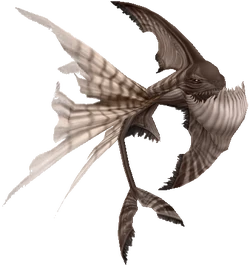
Flauros (Haures, Hauras, Havres)
Flauros
Spirit No. 64 · Great Duke · 36 Legions
Flauros lies as his default operating mode. Truth only emerges under geometric constraint.
Flauros is perhaps the clearest example of conditional danger in the entire Duke catalogue. The original text is direct: he gives true answers about all things past, present, and to come — but only if he has been commanded into a triangle. The grimoire states plainly that without this constraint, he will lie in all things and deceive and beguile the practitioner in any business they pursue with him.
This is not a warning about attitude or mood. It is a description of Flauros’s default operational state. He does not lie occasionally or when provoked. The text describes deception as his baseline when unconfined. The triangle is not a preference or a refinement of the ritual — it is the mechanism that produces truth rather than harm.
Inside the triangle, his scope expands considerably: he speaks about creation, the nature of divinity, his fellow fallen angels, and can destroy enemies through fire. Outside it, the practitioner receives plausible-sounding falsehoods from a spirit who appears as a man with fiery eyes and a terrible countenance — difficult to detect, easy to be misled by.
Documented Failure Modes
- Omitting the triangle entirely — produces deceptive answers indistinguishable from truthful ones
- Treating triangle confinement as optional once rapport is established — the text does not indicate behavior improves over time
- Using Flauros for divination without confirmed triangle placement — highest-risk application given his domain
- Conflating his fire-destruction power with passive threat — he is described as capable of burning enemies; misdirection of this capacity is possible without proper binding
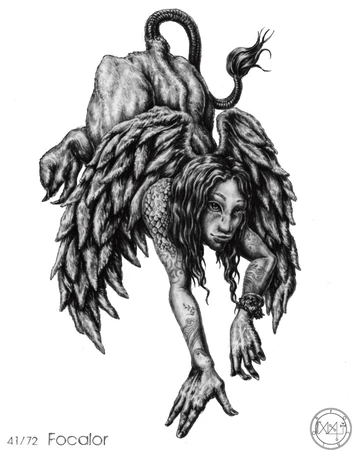
Focalor
Focalor
Spirit No. 41 · Mighty Duke · 3–30 Legions
Focalor’s lethal capacity is his primary attribute, not a secondary one. His default is harm; benign behavior requires active override.
What separates Focalor from merely powerful Dukes is the structure of the original description. His listed abilities are: killing men, causing drowning, and destroying warships. These are not described as secondary capacities or optional powers. They are his primary function. The clarification that he does not cause harm when specifically directed by a summoner frames redirection as the exceptional state, not the norm.
This is the inverse of what people assume about ritual relationships: most practitioners imagine an entity that helps by default and can be turned toward harm if specifically directed. Focalor operates in the opposite configuration. The grimoire also notes that he once hoped to return to heaven after 1,000 years but was deceived — a detail that describes an entity operating under a sense of frustrated expectation, adding instability to his already dangerous profile.
His dominion over wind and sea means the consequences of losing control of a Focalor working are not limited to the ritual space. The Ars Goetia describes genuine elemental authority here, not metaphor.
Documented Failure Modes
- Summoning without a clearly stated directive — his power has no neutral resting state
- Assuming prior successful workings have established stable behavioral patterns
- Invoking him for knowledge work (his domain does not include this — wrong entity for wrong purpose)
- Underestimating that his legion count varies significantly by manuscript (3 to 30) — suggesting contested and potentially unstable source traditions
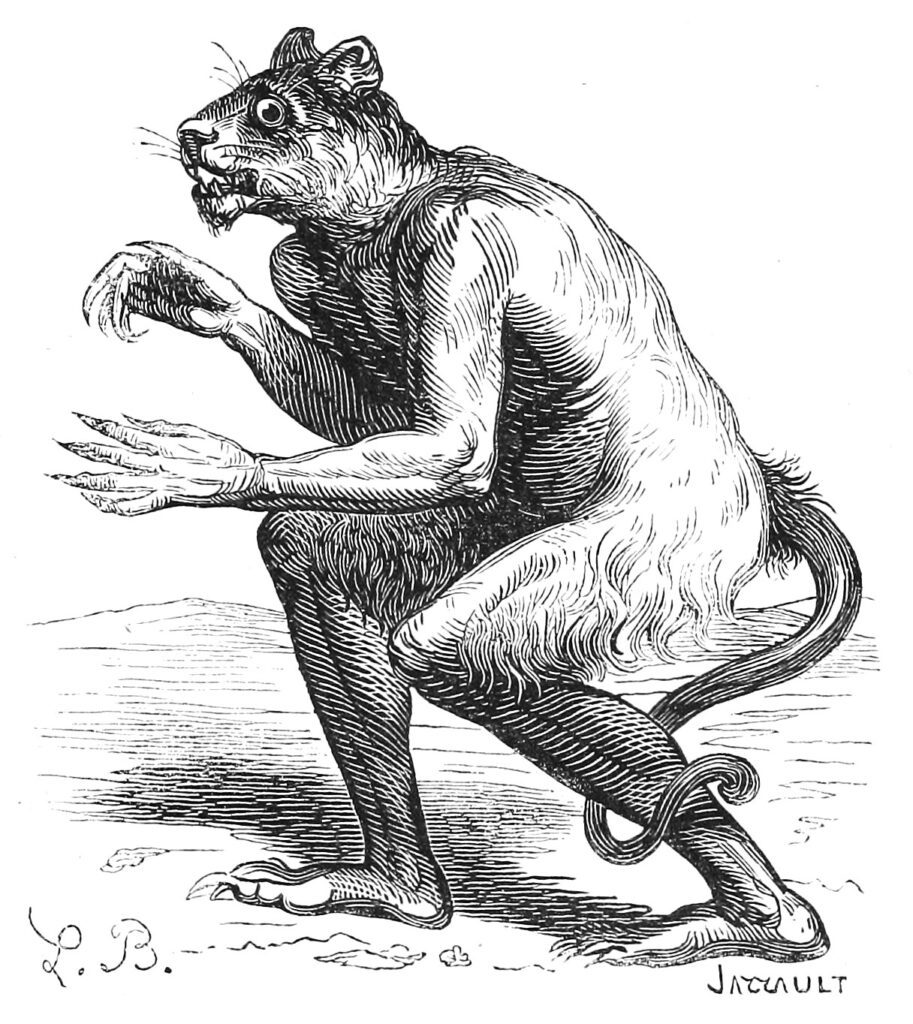
Vepar
Vepar
Spirit No. 42 · Duke · 29 Legions
Vepar governs a wound that is both infliction and cure — requiring precise intent to avoid applying the wrong half.
Vepar is unusual among dangerous Dukes because the thing that makes him lethal is the same attribute that makes him potentially useful: he can inflict festering wounds that cause worms to breed in the bodies of men, killing within three days — and he can reverse the same condition instantly when asked. The problem is direction. Any working with Vepar that lacks absolute clarity about which state is being invoked carries inherent risk of applying the harmful rather than healing capacity.
The grimoire notes that the wounds he causes are specifically described as causing worm infestation — a historically resonant detail that in context describes corruption at the physical level. The three-day timeline for fatal outcome is unusually precise for a grimoire text, suggesting this is not rhetorical exaggeration but a specific warning drawn from the tradition’s experience of what happens when Vepar workings go wrong.
His secondary domain — guiding armed ships, creating storms and illusions of many vessels — makes him one of the more operationally flexible dangerous Dukes, but that flexibility also means more opportunities for protocol failure.
Documented Failure Modes
- Ambiguous intent in the working — his bidirectional power requires complete clarity
- Attempting to use his healing capacity without firmly closing off the harmful mode first
- Using Vepar workings near or on behalf of third parties without their explicit participation in the ritual framework
Berith (Beal, Bofry)
Berith
Spirit No. 28 · Duke · 26 Legions
Berith is uniformly described across demonological sources as a liar — specifically one who speaks plausibly and with a clear voice, making his deception harder to identify.
Berith represents a different threat profile than Flauros or Focalor. He is not primarily dangerous because he kills — his domain is knowledge and transformation. He is dangerous because the Ars Goetia and multiple secondary sources characterize him as a consistent liar whose manner of speech (clear, authoritative) is designed to prevent the practitioner from recognizing they are being deceived.
His connection to alchemy — specifically the transmutation of metals into gold — has made him one of the more sought-after Dukes in the tradition, particularly among those drawn to material workings. This is precisely the problem the grimoire anticipates: the promise of material gain creates motivation to overlook or rationalize warning signs. The Dictionnaire Infernal and later commentaries consistently note Berith as an entity whose apparent gifts should be viewed with extreme skepticism, as they often serve his agenda rather than the practitioner’s.
The red iconography throughout his description — red armor, red horse, golden crown — is consistent across manuscripts and likely encodes his association with ambition, blood, and the corrupting potential of desire.
Documented Failure Modes
- Trusting his prophetic answers without independent verification — he is consistently described as unreliable here
- Pursuing material transmutation workings — the tradition suggests outcomes here are deceptive in nature
- Releasing him before completing the constraint protocol, as his behavior reportedly changes significantly once the binding is relaxed
Aim (Aym, Haborym)
Aim
Spirit No. 23 · Duke · 26 Legions
Aim’s destructive power is not described as conditional — it is what he does. His attractive appearance is a known disarming factor.
Aim is one of the more overlooked dangerous Dukes because his secondary domain — making people witty and giving true answers about private matters — attracts practitioners interested in intellectual or informational workings. The primary domain is almost incidental-seeming at first reading: setting cities and castles on fire. But this framing underestimates what the original text is describing.
Unlike Focalor, whose fire-adjacent power involves wind and sea, Aim’s domain is specifically conflagration of human settlements. The firebrand he carries is functional, not symbolic. His triple-headed form — man, serpent, cat — has been interpreted across commentaries as encoding human intelligence (the man), ancient cunning (the serpent), and unpredictable behavior (the cat). His handsome appearance in the outer form is consistent with entities that use approachability as a mechanism.
The combination of plausible attractiveness, genuine knowledge gifts, and an active destructive capacity that requires no conditional trigger makes Aim a particularly unbalanced risk-reward proposition for most practitioners.
Documented Failure Modes
- Summoning Aim for his knowledge gifts while treating his fire domain as irrelevant to the working
- Being disarmed by his attractive appearance — explicitly noted in the source tradition as a factor
- Failing to distinguish between his truth-telling (which is described as genuine) and his broader tendency toward destructive expression
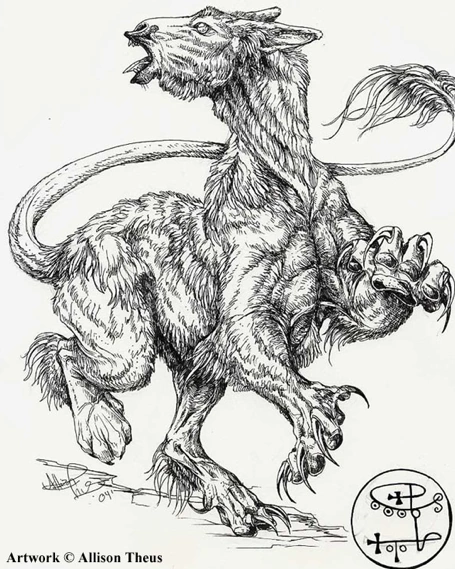
Valefor (Valefar, Malaphar)
Valefor
Spirit No. 6 · Duke · 10 Legions
Valefor’s danger is slow and relational, not immediate. He harms through familiarity, gradually leading those who work with him toward ruin.
Valefor represents a third category of Duke danger that is entirely distinct from Flauros’s deception or Focalor’s direct lethality: the slow corruption through relationship. The grimoire describes him as speaking temptingly to practitioners, making thieves comfortable with and well-disposed toward each other — and ultimately leading them to the gallows. This is not metaphor in the medieval sense; it describes a process of normalization toward harmful behavior that escalates over time.
He commands only 10 legions — far fewer than Flauros (36) or Focalor (30) — which might suggest lower threat. But his mode of operation does not require force. He operates through gradual erosion of judgment and the warming of relationships that begin to feel benign or even helpful. The lion-and-donkey composite in his appearance has been read as encoding strength paired with foolishness: the practitioner’s strength being gradually converted into the donkey’s compliant submission.
Valefor is particularly relevant for those who approach the Goetia seeking a “familiar” relationship with a spirit rather than a strictly constrained evocation. His entire operational description is built around exactly that dynamic — and his documented outcome for practitioners who pursue it is destruction.
Documented Failure Modes
- Developing ongoing or “familiar” relationships with Valefor rather than strictly bounded evocations
- Interpreting his tempting speech as a sign of positive rapport rather than the mechanism of harm
- Underestimating risk based on his small legion count — his danger is qualitative, not quantitative
- Using him in workings involving material gain or the transfer of possessions — his domain makes contamination of intent almost certain
Zepar
Zepar
Spirit No. 16 · Duke · 26 Legions
Zepar’s workings harm third parties by design — and carry a documented built-in cost even when they “succeed.”
Zepar is dangerous in a way that is unlike any other Duke on this list: his power operates by compelling third parties rather than affecting the practitioner directly. The grimoire describes him as making women love men and bringing them together — language that in context describes overriding of autonomous will. The built-in consequence described in the original text is barrenness: those brought together through Zepar’s influence are described as becoming barren.
This is a structurally embedded cost, not a side effect of imperfect ritual. The outcome is described as part of what Zepar does, not what happens when something goes wrong. Any practitioner invoking him for love or desire workings is therefore invoking a spirit whose successful operation includes harmful consequences for the people involved — and for those compelled, has removed their capacity for choice.
The tradition around Zepar is also notable for consistently placing his image in red — red soldier, red armor — iconography shared with Berith, suggesting a tradition-level association between desire, coercion, and the color encoding of blood and ambition in the grimoire’s visual system.
Documented Failure Modes
- Treating “success” as a clean outcome — the tradition explicitly attaches barrenness as a consequence of successful Zepar workings
- Invoking him on behalf of third parties without their knowledge — the compulsion mechanism is built into his function
- Using Zepar workings repeatedly — the cumulative consequences described in the tradition compound rather than normalize
Side-by-Side Risk Table
| Duke | No. | Primary Danger | Failure Mode | Risk Level |
|---|---|---|---|---|
| Flauros | 64 | Lies by default; deception is his baseline state without triangle constraint | Omitting the triangle | Extreme |
| Focalor | 41 | Killing and drowning are primary functions; benign behavior requires active override | No clear directive given | Extreme |
| Vepar | 42 | Bidirectional wound power — ambiguity between inflicting and healing | Unclear intent in working | High |
| Berith | 28 | Uniform liar; attractive gains that corrupt over time | Trusting prophetic answers | High |
| Aim | 23 | Active fire destruction paired with disarming appearance | Attracted by knowledge gifts; ignoring fire domain | High |
| Valefor | 6 | Slow relational corruption leading to ruin; tempting speech | Ongoing “familiar” relationship | Severe |
| Zepar | 16 | Compels third parties; barrenness is a built-in “success” cost | Treating success as clean outcome | High |
The Practitioner’s Decision Framework
When to Proceed vs. When to Stop — The Duke Risk Filter
Proceed if:
- You have studied the specific spirit’s original grimoire entry in full, not summaries
- Your ritual space includes the specific constraints named in the text (triangles, rings, seals)
- You have a clear, bounded objective that matches the spirit’s actual domain
- You have a tested dismissal protocol before invocation begins
- Your working affects only consenting participants
Stop if:
- Your knowledge of the entity comes primarily from secondary sources or popular demonology
- You are improvising constraints or adapting protocols from other entities
- Your objective is vague or emotionally driven rather than precisely defined
- Any part of the working involves third parties who are unaware of or not participating in the ritual
- You are drawn to the entity precisely because of the risk — that motivation is itself a warning
The Constraint That The Grimoire Repeats Most Often
The Ars Goetia does not describe risk as a matter of experience level. It describes risk as a matter of protocol. The same novice who follows every constraint in the text is in a structurally safer position than the veteran who abbreviates them. The dangerous assumption is not inexperience — it is familiarity.
FAQ
Are Duke-ranked demons more dangerous than Goetic Kings?
Not categorically — but the risk structure is different. Kings in the Ars Goetia tend to carry sweeping authority that makes them difficult to work with for narrow purposes. Several Dukes carry more targeted lethality specifically toward the practitioner. Flauros, Focalor, and Valefor all have more explicit practitioner-harm warnings than many of the Kings. Rank correlates with infernal command authority, not with human safety in evocation.
Why does the grimoire describe some Dukes as dangerous while others seem benign?
The Ars Goetia is a practical manual, not a moral document. Dukes like Gusion (40 legions, grants honor, answers questions) or Dantalion (36 legions, reveals thoughts, changes shapes) are described without harm warnings because their operational mode does not have the same practitioner-risk profile. The dangerous ones are specifically those whose default behavior harms the summoner, whose powers have no neutral state, or whose method of corruption operates through the ritual relationship itself.
What makes the triangle constraint for Flauros so critical?
In Solomonic tradition, the triangle placed outside the magic circle is where the spirit is confined during evocation — separate from the protected space the practitioner occupies. For Flauros specifically, the original text makes the triangle not a best practice but the mechanism that switches his behavior from deceptive to truthful. It is one of the few instances in the Ars Goetia where a specific tool directly determines which version of the entity you are engaging with.
Can the dangerous Dukes on this list be safely worked with by experienced practitioners?
The source tradition does not frame this as a question of experience — it frames it as a question of protocol. The original Lemegeton contains detailed protective requirements (circles, triangles, seals, divine names, specific invocations) precisely because even the tradition’s most experienced practitioners used them. The assumption that experience substitutes for protocol is not supported by the grimoire. That said, many practitioners across centuries have engaged with these entities using full protocol without documented harm — the key word being “full.”
Final Thoughts
The uncomfortable truth about the dangerous Dukes is this: the very qualities that make them appealing are the qualities that make them dangerous. Flauros knows everything past and future — which is exactly why practitioners skip the triangle and rely on his answers. Focalor governs wind and sea with absolute authority — which is precisely why engaging him without a clear directive is so catastrophic. Valefor makes his relationships feel good — which is how he leads practitioners to ruin.
The Ars Goetia is not a document that hides its warnings. It states them directly, in the original entries, in language that has survived translation for four centuries. The question is not whether the risks are documented — they are, in the original Latin and in every major translation from Mathers to the Project Gutenberg edition. The question is whether the practitioner reads the entry for the entity they plan to work with, or reads about that entity from someone who did.
There is no Duke on this list that the tradition describes as impossible to engage with. There are several it describes as dangerous to engage with without specific, irreplaceable conditions in place. That distinction is worth taking seriously — not because spirits are certainly real, but because the people who wrote these warnings were describing what they believed to be true based on lived experience. Discarding that record without reading it is the one protocol failure the grimoire cannot protect you from.
Primary Sources
- 1. Lemegeton Clavicula Salomonis (Lesser Key of Solomon) — Goetia section. Project Gutenberg edition. gutenberg.org
- 2. The Lesser Key of Solomon: Goetia: Shemhamphorash — Internet Sacred Text Archive, Mathers-Crowley translation. sacred-texts.com
- 3. Classified List of the 72 Spirits — Internet Sacred Text Archive (Copper/Duke entries). sacred-texts.com
Secondary Sources
- 4. Dukes of Hell — Grokipedia. Historical and structural analysis of the Duke rank in Solomonic tradition. grokipedia.com
- 5. de Plancy, J. Collin. Dictionnaire Infernal (1863). Standard reference for later demonological iconography.
- 6. Skinner, Stephen. The Goetia of Dr. Rudd. Analysis of Solomonic binding protocols and their historical variants.
Related Articles
Last updated: · Sources verified against Project Gutenberg and Sacred Texts Archive editions