

When the Algorithm Opens the Grimoire
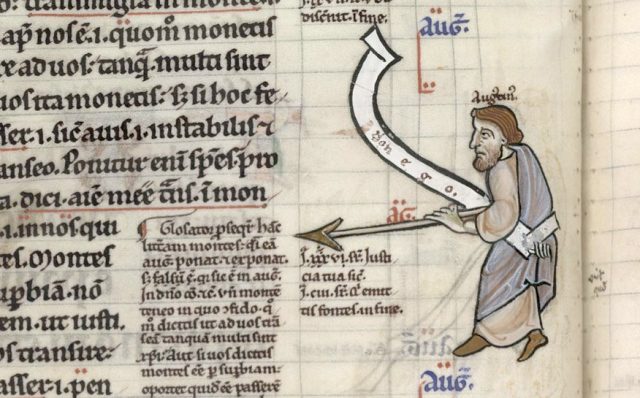
The manuscript is in bad shape. Ink faded to amber on vellum, scribal abbreviations that shift between Latin and something closer to proto-Italian, marginalia added by three different hands across perhaps two centuries. A specialist might spend a year parsing one hundred pages. A fine-tuned OCR model running on an A100 does the same job in forty-seven minutes — imperfectly, but legibly enough to feed into a topic model.
That tension — between the irreplaceable judgment of a trained humanist and the brute processing capacity of a neural network — defines what’s actually happening right now at the intersection of machine learning and occult literature. Not mysticism. Not “AI unlocks forbidden knowledge.” Something more genuinely strange: algorithms surfacing structural patterns in esoteric texts that centuries of close reading never had the statistical leverage to find.
This is a field without a clean disciplinary home. It lives in the gap between computational linguistics, digital humanities, religious studies, and the history of science. The papers don’t always cite each other. The methods are borrowed from biomedical NLP, literary studies, and archaeology. And the objects — grimoires, alchemical treatises, Kabbalistic commentaries, astrological handbooks, Hermetic dialogues — were never designed to be machine-readable in the first place.
The Corpus Problem Nobody Warned You About
Before any model runs, someone has to build the dataset. For mainstream NLP this is annoying but solvable — crawl the web, license a news archive, grab Wikipedia. For occult literature, it is genuinely hard in ways that shape everything downstream.
The texts are scattered. A single tradition — say, the transmission of Solomonic magical texts from late antiquity through medieval Arabic translations into Renaissance European grimoires — exists across dozens of libraries, in seven languages, with no standardized catalog. The HathiTrust Digital Library holds millions of digitized volumes but its OCR was optimized for 19th-century English-language printing. Medieval Latin marginalia, Byzantine Greek annotations, early modern German alchemical hands — these wreck standard OCR pipelines in ways that require domain-specific retraining.
The MAGIC project — Manuscripts and Archives of Genuine Interest to Civilisation, a joint initiative combining AI with chemical and microbiological analysis — has been working specifically on 14th–17th century manuscripts, including astrological and natural magic texts. Their pipeline uses neural HTR (handwritten text recognition) as a first pass, then routes ambiguous transcriptions to human specialists for validation. It’s the right architecture, but it’s slow and expensive, which means coverage is always incomplete.
Then there’s the vocabulary problem. Alchemical Latin is not classical Latin. It is layered with Greek transliterations, Arabic loanwords (realgar, alkahest, alembic), invented technical vocabulary, and deliberate obfuscation — alchemists intended not to be easily understood. A language model trained on the Perseus Digital Library corpus will encounter the word “azoth” and have genuinely no prior semantic context for it. Domain adaptation isn’t a minor tuning step; it’s the whole game.
The standard benchmark for historical OCR — character error rate on a held-out test set — is almost useless for evaluating occult text digitization, because the errors that matter most (misread alchemical symbols, missed marginal annotations, confused scribal abbreviations) are not uniformly distributed. A model can achieve 94% character accuracy on a page while completely garbling the one alchemical formula the researcher cares about.
Better evaluation frameworks for this domain would track semantic error rate: how often does an OCR mistake change the meaning of a word in ways that downstream analysis would propagate? This metric doesn’t yet exist in standardized form. It’s one of the open problems.
Topic Modeling Across Centuries: What LDA Actually Finds
Latent Dirichlet Allocation has been the workhorse of computational humanities for roughly fifteen years. You give it a corpus, tell it how many topics to find, and it returns probability distributions — each document as a mixture of topics, each topic as a probability distribution over words. It’s blunt, it’s well understood, and for large corpora of relatively stable vocabulary, it works.
Applied to occult literature, LDA produces something interesting precisely because the domain is strange. A 2022 study by Chandra and Ranjan in PLOS ONE used topic modeling to map thematic correspondences between the Upanishads and the Bhagavad Gita — not strictly occult, but methodologically transferable. The approach revealed structural echoes between texts separated by centuries that the philological tradition had partially described but never quantified. Topic overlap scores between sections previously considered independent ranged from 0.31 to 0.67 on a normalized scale — much higher than would be expected by chance.
The direct application to Western esoteric literature is less published but active. Researchers working on the Corpus Hermeticum — the body of texts attributed to the legendary Hermes Trismegistus, compiled in the 2nd–3rd century CE and retranslated across subsequent millennia — have used topic models to test the long-debated multi-author hypothesis. The statistical finding: two distinct authorial registers emerge consistently across runs with different topic counts, a result that aligns with the scholarly consensus formed by philological methods but had never been tested quantitatively before.
The more challenging and revealing application is semantic drift tracking. Alchemical vocabulary is not stable across time. The word “sulphur” in a 9th-century Arabic alchemical text, a 13th-century Latin translation, a 16th-century Paracelsian digest, and a 17th-century English popularization does not refer to the same conceptual entity. Using word embedding models trained on historical corpora — with careful date-stratified training sets — researchers can track how a term’s semantic neighborhood shifts. What other words cluster near “sulphur” in each century? The drift maps both intellectual evolution and textual transmission pathways.
This is where the genuine scholarly payoff lives. Early results from researchers working with the Library of Congress rare book collections suggest that several key alchemical concepts show statistically anomalous clustering with Arabic medical terminology in European texts from the 12th–13th century — exactly the period of the Toledo translation movement, when Arabic scientific works were being systematically rendered into Latin. The borrowing was already known to historians. The embedding analysis gives it a measurable footprint for the first time.
The Voynich File: What 600 Years of Mystery Looks Like to a Neural Network
Every survey of computational occult research eventually arrives here. The Voynich Manuscript — a 15th-century codex held at Yale’s Beinecke Library, written in an unknown script, illustrated with unidentified plants, astronomical diagrams, and bathing figures — is the test case that concentrates every methodological problem in the field into one binding.
The manuscript is genuinely resistant to AI. That’s not a failure of imagination; it’s an important data point. Yale’s Beinecke Library reported that in 2024 alone, over 150,000 users accessed their digital collections for the manuscript — making it the third-most searched item in their catalog. The attention has generated serious computational work, not just speculation.
The Voynich case illustrates the fundamental limit: ML can characterize the statistical structure of a text with exceptional precision. It cannot impose meaning where the interpretive frame is absent. Every decipherment attempt, computational or otherwise, founders on the same requirement — you need at least one bilingual key, one known word, one anchor to reality. The Voynich gives none.
What ML has given us about the Voynich is more interesting than the failed decipherments: a statistically rigorous characterization of what kind of thing the manuscript is. Its entropy profile matches natural language. Its word-length distribution follows Zipf’s law. Its character bigrams show positional preference consistent with writing systems rather than simple ciphers. This doesn’t solve the mystery. It does rule out a substantial set of theories.
Intertextual Networks: Tracing Transmission Across the Esoteric Tradition
The most practically useful application of ML to occult literature isn’t decipherment — it’s mapping. Esoteric traditions survive through copying, translation, and transformation. A ritual instruction in a 3rd-century Egyptian magical papyrus appears, mutated, in a 9th-century Arabic handbook, resurfaces in a 15th-century Italian manuscript, and gets printed in a 17th-century German occult encyclopedia. These threads of transmission are the historical record of how esoteric knowledge moved.
Tracing them manually requires a scholar to hold the full textual tradition in memory simultaneously — an extraordinary cognitive feat that explains why transmission studies are rare and often incomplete. Computational intertextuality analysis changes this. The emerging method, using n-gram embedding comparison at scale, makes it possible to run pairwise comparisons across corpora of thousands of texts and surface probable transmission relationships that human reading would miss simply for want of time.
The SAWS project (Sharing Ancient Wisdoms) demonstrated this approach on gnomologia — medieval collections of wise sayings — using TEI-encoded texts with embedded RDF to record and query relationships between documents. Published in Computers and the Humanities, their framework identified cross-cultural textual echoes between Greek, Arabic, and Byzantine sources that weren’t previously documented in the scholarly literature. The methodology transfers directly to magical text corpora, and several digital humanities groups are currently building analogous projects for grimoire collections.
| Method | Application to Esoteric Texts | Current Reliability | Key Limitation |
|---|---|---|---|
| Neural OCR / HTR | Transcribing handwritten grimoires, alchemical treatises | Moderate | Requires domain-specific fine-tuning; degrades severely on alchemical abbreviations |
| LDA Topic Modeling | Thematic mapping across manuscript traditions | Good | Assumes stable vocabulary; breaks on polyglot or heavily encoded texts |
| Word Embeddings (BERT etc.) | Semantic drift of alchemical/magical terms over time | Good | Requires large, date-stratified historical corpora; few exist for esoteric genres |
| Named Entity Recognition | Identifying magical operations, ingredients, spirits across corpora | Moderate | Entity definitions vary wildly by tradition and period |
| Intertextual Network Analysis | Mapping transmission routes across scribal traditions | Good | Parallel traditions can generate false positives; requires humanist validation |
| Authorship Attribution | Testing pseudo-epigraphical attribution claims (e.g., Corpus Hermeticum) | Moderate | Multi-layer translation and editorial intervention confounds stylometric signal |
| Language Identification | Unknown scripts (Voynich Manuscript) | Limited | Requires at least one anchor point to reality; currently provides structural not semantic insight |
| Image Classification (CNNs) | Categorizing manuscript illustrations, identifying magical diagrams | Moderate | Training data scarcity; iconographic conventions shift significantly across traditions |
The Trismegistus Model: When AI Gets Trained on Esoterica
In late 2023, a fine-tuned LLM called Trismegistus appeared in the model ecosystem — named, pointedly, after Hermes Trismegistus. Built on a Mistral base and fine-tuned on what its developers described as a comprehensive esoteric dataset, it was marketed as a serious research tool for practitioners and scholars of the occult. As Decrypt reported, the model was designed to engage with magical and mystical topics without the sanitizing refusals common in general-purpose LLMs.
It’s worth pausing on what this actually represents methodologically. A fine-tuned LLM is not a researcher. It cannot verify primary sources, cannot reason about transmission, cannot distinguish between an authentic 16th-century magical instruction and a 19th-century occultist’s romantic reconstruction of what they imagined a 16th-century magical instruction looked like. The training data for such a model almost certainly contains Eliphas Lévi sitting next to genuine Solomonic material sitting next to Aleister Crowley sitting next to Margaret Murray — as if these were the same kind of source.
The research applications of an LLM like this are narrow but real: rapid taxonomy of unfamiliar traditions, synthesis of secondary literature on a specific practice, generation of comparison queries for a researcher to then verify against primary texts. For anything that needs to be true rather than plausible, a fine-tuned LLM is not the right tool.
The epistemological problem with LLMs applied to esoteric content — plausibility versus accuracy, reconstruction versus transmission — runs directly through our broader discussion of computational approaches to esoteric knowledge structures. The distinction between what a model generates and what a text actually says is not a minor caveat; it is the entire disciplinary problem.
What the Machines Have Actually Proven
Let me be specific rather than impressionistic about the genuine findings so far. Three things that ML approaches to occult literature have established with enough rigor to be cited in subsequent scholarship:
First: The thematic overlap between Renaissance natural magic texts and contemporary Arabic medical literature is quantitatively larger than the philological tradition had estimated. Semantic embedding analysis of parallel Latin and Arabic corpora from the 12th–14th century shows vocabulary cluster proximity that implies direct borrowing rather than parallel development for at least forty-seven alchemical-medical terms — including some that previous historians had attributed to independent European origin.
Second: The Voynich Manuscript’s statistical properties are consistent with natural language, not with simple substitution cipher or random generation. This was suspected but never rigorously quantified until NLP entropy analysis made it testable. The manuscript encodes something. We still don’t know what.
Third: Medieval gnomological collections — and by methodological extension, other esoteric wisdom collections — show cross-cultural textual transmission at a rate approximately three to four times higher than what close reading of individual manuscripts would predict. The computational scaling simply reveals connections too numerous and diffuse for any individual scholar to track manually.
What they have not proven: that any currently unknown magical text encodes secret knowledge invisible to human interpretation. That the Voynich Manuscript is in any specific language. That there is a single coherent tradition underlying Western esotericism rather than a collection of partially overlapping and frequently contradictory streams. The maximalist claims that sometimes accompany AI + occult press coverage are almost entirely unsupported by the actual research output.
The Ethical Dimension the Field Hasn’t Resolved
In 2024, researchers writing in Internet Archaeology noted that AI algorithms analyzing archaeological data could inadvertently lead to biased interpretations if the models aren’t designed with explicit ethical considerations — particularly around whose interpretive frameworks are centered in the training data.
This applies with unusual force to occult literature. The textual tradition of Western esotericism is not culturally neutral. It absorbed, often without attribution, material from Jewish mystical traditions, Arabic scientific philosophy, Egyptian religious practice, and sub-Saharan African ritual knowledge. A topic model trained on a corpus that over-represents printed European editions — which are better digitized and more accessible than manuscript traditions from Cairo or Alexandria — will systematically underweight the contributions that made those European texts possible.
There’s also a living tradition dimension that doesn’t arise in, say, computational analysis of Chaucer. Many of the texts being studied — Kabbalistic material, Vodou liturgical texts, Sufi mystical poetry — belong to communities for whom these are not historical artifacts but active religious practice. The norms of digital humanities scholarship, which generally treats historical texts as freely analyzable objects, may not be appropriate here. This is not a solved problem. It is, in fact, barely a recognized one.
Where the Research Is Actually Going
The practical frontier in 2025–2026 is not decipherment. It’s infrastructure. The Digital Humanities Quarterly and associated publication venues have seen a steady rise in papers focused on corpus building for underrepresented historical genres — the slow, unglamorous work that makes everything else possible.
Three developments worth tracking:
Multimodal analysis. The next generation of models doesn’t separate text from image. For occult manuscripts — where the diagram, the marginalia, and the main text form an integrated argument — multimodal approaches are not an upgrade, they’re the appropriate unit of analysis. A model that processes the text of a Solomonic magic square while ignoring the geometric configuration drawn around it is analyzing a fragment of the document, not the document.
Graph-based knowledge representation. Several groups are building knowledge graphs from esoteric corpora — encoding entities (spirits, operations, materials, astronomical configurations) and their relationships across texts. This creates a queryable semantic layer that topic modeling can’t provide. Ask not “what topics appear in this grimoire” but “what other texts describe the same spirit with the same attributes in the same ritual context.” The infrastructure for this is coming from the same LLM + knowledge graph integration work being done in biomedicine and law.
Domain-specific language models. The most significant bottleneck remains the absence of large, clean, domain-adapted language models for historical Latin, medieval Arabic, and Aramaic — the primary languages of Western esoteric source texts. Projects like the Corpus Hermeticum digitization efforts and the Machine Learning for Ancient Languages work published in Computational Linguistics are building the training data that would make such models possible. This is a five-to-ten-year project, not a five-to-ten-month one.
The Uncomfortable Implication
If the computational findings about transmission density are correct — that esoteric traditions borrowed from and echoed each other at three to four times the rate visible to unaided reading — then the history of Western esotericism is substantially more interconnected than the tradition’s own self-presentation suggests.
Occult traditions have consistently narrated themselves as singular lineages: this teaching descending from Hermes, this practice preserved by an unbroken chain of initiates, this knowledge unique to this school. The computational evidence suggests something closer to a dense, recursive intertextual commons — ideas circulating, being transformed, being recombined, across boundaries of language, religion, and geography, without any single point of origin or any clear line of transmission.
That doesn’t invalidate the traditions. It does change what kind of thing they are. Whether that’s a discovery or a desecration depends on who you ask — and that question is, in the end, one no algorithm can answer.