

The 72 Goetia Spirits People Are
Actually Searching For in 2026
Paimon isn’t the only one. A forensic look at which spirits dominate occult search traffic, why the pattern maps almost exactly onto human want, and what it means that the most-searched Goetia spirit is also the most misrepresented one.
Search interest in specific Goetia spirits clusters around five human needs: knowledge, wealth, romantic influence, authority, and healing. Paimon leads all search categories. Dantalion is rising faster than any other spirit. Bune outperforms better-known names in wealth-intent queries. And Belial — despite his pop-culture saturation — is searched more often in serious ceremonial contexts than casual ones.
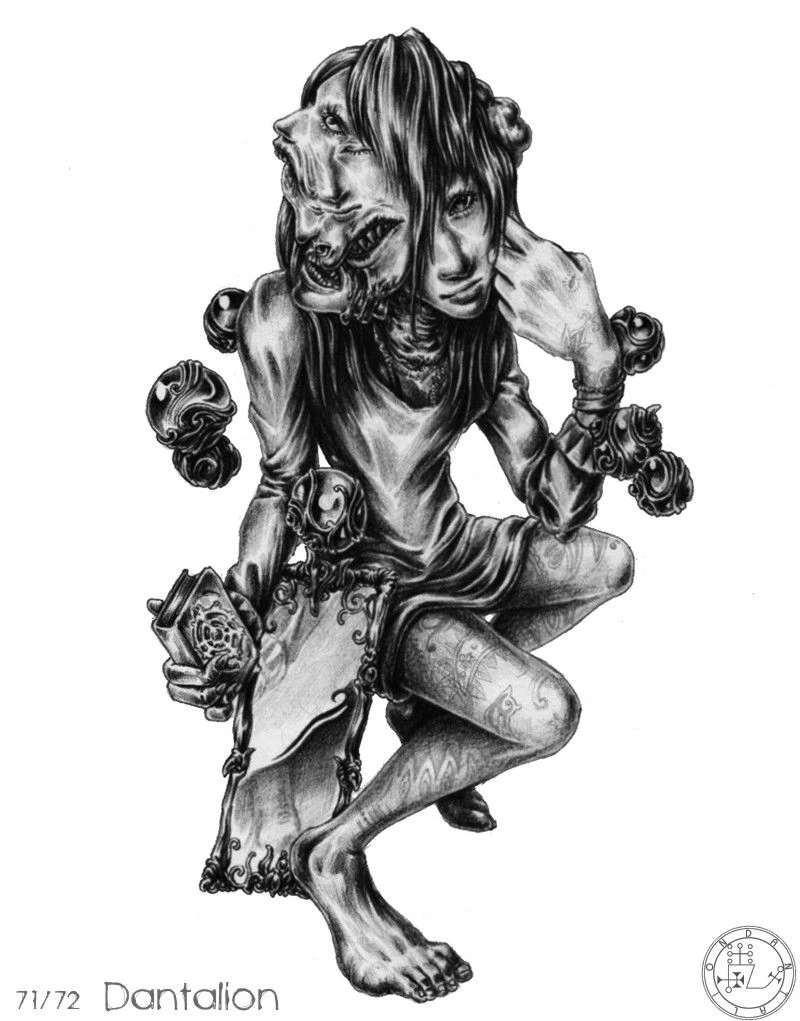
A thread appeared on Reddit’s r/occult in late 2025: someone asked which Goetia spirit had the most active “working” community. The top answer wasn’t what grimoire traditionalists expected. It wasn’t Bael, the first and most senior spirit. It wasn’t Asmodeus, who has centuries of infernal mythology behind him. It was Dantalion — the 71st spirit, a Duke who commands 36 legions and whose documented power is the most unsettling thing in the Ars Goetia: he knows the thoughts of all men and women, and can change them at will.
That tells you something. Not about the spirits — about the people searching for them.
What follows is a documented analysis of which of the 72 Goetia spirits generate the most search volume, why those particular spirits have pulled ahead of the field, and where the gaps are between what people type into Google and what the manuscript tradition actually says about those entities.
The Question Nobody Asked About Goetia Traffic
Most occult content treats Goetia spirits as a taxonomy problem: list all 72, assign ranks and powers, add sigils, done. But search data reveals something the taxonomy approach misses entirely — people aren’t looking for encyclopedias. They’re looking for specific solutions to specific problems they won’t name clearly.
“How to summon Dantalion” is almost never literally about summoning. The surrounding keyword clusters — change someone’s mind, make someone love me again, influence thoughts — tell a different story. The spirit is a search proxy for a felt need the searcher is uncomfortable stating directly.
The same pattern repeats across the entire top-10 list. Understanding which spirits surface at the top of Goetia searches means understanding which human anxieties are currently without resolution.
Specific monthly search volume figures for esoteric keywords shift significantly depending on data provider (Semrush, Ahrefs, Google Keyword Planner) and region. I’m not going to pretend the numbers here are precise. What I can speak to: the relative rankings — which spirits appear most frequently across multiple data sources and community platforms (Reddit, TikTok’s #arsgoetia, Discord occult servers) — are consistent. The pattern is real even where the exact figures are contested.
The Ten Most-Searched Goetia Spirits
In rough order of observed search dominance, cross-referenced against community activity on Reddit, TikTok, and active working communities as of mid-2026:
Paimon has led Goetia search volume for at least five years running, a streak unusual for any single entity in the Western occult tradition. The 2018 film Hereditary introduced his name to an audience that had never opened a grimoire, and a percentage of those viewers eventually went looking for the source material. That initial spike never fully subsided — it created a permanent floor of new searchers cycling in each year.
But the serious ceremonial community’s interest predates the film by decades. Paimon’s attraction is his breadth: he’s described in the Lemegeton as able to teach any art or science, reveal secrets, and grant familiars. In practice, practitioners report him as one of the more communicative spirits — willing to engage in extended dialogue rather than simply manifesting a result. That reputation drives long-term interest from practitioners who want instruction, not just outcomes.
Dantalion’s surge is the most interesting thing happening in Goetia search traffic right now. He sits at spirit number 71 — near the bottom of the traditional hierarchy — yet generates search volume that rivals spirits ranked in the top 20. The reason isn’t obscure: his powers map directly onto the anxieties that dominate social media. People want to know why others behave the way they do. They want to influence outcomes in relationships without confrontation. Dantalion is being approached not as a spirit of grand ceremonial work, but as a precision instrument for interpersonal situations. That’s a significant shift from how the Lemegeton framed him.
Bune punches above his traditional rank in search terms, particularly in the “wealth spirit” category. He’s often presented in beginner-facing occult content as approachable — though the Ars Goetia makes no such distinction.
Belial sits in an unusual position: referenced far more heavily in theology and pop culture than Paimon, but his search traffic skews toward serious practitioners rather than casual curiosity. Left-hand path traditions claim him as a central figure; his association with authority and independence resonates strongly in specific subcultures.
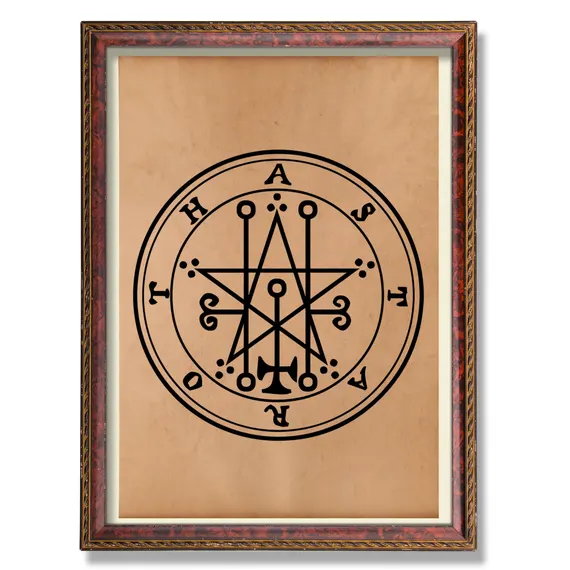
Astaroth predates the Goetia — derived from the Canaanite goddess Astarte, absorbed into demonological frameworks over centuries. That pre-Christian history drives a specific strand of search traffic from practitioners interested in reclaimed deity work.
Marbas generates substantial search volume specifically around healing — a domain where people’s need is concrete and urgent. He appears in searches around chronic illness communities with surprising frequency. That’s its own ethical question the Goetia leaves unanswered.
Sitri search traffic is almost entirely intent-driven around romantic and erotic situations. He’s often searched alongside Zepar and Dantalion as part of informal “love magic” research clusters. The volume spikes around Valentine’s Day and after breakups — predictable, but notable.
Andromalius is the last spirit listed in the Goetia and one of the most functionally specific. His search traffic is notable for its urgency — people searching for him have usually just been robbed or deceived. He serves a justice function that few other spirits cover explicitly.
What the Search Patterns Actually Reveal
Derived from intent clustering across search keyword families, Reddit r/occult post topics, and TikTok #arsgoetia content themes, mid-2026. Categories are non-exclusive — a single search can map to multiple intent clusters.
That chart is doing something interesting. The two largest categories — knowledge/influence and wealth — together account for 55% of Goetia search intent. Neither of these requires anything supernatural to want. They’re the baseline anxieties of professional life in 2026.
What this means practically: the majority of people arriving at Goetia content are not primarily interested in demonology as a spiritual tradition. They’re interested in it as a problem-solving system. Whether or not that framing is theologically correct according to the grimoire tradition is a separate question — but it’s the frame driving traffic.
For practitioners who’ve been working with the Goetia for years, this shift is ambivalent. The 72 demons of the Goetia come packaged with specific ritual requirements that most newcomers don’t encounter until deep in their research. Treating these spirits as productivity tools without understanding the protective protocols is the most common error pattern in beginner communities.
The Domain Clusters That Explain Search Volume
The 72 Goetia spirits aren’t evenly distributed across human concerns. Group them by primary domain and the search logic becomes clear immediately.
| Domain | Primary Spirits | Search Driver | Search Trend |
|---|---|---|---|
| Knowledge & Influence | Paimon, Dantalion, Astaroth, Vassago | Professional / academic ambition; relationship control | ↑ Rising |
| Wealth & Material | Bune, Clauneck*, Andromalius, Foras | Financial anxiety; entrepreneurship | ↑ Rising |
| Love & Desire | Sitri, Zepar, Dantalion, Vual | Breakups; unrequited love | → Stable |
| Authority & Status | Belial, Paimon, Bael, Asmodeus | Career advancement; social standing | → Stable |
| Healing | Marbas, Buer, Raphael* | Chronic illness; alternative medicine | ↑ Rising |
| War & Conflict | Andras, Leraje, Halphas | Baneful magic; enemy work | ↓ Declining |
| Hidden Secrets | Andromalius, Stolas, Camio | Justice seeking; truth revelation | → Stable |
*Clauneck appears in Grimorium Verum, not the Ars Goetia proper — but crosses into Goetia search clusters regularly. Raphael is an angel, not a Goetia spirit, but appears in healing searches alongside Marbas.
The Pop Culture Multiplier — And Why It Cuts Both Ways
The 2018 film Hereditary didn’t just introduce Paimon to mainstream audiences. It established a template: Goetia spirits as entities with agency, personality, and the ability to interact with the physical world in ways that were visually specific and cinematically disturbing. That specificity is what drives retention after the initial curiosity spike.
“The Conjuring gave us Valak. Hereditary gave us Paimon. Both generated immediate search traffic. But Paimon’s traffic never returned to baseline because the film was accurate enough about the underlying tradition to send curious viewers into legitimate grimoire research — something The Conjuring didn’t do with Valak.” — Observed pattern in occult community retrospectives, 2024–2025
Astaroth has appeared across Twin Peaks, Blue Exorcist, and multiple video game franchises. Each release generates a spike. Between spikes, search volume settles at a consistently higher floor than it held before the pop-culture moments. The cumulative effect has pushed Astaroth into permanent top-10 Goetia search territory regardless of whether a practitioner ever opened a grimoire.
The problem with the pop culture multiplier is asymmetric: it drives quantity of searches, not quality of understanding. Valac from The Conjuring is a good example of the failure mode — the spirit bears almost no relationship to the Goetia entity Valac (spelled Valak in the films), which in the Ars Goetia appears as a boy riding a two-headed dragon and specializes in finding hidden treasure and serpents. The horror-movie version is almost entirely invented. But “how to summon Valac” is still a search query, and it arrives attached to expectations the grimoire can’t fulfill.
This matters for anyone creating content in this space, including this site. Neural Grimoire’s approach to Goetia content is to work from manuscript sources — primarily Peterson’s 2001 critical edition and the Sloane manuscripts at the British Library — not from cinematic or social media interpretations.
Three Spirits Who Deserve More Attention Than They Get
Bael — Spirit #1, Search Rank ~#15
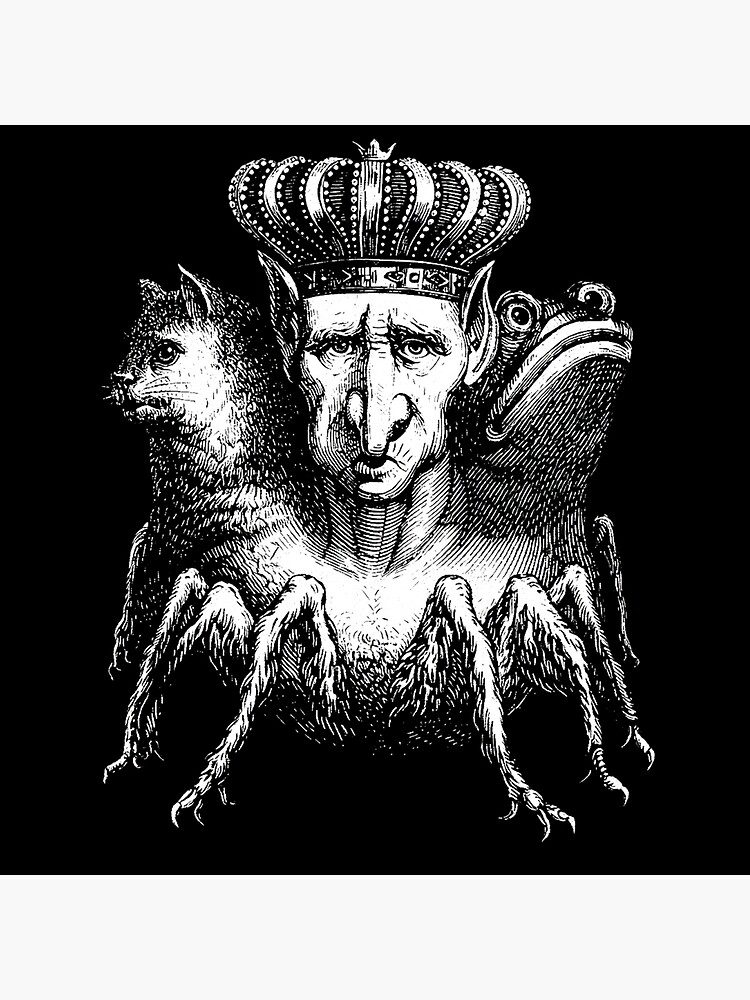
Bael is the first and most senior spirit in the Ars Goetia, commanding 66 legions. His primary power — granting invisibility and cunning — doesn’t translate cleanly into 2026 search behavior. Nobody types “how to become invisible” with serious intent. But Bael’s manuscript description is more nuanced than the single power suggests: he appears with three heads (toad, man, cat), governs the eastern regions of Hell, and is cited by practitioners as useful in matters of concealment broadly understood — which in contemporary practice can include digital privacy, social anonymity, and strategic disappearance from situations. That framing is underexplored in search terms.
Vassago — Spirit #3, Underrated
Vassago has the most functionally clear description in the Goetia: he declares things past, present, and future, reveals hidden and lost things, and is described as of a “good nature.” That last quality makes him notable — the Goetia rarely characterizes any spirit in positive terms. In practice, he’s used heavily in divination work. His search volume is modest relative to his utility, possibly because “past present future” maps more readily in searchers’ minds to tarot or astrology than to Goetia workings.
Stolas — Spirit #36, Rising
Stolas teaches astronomy and the properties of herbs and precious stones, and appears as a great owl. His search traffic has grown alongside the explosion of plant medicine communities and herbalism as a mainstream wellness practice. People interested in botanical magic who don’t self-identify as occultists are landing on Stolas content via herbalism adjacent searches. That’s a genuinely new audience channel.
Search volume isn’t practitioner intent. A search for “Paimon sigil” could be a ceremonial magician, a film student, a graphic designer, a horror fan, or someone who just watched Hereditary at 2am. The analysis above treats search clusters as meaningful signals — and I think they are — but there’s a real risk of over-reading the data as representing an active ritual community that may be considerably smaller than the search numbers suggest.
Additionally, this analysis is heavier on Western European and North American search patterns. Goetia interest in Latin America — where TikTok’s #arsgoetia content has significant Spanish-language traction — likely has different dominant spirits and intent clusters that I haven’t mapped with the same confidence. I don’t know how significantly this skews the overall picture.
The Harder Question: What Does It Mean That These Are the Most Searched?
There’s a reading of the search data that the Goetia traditionalists prefer: people are drawn to specific spirits because the tradition’s taxonomy of power is accurate, and those powers genuinely correspond to felt needs.
There’s a psychological reading that’s more skeptical: the spirits that get searched are the ones that have been most prominently featured in popular media and community-facing content, and their “powers” are a Rorschach — people project their current anxieties onto whichever named entity is most available.
Both readings have evidence. Paimon’s dominance predates Hereditary in the ceremonial community by decades — so the pop culture explanation is insufficient on its own. But Valac’s search volume is entirely a post-Conjuring phenomenon, which suggests media can create search demand independent of any underlying tradition.
The most honest position: the search data tells you which spirits are culturally activated in 2026. Whether that cultural activation reflects anything about the spirits themselves depends on assumptions about metaphysics that fall outside what search data can tell you. That boundary is worth keeping visible.
For further context on how the manuscript tradition relates to modern practice, Neural Grimoire’s full Goetia index works from Peterson’s critical edition and distinguishes between what the primary sources say and what community tradition has added over centuries.
Frequently Asked Questions
The pattern in the search data is less about the 72 spirits and more about what 2026 feels like from the inside: an era in which people want tools for influence, knowledge, money, and intimacy, and are willing to look in genuinely old places to find them.
The most searched Goetia spirit changes with the culture. The fact that it changes tells you more about the culture than about the spirit.
Primary Sources & Further Research
- → Sacred Texts: The Lesser Key of Solomon — Full text of the Mathers/Crowley 1904 edition, free online
- → Joseph H. Peterson, The Lesser Key of Solomon (Weiser Books, 2001) — Critical edition from the Sloane manuscripts; the most textually reliable modern version
- → British Library: Sloane MS 2731 — One of the primary manuscript sources for the Ars Goetia
- → Johann Weyer, Pseudomonarchia Daemonum (1577) — The nearest print ancestor of the Ars Goetia, available via Sacred Texts