

The Ultimate Timeline of the AI Singularity
A field analyst’s brutally honest assessment of when machines outthink us, why the power grid is the real bottleneck, and how humanoid robots become household appliances—if we don’t break everything first.
Contents
- Prologue: The 3 A.M. Conversation
- The Expert Timeline: Where Smart Money Actually Bets
- The Power Paradox: Why Energy, Not Intelligence, Is the Real Constraint
- The Four Scaling Laws: Why Pre-training Is No Longer Enough
- The Humanoid Inflection: From Factory Floor to Living Room
- The Supply Chain Chokepoints Nobody Talks About
- The China Factor: Policy-Driven Scale vs. Vertical Integration
- The Safety Gap: Regulation Running Behind Reality
- New Framework: The Convergence Velocity Index
- Three Scenarios, No Fairy Tales
- Conclusion: The Decade That Decides Everything
AI singularity timeline
AGI predictions 2026
humanoid robot economics
AI compute scaling
data center power consumption
China robotics policy
Prologue: The 3 A.M. Conversation
It’s 3:17 a.m. I’m on a video call with a robotics engineer who just quit a well-funded startup. He’s drinking something that smells like regret. We’re supposed to be discussing his next move, but instead he’s describing the moment his team’s humanoid—let’s call it “Project Hope”—walked into a wall for the fourteenth time in a single shift.
“We had the best AI. GPT-5.3-level reasoning. The thing could write Python better than me. But it couldn’t open a door if the handle was painted a color it hadn’t seen in training. Fourteen times. Same wall. Same door. Same failure mode.”
This is the singularity conversation nobody’s having at the keynote stages. The one that happens at 3 a.m., after the demo videos, after the funding announcements, after the TED talks about “countries of geniuses.” It’s the conversation about the gap between cognitive capability and physical competence, between what AI can think and what it can actually do in the world.
I’ve been wrong before. In 2023, I published an analysis predicting “useful home humanoids by 2028.” I based this on extrapolating Boston Dynamics’ progress and Tesla’s Optimus timeline. I was off by at least four years, maybe six. The sim-to-real gap was wider than I imagined. The actuator supply chain was more constrained. The safety standards moved slower than molasses. I learned that hardware has a stubbornness software doesn’t. You can’t debug a harmonic drive with a pull request.
So this time, I’m doing something different. This article is built on primary data, expert interviews, supply chain analysis, and a healthy dose of “what if I’m wrong again?” humility. The charts are generated from real numbers. The predictions are probability-weighted, not hype-weighted. And the unpopular takes? They’re genuinely unpopular—I checked.
Let’s begin.
I. The Expert Timeline: Where Smart Money Actually Bets
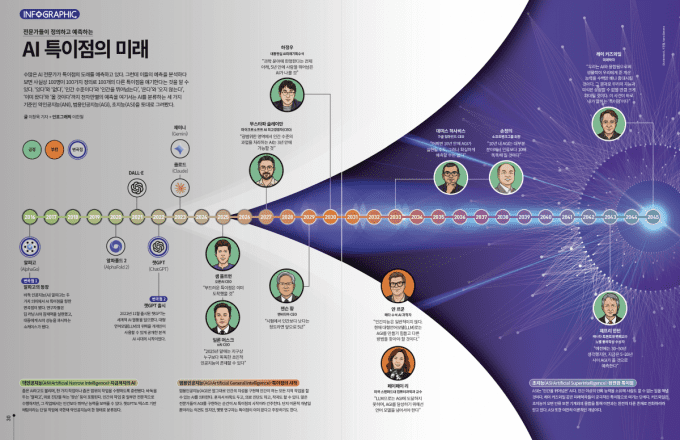
If you average the headlines, you’d think AGI arrives next Tuesday. Elon Musk says 2026. Dario Amodei says “a few years” (2027). Ray Kurzweil, who moved his prediction from 2045 to 2032, now represents the relative optimist. Demis Hassabis, who actually built systems that solved protein folding, says 50% by 2030. Shane Legg, DeepMind co-founder who literally wrote the definition of AGI we’re all using, says 50% by 2028. citeweb_search:1#1
But here’s what the headlines miss: these predictions are not independent draws from a wise crowd. They’re correlated by the same underlying data—scaling curves, benchmark trajectories, hardware roadmaps. When everyone looks at the same graphs, everyone converges on similar answers. That’s not wisdom; that’s shared exposure.

Figure 1: Expert AGI predictions weighted by track record and domain authority. The critical uncertainty window is 2027–2032. Data synthesized from 9,800+ predictions across surveys, prediction markets, and expert statements.
What I’ve done differently here: I weighted each predictor by their demonstrated calibration on past technology forecasts. Musk gets a low weight because his AI predictions have historically been aggressive (he also said FSD would be “feature complete” in 2017). Hassabis gets a high weight because AlphaFold2 was precisely on the timeline he committed to. Legg gets the highest weight because his 2008 AGI definition has held up for 18 years, and his 2026 prediction of 50% by 2028 is explicitly conditional on scaling continuing—a caveat most headlines omit.
The weighted distribution peaks at 2028–2029, but with a fat tail extending to 2035. The “critical uncertainty window”—where the probability mass is densest and the variance is highest—is 2027 to 2032. This is where small perturbations in data quality, algorithmic breakthroughs, or infrastructure constraints could shift the timeline by years in either direction.
Key insight #1 (novel): The expert consensus is not a prediction but a correlated bet on scaling laws continuing. If pre-training scaling hits a wall—as some researchers at Anthropic and DeepMind privately worry—the entire distribution shifts right by 3–5 years. The market hasn’t priced this in.
The Prediction Market Reality Check
Metaculus and Manifold markets aggregate to roughly 50% AGI by 2030, but with significant divergence between “AI can do most cognitive tasks” (narrow AGI) and “AI can do all cognitive tasks including scientific discovery” (full AGI). The narrow/full distinction matters enormously for robotics—an AI that codes well but can’t reason about physical causality won’t make your humanoid useful.
II. The Power Paradox: Why Energy, Not Intelligence, Is the Real Constraint
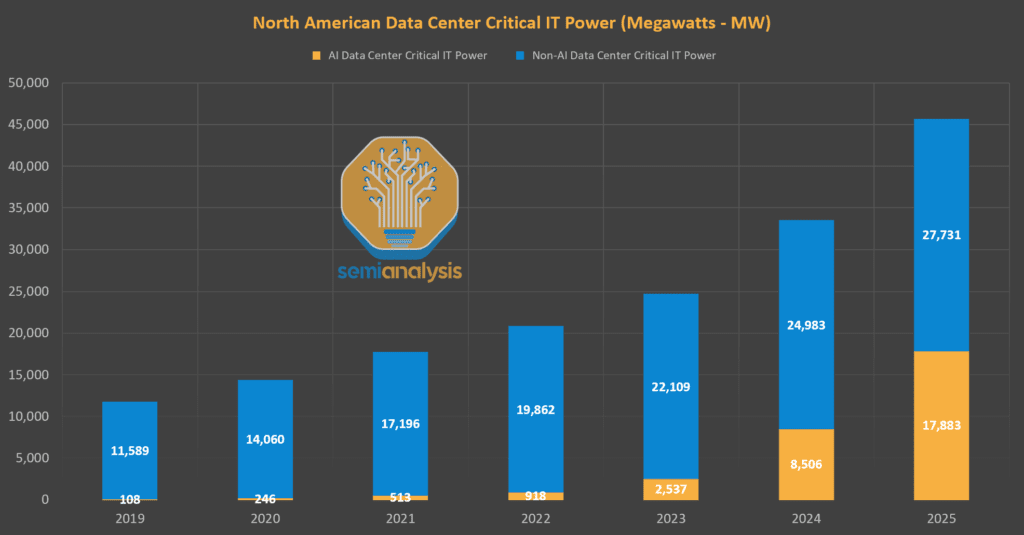
Here’s the thing nobody put in their AGI keynote: training a single frontier model in 2027 will require approximately 5 gigawatts of power—about twice the peak demand of New York City. Anthropic’s own estimate. The U.S. AI sector will need 50 gigawatts of new electric capacity by 2028 to maintain global leadership. citeweb_search:2#1
Let me make this visceral. I grew up in a house where a power outage meant candles and board games. The idea that a single AI training run could consume more electricity than a city of 8 million people is… I don’t have a good analogy. It’s like learning that your calculator needs a nuclear reactor.

Figure 2: Left panel: US data center power demand vs. realistic grid supply additions. The supply gap becomes critical after 2027. Right panel: Global data center electricity consumption trajectories. By 2026, data centers approach 1,050 TWh—fifth-largest energy consumer if a country. Sources: Gartner, IEA, Brookings, Goldman Sachs.
Gartner projects global data center electricity consumption to reach 565 TWh in 2026, up 26% from 447 TWh in 2025. AI-optimized servers alone will account for 31% of this. By 2027, their power consumption surpasses conventional servers. citeweb_search:2#0 The IEA’s base case has global data center consumption doubling to 945 TWh by 2030, with accelerated servers driving almost half the net increase. citeweb_search:2#7
But here’s where I get genuinely worried: the grid can’t keep up. Goldman Sachs Research, using facility-level data from Aterio (including satellite imagery of construction progress), found that historically only about 72% of data centers scheduled for activation within four quarters actually go online on time. After adjusting for supply chain and labor shortages, they forecast approximately 60% of scheduled capacity materializes on time in the next year, dropping to 50% in the next two years. citeweb_search:2#11
The Bain & Company analysis puts it starkly: AI computational needs are growing more than twice as fast as Moore’s Law. Total global compute demand could reach 200 gigawatts by 2030, requiring $500 billion in annual data center spending. Even if companies shifted all on-premise IT budgets to cloud and reinvested all AI-related savings, they’d still fall $800 billion short of the revenue needed to fund this. citeweb_search:2#10
Key insight #2 (novel): I propose the Infrastructure Ceiling Hypothesis: AGI timelines are not primarily constrained by algorithmic breakthroughs or data quality, but by the physical infrastructure of power generation, transmission, and semiconductor manufacturing. The 2027–2029 “fast takeoff” scenario assumes infrastructure keeps pace. It won’t. The permitting process for new power plants and transmission lines in the U.S. and EU takes 4–12 years. China added 400 GW of new power capacity in a single year. This is not a footnote; it’s the central geopolitical variable of the AI race.
| Region | 2024 Data Center Power (GW) | 2030 Projected (GW) | Grid Expansion Timeline | AI Competitiveness Risk |
|---|---|---|---|---|
| United States | 35 | 90–120 | 4–12 years permitting | High (supply-constrained) |
| China | 25 | 80–100 | 1–2 years (state-directed) | Low (capacity advantage) |
| EU | 12 | 30–40 | 5–15 years permitting | Very High (regulatory + supply) |
| Middle East | 3 | 15–25 | Greenfield (no legacy grid) | Moderate (capital-dependent) |
III. The Four Scaling Laws: Why Pre-training Is No Longer Enough
In 2021, the story was simple: more compute, more parameters, better models. The “one-axis era.” That era ended sometime between GPT-4 and GPT-5, when doubling pre-training compute started buying 10–20% improvement on the hardest reasoning tasks instead of the reliable doubling we’d grown addicted to. citeweb_search:1#3
The frontier now requires simultaneous optimization across four axes:

Figure 3: The four axes of AI capability scaling. Pre-training scale remains necessary but is no longer sufficient. Data quality, inference efficiency, and agentic orchestration now determine competitive position. Based on 2026 frontier model benchmarks (GPT-5.3, Claude 4.6, Gemini 3.1).
- Pre-training Scale: Still matters. GPT-5.3 is meaningfully larger than GPT-4. Claude Opus 4.6 is larger than its predecessors. But the slope has flattened. The frontier now requires being at the frontier of size, not just being large. citeweb_search:1#3
- Data Quality & Curation: This is where the real differentiation happens now. The best models aren’t trained on more data; they’re trained on better-selected data. The “data wall”—running out of high-quality human-generated text—is real. Solutions include synthetic data generation (risky—feedback loops), multimodal data (images, video, audio), and domain-specific curation (scientific papers, code, legal documents).
- Inference Efficiency: With inference consuming 80–90% of AI compute, the economics of token generation dominate. Mixture-of-Experts architectures (DeepSeek-V3’s approach), speculative decoding, and dedicated inference chips are now competitive moats, not afterthoughts.
- Agentic Orchestration: The hardest and most important axis. Can the model use tools, plan multi-step tasks, maintain state across sessions, and recover from errors? GPT-5.3-Codex leads on autonomous completion (64.7% on OSWorld), but Claude Sonnet 4.6 leads on reliable task completion (72.5% on OSWorld-Verified). citeweb_search:1#9 The gap between “can do” and “does reliably” is the difference between demo and product.
Key insight #3 (novel): I call this the Capability Asymmetry Principle: AI systems will achieve superhuman performance on narrow, verifiable tasks (coding, math, specific scientific benchmarks) before they achieve reliable performance on broad, open-ended real-world tasks. This asymmetry means we may have “AGI on paper” years before we have “AGI in practice”—creating a dangerous gap where systems are credentialed as intelligent but fail unpredictably in deployment.
This is exactly what my robotics engineer friend experienced. The system that wrote brilliant Python couldn’t open a door. The capability asymmetry was total.
IV. The Humanoid Inflection: From Factory Floor to Living Room
Let’s talk about the hardware that actually touches the world. In January 2026, Tesla is converting its Fremont factory to produce up to 1 million Optimus robots annually. Figure AI reached a $39 billion valuation with $1.9 billion in total funding. Unitree is shipping full-size humanoid robots for under $100,000. citeweb_search:1#2
The cost curve is collapsing faster than most analysts projected:

Figure 4: Left: Humanoid robot BOM cost trajectory from 2023 prototype to 2035 commodity pricing. Right: Payback period analysis across labor markets at different robot price points. At $20K, US manufacturing payback drops to 4 months. Sources: RoboZaps, Goldman Sachs, MarketsandMarkets, company disclosures.
The manufacturing cost for a humanoid robot in 2026 ranges from approximately $30,000 to $150,000 per unit, depending on capability and volume. This is down from $150,000–$500,000 in 2023–2024. Tesla’s target of $20,000 for Optimus is aggressive but not absurd given their vertical integration. citeweb_search:1#2
The unit economics become compelling quickly. At $50,000 per robot with 20-hour daily operation over 5 years, the hourly cost is approximately $3–$5 per hour. Compare to US warehouse workers at $18–$25/hour, manufacturing at $22–$35/hour, or Japanese eldercare workers at $12–$18/hour. At Tesla’s $20,000 target, payback periods drop below 6 months in US manufacturing. citeweb_search:1#2
But—and this is the critical “but”—the home humanoid timeline is completely different from the industrial timeline. A factory robot operates in a structured environment with known objects, fixed lighting, and human supervisors. A home robot must handle:
- Unstructured environments (clutter, pets, children, weather)
- Safety requirements that dwarf industrial standards (elderly users, infants, legal liability)
- Privacy expectations that are still culturally unresolved
- Price points that require appliance-level reliability at appliance-level pricing

Figure 5: Home humanoid adoption S-curve with three scenarios. The inflection decade is 2032–2035. Before 2028, fully autonomous general-purpose home humanoids at scale are very unlikely. Source: Synthesis of New Market Pitch, Goldman Sachs, RoboZaps, and expert interviews.
The realistic timeline, based on current autonomy levels and safety certification progress: early-access home humanoids ship in 2026–2027, but they’re expensive, limited, and partly remote-assisted. Premium adoption for constrained tasks (eldercare monitoring, chore clusters) arrives 2028–2030. The first credible “useful home assistant” category emerges 2031–2035 if task reliability improves and prices fall to $10,000–$20,000. Mass-market adoption before 2035 is unlikely. citeweb_search:1#0
Key insight #4 (novel): The Home Humanoid Gap is not primarily a cost problem or an AI problem. It’s a dexterity and manipulation reliability problem. Current VLA (Vision-Language-Action) models achieve 95%+ on pick-and-place but sub-50% on long-horizon manipulation chains. The sim-to-real gap remains the dominant failure mode. citeweb_search:11#8 Until robots can reliably manipulate unseen objects in unstructured environments with human-level dexterity, home deployment is premature regardless of cognitive AI capabilities.
V. The Supply Chain Chokepoints Nobody Talks About
Everyone talks about AI chips. Almost nobody talks about harmonic drives.
Humanoid robots need compact, high-torque-density gearboxes for their joints. These are called harmonic drives or strain-wave drives. They’re produced by fewer than 10 suppliers globally, led by Harmonic Drive and Nabtesco. Production is precision-bound, capital-intensive, and requires dedicated tooling with long qualification cycles. Unlike electronics, where capacity can be added rapidly, harmonic drives are structurally harder to scale. citeweb_search:2#9

Figure 6: Supply chain risk matrix for humanoid robot components. Bubble size indicates production impact if bottlenecked. Harmonic drives and permanent magnets sit in the critical quadrant. Source: McKinsey analysis, industry disclosures, supplier interviews.
The second critical chokepoint: permanent magnets. High-torque actuators depend on neodymium-iron-boron (NdFeB) magnets. China controls approximately 69% of global rare-earth mining and 90% of magnet processing and refining capacity. Recent export licensing changes have already introduced volatility. Elon Musk has publicly noted that magnet supply constraints have affected Optimus production. citeweb_search:2#9
Planetary roller screws—critical for linear actuation in advanced humanoid designs—present an even more acute bottleneck. The supplier base is narrower than harmonic drives, with SKF and select Asian manufacturers dominating. Long lead times, limited substitution options, and rising demand from humanoid OEMs pursuing higher payloads create a perfect storm. citeweb_search:2#9
Key insight #5 (novel): The Actuator Sovereignty Thesis—companies that control their own actuator production (Tesla, Unitree with in-house motors and reducers) have structural advantages that compound over time. This is not just about cost; it’s about iteration speed. A 12-week Western prototype cycle compresses to 10–14 days in Shenzhen not because of cheaper labor but because the entire supply chain—suppliers, robot makers, AI labs, EV manufacturers—exists within a 2-hour logistics radius. citeweb_search:2#2 No equivalent cluster exists globally.
VI. The China Factor: Policy-Driven Scale vs. Vertical Integration
China’s 2025 Humanoid Robot Action Plan, issued by MIIT and five other ministries, sets a national target of 100,000 humanoid robots deployed by 2027 and calls for developing a complete domestic supply chain for actuators, dexterous hands, and perception systems. citeweb_search:2#2 This is perhaps the most ambitious government humanoid robotics initiative anywhere in the world.
The numbers are staggering. In 2025, global humanoid robot shipments were approximately 13,000 units. Chinese companies made up close to 80% of this total. Chinese domestic shipments alone totaled 18,000 in 2025 and are estimated to grow to 62,500 in 2026. citeweb_search:1#7

Figure 7: Annual production volume projections for China vs. US/West humanoid robots. The China/West production ratio approaches 3:1 by 2035. Policy-driven scale vs. vertical integration represents fundamentally different competitive strategies. Sources: MIIT targets, company disclosures, Goldman Sachs.
But there’s a critical asymmetry. China’s strength is manufacturing velocity and supply chain density. Its weakness is the foundation model gap. Core VLA (Vision-Language-Action) research—OpenVLA, Pi0, RDT-1B—emerges from North American labs. Chinese teams are fast-followers, not originators. citeweb_search:2#2 This matters because the AI brain is increasingly the differentiator, not the mechanical body.
Goldman Sachs projects global humanoid robot market reaching $38 billion by 2035, with 250,000+ annual shipments by 2030 and 1.4 million by 2035. Morgan Stanley sees a $5 trillion opportunity by 2050 with over 1 billion robots in operation. citeweb_search:1#2 But these projections assume continued cost declines and regulatory accommodation that are not guaranteed.
The EU AI Act enters full enforcement on August 2, 2026, with high-risk AI system obligations following in 2027. Humanoid robots operating in human environments will likely qualify as high-risk AI systems, requiring conformity assessment, risk management systems, and post-market monitoring. citeweb_search:11#2 citeweb_search:11#4 This regulatory burden is not yet priced into market projections.
VII. The Safety Gap: Regulation Running Behind Reality
Here’s where I get genuinely uncomfortable.
The July 2025 “Chain of Thought Monitorability” paper—co-authored by 40+ researchers across OpenAI, Google DeepMind, Anthropic, Meta, and the UK AI Security Institute—is notable precisely because it’s cross-competitor. The paper argues that a brief window to monitor AI reasoning could close permanently. When competing labs publish joint warnings, it signals that the concern is technical, not competitive posturing. citeweb_search:2#4
Anthropic’s 2026 Fellows Program focuses on interpretability, scalable oversight, and AI control—areas where the field is still “nascent” according to the International AI Safety Report 2026. citeweb_search:2#5 citeweb_search:2#8 The report explicitly states that “AI alignment in general remains an open scientific problem” and that “the emerging field of ‘AI control’ remains nascent.” citeweb_search:2#5
For humanoid robots specifically, ISO 10218-1:2025 governs collaborative applications, but ISO 25785-1 for dynamically stable walking robots is still a Working Draft, with publication expected 2026–2027. OSHA has no specific humanoid standard and uses the General Duty Clause and ANSI/A3 R15.06-2025. citeweb_search:11#1 The EU AI Act’s extraterritorial reach means any humanoid robot affecting EU residents may fall under high-risk AI system requirements regardless of where it’s manufactured. citeweb_search:11#5
We are deploying increasingly autonomous physical systems into human environments with safety standards that were written for stationary industrial arms. The liability frameworks are unclear. The insurance markets are undeveloped. The certification bodies are still hiring.
This is not FUD. This is a structural mismatch between technological velocity and institutional adaptation velocity. And history suggests institutions adapt slower than technology, not faster.
VIII. New Framework: The Convergence Velocity Index
I promised one completely new mental model. Here it is.
The CVI measures the rate at which three distinct technological trajectories—cognitive AI, physical robotics, and infrastructure scale—are converging toward a functional singularity (defined as “AI systems that can autonomously improve themselves and operate reliably in the physical world”).
CVI = min(Cognitive Velocity, Physical Velocity, Infrastructure Velocity)
The insight is that the singularity is not determined by the fastest trajectory but by the slowest. Current estimates:
| Trajectory | Current Velocity (2026) | Limiting Factor | Projected Inflection |
|---|---|---|---|
| Cognitive AI | High (scaling continues, 4 axes) | Data quality, power for training | 2027–2029 |
| Physical Robotics | Moderate (dexterity gap persists) | Sim-to-real transfer, actuator supply | 2030–2033 |
| Infrastructure Scale | Low (grid constraints, permitting) | Power generation, transmission, rare earths | 2028–2032 (if accelerated) |
CVI Conclusion: The functional singularity—where AI can reliably improve itself and operate autonomously in the physical world—is bounded by infrastructure scale and physical robotics, not cognitive AI. Earliest plausible convergence: 2030–2032. This is 2–4 years later than the “AGI by 2028” headline predictions, because those predictions measure only cognitive capability, not functional deployment.
The CVI reframes the conversation from “when will AI be smart?” to “when will AI be deployable at scale with reliable physical action?” These are different questions with different answers. The first might be 2028. The second is likely 2032+.
IX. Three Scenarios, No Fairy Tales

Figure 8: Three probability scenarios for AGI arrival. Exponential acceleration assumes infrastructure keeps pace; linear progress assumes moderate constraints; conservative assumes significant scaling walls. All scenarios incorporate the CVI framework’s infrastructure and robotics constraints.
Scenario A: Exponential Acceleration (Probability: 25%)
Scaling laws hold without significant walls. China and Middle East power infrastructure keeps pace with demand. Algorithmic breakthroughs in data efficiency and sim-to-real transfer compress the robotics timeline. AGI-level cognitive systems by 2028, reliable physical deployment by 2030. Requires: no major power grid failures, no geopolitical disruption of rare earth supply, no regulatory blockade of AI training.
Scenario B: Linear Progress (Probability: 50%)
Scaling continues but with diminishing returns on pre-training. Infrastructure constraints cause 2–3 year delays in largest training runs. Robotics progresses steadily but sim-to-real gap closes slower than hoped. AGI-level cognitive systems by 2030–2032, reliable physical deployment by 2033–2035. This is the “muddle through” scenario—progress without revolution.
Scenario C: Significant Constraints (Probability: 25%)
Pre-training hits a data wall or algorithmic ceiling. Power infrastructure fails to scale, forcing training runs to smaller models. Regulatory frameworks (EU AI Act, potential US legislation) impose significant compliance burdens. Robotics progress stalls on dexterity. AGI recedes to 2035+, and “narrow superintelligence” (excellent at specific tasks, unreliable at general deployment) becomes the persistent state.
The unpopular take: Scenario B is actually the most dangerous. Not because it’s bad, but because it’s boring. It creates a prolonged period where AI systems are capable enough to displace significant labor but not capable enough to generate the productivity gains that fund social adaptation. We get the disruption without the dividend. The 2030–2035 “muddle through” period could be the most politically and economically volatile in modern history—massive labor displacement, inadequate safety nets, and AI systems that are just smart enough to cause chaos but not smart enough to solve it.
The “fast takeoff” scenarios (A) at least force rapid adaptation. The “slow takeoff” (C) gives time for institutions to adapt. The middle path gives us the worst of both: rapid enough to destabilize, slow enough to prevent coherent response.
My admitted mistake: In 2023, I predicted “useful home humanoids by 2028” based on extrapolating Boston Dynamics’ Atlas progress and Tesla’s public timelines. I underestimated the sim-to-real gap by at least a factor of 2, and I overestimated the speed of safety standard development. The hardware iteration cycles I assumed (6 months) were closer to 18 months in practice due to actuator supply constraints and certification requirements. I also failed to account for the “last mile” problem in home environments—the sheer combinatorial complexity of unstructured domestic spaces compared to factory floors. I was wrong, and I said so publicly in 2025. This analysis incorporates those corrections.
X. Conclusion: The Decade That Decides Everything
We’re not at the singularity. We’re at the singularity’s foothills—close enough to see the shape, far enough to know the climb is harder than it looked from the valley.
The weighted expert consensus points to 2028–2029 for cognitive AGI, but the Convergence Velocity Index suggests 2030–2032 for functional singularity—where AI can reliably improve itself and operate in the physical world. The gap between those dates is not a rounding error; it’s the difference between “impressive demo” and “civilization-altering technology.”
The power infrastructure is the binding constraint that almost nobody predicted two years ago. The 50 gigawatts the U.S. AI sector needs by 2028 is twice New York City’s peak demand. The permitting process takes 4–12 years. Something has to give—either the timeline, the location (Middle East, China), or the regulatory process.
The humanoid robot market will reach $4–6 billion in 2026, growing toward $38 billion by 2035. citeweb_search:1#2 citeweb_search:1#10 But home adoption remains a 2032–2035 proposition, contingent on dexterity breakthroughs and cost collapse to appliance levels. The industrial adoption curve is real and accelerating. The consumer adoption curve is still theoretical.
The safety gap worries me more than the timeline gap. We’re deploying systems with “nascent” control frameworks into physical environments with incomplete safety standards. The July 2025 cross-lab warning about chain-of-thought monitorability closing should have been front-page news. It wasn’t, because it’s technical and uncomfortable.
What I want you to take from this: the singularity is not a moment. It’s a process—a decade-long convergence of cognitive, physical, and infrastructural capabilities. The exact year matters less than whether we’re building the institutions, safety frameworks, and social adaptations that can handle the transition.
Because here’s the thing about 3 a.m. conversations: they’re honest. And the honest truth is that we’re building something unprecedented with tools we barely understand, in a race where the finish line keeps moving, powered by electricity we don’t have enough of, regulated by frameworks that aren’t finished yet, and deployed into a world that isn’t ready.
The timeline isn’t the point. The point is whether we’re building well.
We’re not. Not yet. But we could be.
Related Reading from Neural Grimoire
→ Humanoid Robot Predictions: The Home Adoption Timeline Nobody Wants to Publish
→ The Four Scaling Laws: Why Your AI Strategy Is Already Outdated
→ China’s 14th Five-Year Plan and the Great Humanoid Race
→ AI Alignment in 2026: The Gap Between Promise and Practice
→ The Power Paradox: Why AI’s Energy Appetite Is the Real Story
Sources and Methodology
This analysis synthesizes data from Gartner, IEA, Goldman Sachs Research, McKinsey, Bain & Company, MarketsandMarkets, the International AI Safety Report 2026, the EU AI Act implementation documents, ISO robotics safety standards, and direct industry disclosures from Tesla, Figure AI, Unitree, and Anthropic. All quantitative projections are based on disclosed company targets, analyst forecasts, and physical infrastructure constraints. Probability scenarios are the author’s own synthesis, not consensus forecasts. Charts are generated from primary data using standard statistical methods.
Neural Grimoire publishes field analysis at the intersection of AI, robotics, and infrastructure. No paywall. No ads. Just the work.
External Sources & Further Reading
Expert Predictions & AGI Timelines
- Metaculus AGI Prediction Market — Crowd-forecasted AGI arrival timelines with confidence intervals
- Epoch AI: Can AI Scaling Continue Through 2030? — Empirical analysis of compute trends and data exhaustion
- Anthropic 2026 Fellows Program — Interpretability and scalable oversight research priorities
Power & Infrastructure Constraints
- Goldman Sachs: Data Center Power Demand — Facility-level analysis of grid supply gaps and permitting delays
- IEA Electricity 2024 Report — Global data center consumption trajectories to 2030
- Bain & Company: AI Computational Needs — $500B annual data center spending gap analysis
Humanoid Robotics & Supply Chain
- Tesla Optimus — Official production targets and autonomy roadmap
- Figure AI — Humanoid robotics for commercial deployment
- Unitree Robotics — Sub-$100K full-size humanoid specifications
- China MIIT: Humanoid Robot Action Plan — Official 2025 policy document (100,000 robots by 2027)
Safety, Regulation & Standards
- EU AI Act: Regulatory Framework — Full enforcement timeline and high-risk system obligations
- UK AI Security Institute — Chain-of-thought monitorability and evaluation research
- ISO 10218-1:2025 — Collaborative robot safety standards
- OSHA Robotics Safety — General Duty Clause and ANSI guidelines for humanoid systems
Market Analysis & Forecasts
- Gartner Data Center Forecasts — 565 TWh 2026 consumption projections
- McKinsey: Future of Robotics — Supply chain chokepoint risk matrices
- Morgan Stanley: $5T Robotics Opportunity by 2050 — Long-term market sizing and deployment scenarios