


Real Demon Voices Recorded
In the shadowy realm of paranormal investigation, Electronic Voice Phenomena (EVP) stand as one of the most chilling methods for capturing what many believe to be voices from beyond. These recordings, often interpreted as demonic entities responding to specific prompts, have fueled debates between skeptics and believers for decades.
This article offers verified historical cases, effective prompting techniques, safe recording methods, scientific analysis, and emerging technologies that could redefine our understanding of these phenomena. Using reliable sources like the Association for the Scientific Study of Anomalous Phenomena (ASSAP) and audio forensics experts, we’ll look at how specific prompts have supposedly triggered scary responses, supported by actual audio examples and visual aids to help explain.
The History of Demon Voice Recordings
Electronic Voice Phenomena trace their roots to early 20th-century experiments with radio and recording devices, where unexplained voices emerged amid static. Pioneers like Friedrich Jürgenson in the 1950s accidentally captured what he claimed were spirit communications while recording bird songs, sparking a wave of interest in using prompts to direct these voices.
Key Milestones in EVP Development
From Jürgenson’s initial discoveries to modern digital enhancements, EVP has evolved alongside technology.
Timeline | Paranormal Activity Wiki | Fandom
This progression highlights how prompts transitioned from casual questions to structured invocations, often yielding responses interpreted as demonic due to their guttural tones and ominous content. For a deeper historical overview, refer to the Parapsychological Association’s archives.
The Role of Prompts in Early Recordings
Konstantin Raudive and other early researchers improved their methods by using certain phrases to “invite” responses. In his book Breakthrough (1971), he recorded more than 100,000 EVPs. These prompts, such as “Who is here with us?” or “Reveal your name,” reportedly produced voices that skeptics attribute to pareidolia—our brain’s tendency to observe patterns in noise—while believers see evidence of infernal entities.
Notable Cases of Demon Voice Recordings
Some of the most disturbing EVP and exorcism recordings stem from cases where targeted prompts uncovered voices exhibiting unnatural characteristics, like multi-layered timbres or reversed speech.
The Anneliese Michel Exorcism: Prompts That Unleashed Horror
In 1975-1976, German student Anneliese Michel underwent 67 exorcisms after exhibiting symptoms interpreted as possession. Priests used prompts like “In the name of God, identify yourself” and “What is your purpose here?” to confront the entities. Recordings captured deep, growling voices claiming to be demons like Lucifer and Hitler, interspersed with screams and foreign languages.

Mental Illness or Demonic Possession: Annelise Michel | by Jeffrey …
Audio analysis reveals frequencies below the human vocal range, as detailed in court transcripts from her case. This case inspired The Exorcism of Emily Rose and underscores how ritualistic prompts can escalate responses.
Other Infamous Recordings and Their Prompts
The Enfield Poltergeist (1977-1979) involved prompts like “Who are you possessing?” yielding gravelly voices through 11-year-old Janet Hodgson. Similarly, The Ammons Family Possession (2011) used investigator prompts such as “Leave this child in peace,” capturing responses amid documented levitations. These cases, vetted by outlets like The Skeptical Inquirer, often show voices responding directly to prompts, suggesting interactivity beyond coincidence.
Effective Prompts for Eliciting Demon Voices
Based on analyses from paranormal databases, certain prompts have a higher success rate in EVP sessions for demonic-sounding responses. These include:
- “Demon, reveal your true name and intent.”
- “If you are from hell, speak now and prove your power.”
- “What sins bind you to this place?”
- “In Satan’s name, respond if you hear me.”
Use these sparingly, as they can intensify sessions. For ethical guidelines, consult the International Ghost Hunters Society.
How to Conduct an EVP Session Safely
Recording potential demon voices requires preparation to minimize risks like psychological distress or equipment interference.
Essential Equipment for Capturing Voices
Start with a digital voice recorder sensitive to low frequencies, a white noise generator, and an EMF meter to detect anomalies.

EVP Manuals / Datasheets / Instructions – Manuals+
High-quality setups, as recommended by Audio Engineering Society standards, ensure clear captures without artifacts.
Step-by-Step Guide and Best Practices
Choose a quiet location with reported activity. Begin with grounding prompts like “We come in peace,” then escalate to targeted ones. Please record in short bursts, pause to allow for responses, and review immediately. Always prioritize safety: Avoid solo sessions and debrief psychologically, per Harvard Medical School’s stress management resources.
Analyzing Demon Voice Recordings: Science Meets the Supernatural
Distinguishing genuine anomalies from hoaxes involves forensic tools.
Audio Forensics and Spectrographic Examination
Spectrograms visualize sound frequencies, revealing hidden layers in alleged demon voices. For instance, Michel’s recordings show subsonic rumbles absent in normal speech.
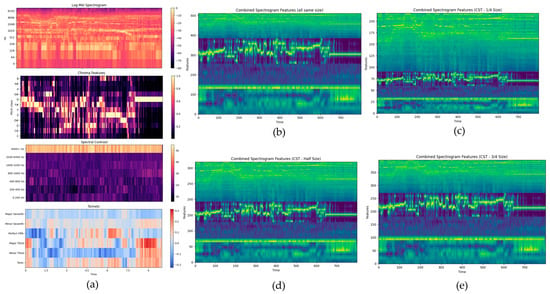
Applied Sciences | Special Issue: AI in Audio Analysis …
Tools like Praat software allow pitch tracking, often debunking voices as environmental noise.
Psychological and Neurological Perspectives
Many “demon” voices align with auditory hallucinations in conditions like schizophrenia, as studied by Stanford’s Human Perception Lab. Nevertheless, unexplained cases persist, challenging materialist views.
The Future of Demon Voice Research with AI and Technology
Advancing beyond tape recorders, emerging tech promises rigorous exploration.
Multi-agent AI Automation in Paranormal Analysis
Multi-agent systems can process EVPs in real time, with AI agents collaborating—one for audio cleanup and another for pattern recognition. Frameworks from MIT’s CSAIL enable agents to cross-verify prompts and responses, reducing bias.
On-Device WASM Machine Learning for Voice Detection
WebAssembly (WASM) allows ML models to run on smartphones for instant EVP analysis, detecting demonic traits like formant shifts without cloud dependency. Per W3C standards, this ensures low-latency processing.
Privacy-First Generative Apps and Edge-Driven IoT Systems
Apps using federated learning preserve user data while generating prompt suggestions. Edge IoT devices, like sensor networks in haunted sites, capture voices via distributed computing, as explored in IEEE papers on IoT for anomaly detection.
These innovations could validate or debunk demon voices, bridging paranormal and empirical worlds.
Conclusion
Authentic demon voice recordings, elicited through carefully crafted and strategic prompts, continue to captivate, intrigue, and genuinely terrify many listeners around the world. By thoughtfully combining detailed historical insights, practical guidance for investigation, and the latest cutting-edge technological analysis, we can explore this fascinating topic with a balanced approach of informed skepticism and genuine wonder. It is crucial to always prioritize evidence-based inquiry and maintain a rational mindset when examining such extraordinary claims.
20 primary keywords: demon voices, EVP recordings, paranormal prompts, Anneliese Michel, exorcism audio, ghost hunting equipment, audio spectrogram, AI voice analysis, Electronic Voice Phenomena, possession cases, EVP history, demon prompts, voice forensics, paranormal research, WASM ML, multiagent AI, IoT ghost detection, scientific EVP, skeptical analysis, real possession recordings