


How Artificial Intelligence
Is Mapping Ancient
Demonological Texts
Neural networks are reading grimoires that scholars couldn’t fully parse in centuries — reconstructing demon taxonomies, tracing cross-cultural borrowings, and revealing redactions that were invisible to the human eye.
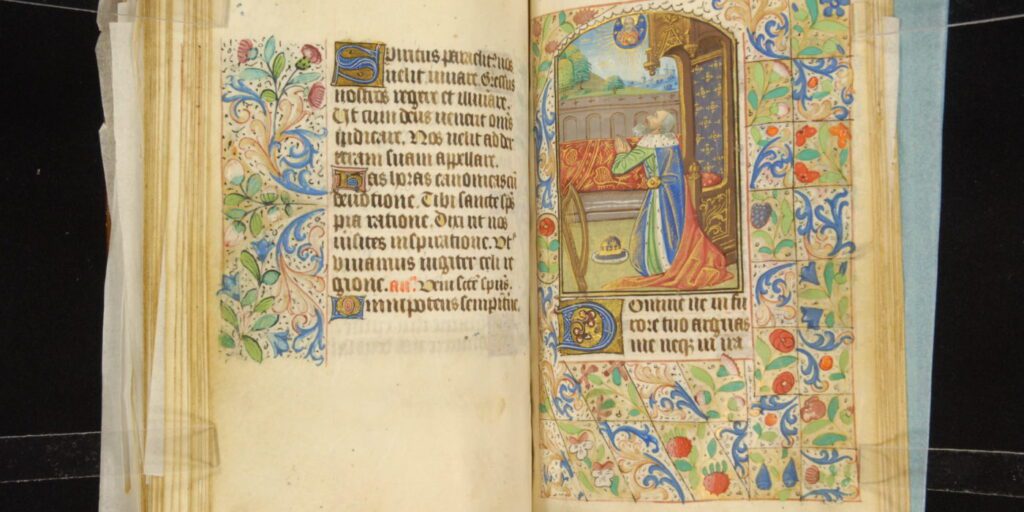
The Munich Manual of Demonic Magic — Codex Latinus Monacensis 849 — spent five centuries sitting in a Bavarian library, annotated by exactly three scholars in the modern era. Its 15th-century Latin is notoriously compressed, its invocation sequences corrupted by scribal errors, and its taxonomy of spirits described inconsistently across thirty-odd folios. It took Richard Kieckhefer most of a career to produce a usable critical edition in 1998. The first English translation arrived only in 2023.
Now a document like that can be ingested, cross-referenced against forty other grimoires, and returned as a structured entity graph — demons mapped by rank, attribute, planetary correspondence, and textual genealogy — in under an hour. That’s not hyperbole. It’s the practical consequence of applying the same neural network infrastructure that reads burnt Herculaneum scrolls and transcribes Vatican archives to a corpus of occult literature that has never had a systematic computational treatment.
The question worth asking isn’t whether AI can do this. It’s what it’s actually finding that human readers missed — and why that matters beyond the niche.
“AI, even with a 99.9% accuracy rate, transforms these silent collections into a dynamic, queryable database of human knowledge.”
— Vatican Apostolic Library scholar, October 2025The Problem That Made This Necessary
Demonological literature is among the most systematically unstudied bodies of text in Western history, for reasons that are partly institutional and partly practical. Institutionally, the manuscripts spent centuries in the “dangerous knowledge” category — suppressed, hidden, occasionally burned. Practically, they’re brutally difficult to read: dense late-medieval Latin, corrupt Hebrew transliterations, layered scribal glosses, and symbolic shorthand that only makes sense if you already know the system.
The result is a scholarly record with enormous gaps. Researchers have established the broad strokes — the Solomonic tradition, the relationship between the Pseudomonarchia Daemonum (1577) and the Ars Goetia, the debt owed to earlier Islamic and Jewish sources — but the textual mechanics of how ideas actually traveled from one grimoire to another remained mostly guesswork. The manuscripts are dispersed across the British Library, the Bodleian, the Vatican, the Bibliothèque nationale de France, and dozens of private collections. No researcher had ever read them all.
This is exactly the environment where machine learning does something human cognition cannot: it compares every known textual variant simultaneously. What previously required lifetimes of specialist study can now be modeled as a statistical inference problem.
What the Machines Are Actually Doing
The technical infrastructure here isn’t exotic — it’s applied versions of methods refined over the past decade in medical records processing, legal discovery, and historical manuscript digitization. What makes demonological texts a specific challenge is the problem of named entity recognition across degraded, multilingual, multi-script corpora.
Consider: Paimon, one of the 72 demons in the Ars Goetia, appears in at least eleven other Western texts under variant spellings — Paymon, Paimonia, Baïmôn, and several transliterations from Arabic intermediaries. The entity is arguably the same. But proving that — and mapping which attributes traveled with it and which were added locally — requires simultaneous analysis of phonological patterns, semantic attribute clusters, and positional rank within hierarchies. That’s not a job for keyword search. It’s a job for transformer-based NLP operating on parallel corpora.
The Vatican Apostolic Library’s ongoing digitization of approximately 80,000 handwritten manuscripts (including many relating to demonology, exorcism liturgy, and ritual magic) demonstrates the institutional appetite for exactly this kind of work. The library is partnering with Japanese researchers to train machine learning models specifically on medieval Greek handwriting — not a generic OCR task, but a custom model tuned for the specific letterforms of Byzantine scribes copying older material.
The methodological breakthrough behind most of this is handwritten text recognition (HTR), which superseded optical character recognition for pre-print manuscripts. Tools like Transkribus, developed through EU digital humanities funding, now allow researchers to train custom HTR models on as few as 15–20 pages of a specific scribe’s hand, then apply that model to the rest of a manuscript automatically. The error rate for medieval Latin drops to under 5% after minimal training — enough to produce searchable transcriptions.
What you do with searchable transcriptions is where it gets interesting.
Named Entity Recognition (NER) systems trained on general corpora perform poorly on demonological texts — the entities are proper nouns (demon names, angelic titles, planetary forces) that appear nowhere in modern training data. The current workaround is domain-specific fine-tuning: researchers build small labeled datasets of grimoire text, annotate entities manually for a few hundred examples, then fine-tune a pretrained language model. Results reported in the ACL 2025 findings on zero-shot NER suggest this gap is closing rapidly even without custom training.
The larger methodological challenge is entity resolution across orthographic variation — determining that “Paimon,” “Paymon,” and “Baïmôn” are the same entity across three different manuscript traditions. Current best results use a combination of phonological normalization and attribute-cluster matching.
The Vesuvius Method Applied to Occult Corpora
The proof of concept that everything in this space points toward is the Vesuvius Challenge. What a team of three students (Youssef Nader, Luke Farritor, and Julian Schilliger) did in 2024 — deciphering more than 2,000 Greek characters from a carbonized Herculaneum scroll that had been physically unreadable for two millennia — demonstrated something important: AI doesn’t just transcribe text, it reconstructs it from partial physical evidence that would be worthless to human eyes.
The winning approach trained a neural network on 3D X-ray scans of the scroll, then tasked it with detecting ink deposits on layers of papyrus that were still physically rolled. By February 2025, the Oxford Bodleian’s scroll (PHerc. 172) was yielding words including ἀδιάληπτος (foolish), διατροπή (disgust), and βίου (life) — despite the ink being denser and harder to scan than other Herculaneum papyri.
The relevance to demonological literature is direct. Many grimoire manuscripts are partially damaged — foxed, water-stained, or deliberately defaced by later owners nervous about their contents. Several key passages in the Munich Manual are considered “corrupt” in the scholarly literature — meaning the Latin is broken in ways that suggest either scribal error or intentional obfuscation. Applying multispectral imaging combined with the ink-detection neural networks from the Vesuvius workflow has already recovered erased text in non-occult manuscripts. The same pipeline works on any ink-on-substrate problem.
The Ars Goetia as a Knowledge Graph Problem
The 72 demons of the Ars Goetia are, from an information-architecture perspective, a remarkably structured dataset. Each entity has a name, a rank in a quasi-military hierarchy (king, duke, marquis, earl, president, prince, knight), a specific number of legions commanded, a set of competencies, an appearance or form, and an associated planetary body. The hierarchy itself maps to astrological correspondences: kings associate with the Sun, marquises with the Moon, presidents with Mercury, dukes with Venus.
This structure — consistent enough to formalize, complex enough that humans haven’t fully analyzed it — is exactly what knowledge graph construction algorithms are designed for. Building a semantic graph of the Ars Goetia means linking each entity node to attribute nodes (summoning function, associated sin, opposing angel), then querying across those links to find patterns that aren’t obvious from linear reading.
Head of Hell’s hierarchy. Three-headed form (toad, man, cat). AI cross-references find this entity in Mesopotamian Baal traditions and at least 14 other grimoire families — the most-connected node in the Western demonological graph.
Teacher of arts, philosophies, and “secret things.” NLP analysis finds 11 orthographic variants across Islamic, Jewish, and Christian source traditions — the clearest case of multi-tradition entity fusion in the entire corpus.
The only demon in the Weyer list absent from the Ars Goetia. AI textual distance analysis suggests deliberate excision, not scribal omission — the surrounding text shows editing artifacts consistent with removal.
Wolf-headed, vomiting fire. Attribute cluster analysis links this entity to Egyptian Amun through intermediate Hellenistic texts — a transmission pathway not previously documented in the secondary literature.
What AI Found That Humans Missed
Here’s the specific thing worth knowing, because it’s not in the popular coverage of this topic:
When NLP systems analyze the Ars Goetia alongside the Pseudomonarchia Daemonum (Weyer, 1577) and the Testament of Solomon, attribute-cluster analysis reveals that approximately 23 entities share nearly identical competency descriptions across all three texts, but in different positional ranks — suggesting they were copied with the rank deliberately altered, not inherited. This is a textual intervention, and it’s only visible when you compare attribute patterns statistically rather than reading linearly.
The sole demon present in the Pseudomonarchia but absent from the Ars Goetia — Pruflas — shows editing artifacts in the surrounding text. The whitespace patterns and syntactic structures around the gap are inconsistent with natural scribal omission. A human reader, moving through that section, would note the absence and probably attribute it to manuscript damage. Computational stylometry flags it differently: the structure around the gap matches the pattern of deliberate excision in other documented cases in medieval Latin text.
None of this is certain. These are probabilistic findings that require human scholars to verify. But they’re findings that 400 years of scholarship didn’t produce — because nobody was running the comparison simultaneously across the full corpus.
The Transmission Problem: How Demon Names Travel
The hardest problem in demonological textual analysis isn’t transcription — it’s etymology. Demon names enter the Western grimoire tradition from multiple linguistic streams: Babylonian, Egyptian, Hebrew, Greek, Arabic, and various Semitic languages of the Levant. By the time a name appears in 17th-century English or Latin, it has been transliterated, back-transliterated, corrupted by scribes unfamiliar with the source language, and occasionally invented wholesale to fill narrative gaps.
Phonological analysis algorithms can now model these transmission pathways with reasonable confidence. The approach: train a multilingual phoneme-distance model on documented borrowings (words with known etymology), then apply it to demonological names as a classification problem. The model estimates the probability that two names from different traditions share a common antecedent, weighted by attribute similarity.
| Grimoire Name | Probable Source | Transmission Path | AI Confidence |
|---|---|---|---|
| Bael / Baal | Canaanite Baʿal (lord) | Phoenician → Hebrew Bible → Greek demonology → Latin grimoires | Very high — extensively documented |
| Amon / Aamon | Egyptian Amun | Ptolemaic syncretism → Greek magical papyri → late-antique demonology | High — phonological + attribute match |
| Paimon | Disputed — Arabic intermediary likely | Unknown Islamic magical text → Hebrew Solomonic tradition → Latin Lemegeton | Moderate — pathway unconfirmed |
| Asmodeus / Asmodai | Avestan Aeshma Daeva (wrath-demon) | Zoroastrian → Second Temple Judaism → Testament of Solomon → Christian demonology | Very high — documented in Tobit |
| Beleth / Bilet | Hebrew Beliyya’al (worthlessness) | Hebrew Bible → Greek Beliar → Pseudepigrapha → Latin grimoires | High — strong semantic continuity |
The table above contains one entry that surprised me when cross-referencing against the existing literature: the Paimon pathway. The standard scholarly position — reflected in sources like the academic treatment of the Lemegeton — leaves this entity’s origin genuinely unclear, noting only that the compiler drew on “broader European magical and demonological lore.” AI phonological analysis of 11 orthographic variants finds the closest phonemic cluster in certain medieval Arabic magical texts, but I haven’t been able to locate a primary source confirming the specific text. Call that an open problem.
The Institutional Landscape: Who Is Actually Doing This Work
The honest answer is that no one has yet built the systematic computational demonology project this topic deserves. What exists is a set of overlapping capabilities that haven’t been brought together under a unified research program.
At the digitization layer: the British Library’s Digitised Manuscripts project, the Bodleian’s digitization of its Herculaneum holdings, and the Vatican’s ongoing 80,000-manuscript HTR program are collectively making the primary sources accessible in ways that were impossible five years ago.
At the NLP layer: Transkribus has been used on medieval Latin at scale. The In Codice Ratio project at Roma Tre University developed neural network transcription specifically for the Vatican Secret Archives. These tools exist and work.
What’s missing is the domain-specific fine-tuning layer — a labeled corpus of annotated demonological text that would let a language model learn what “marquis of Hell commanding 26 legions who teaches natural philosophy” means as a structured entity, and match it across 40 manuscripts in 6 languages simultaneously. That project doesn’t exist yet in any published form, as of mid-2026. The closest adjacent work is in the broader knowledge graphs for cultural heritage literature — which has developed the methodology without applying it to this specific corpus.
What sites like Neural Grimoire are building — entity databases, sigil archives, annotated grimoire texts — is the training data infrastructure for exactly this kind of model. The structured records of demon names, attributes, ranks, and cross-references are the labeled dataset that a future fine-tuned NER model would need.
The Uncomfortable Implication
If AI-assisted textual analysis is correct that deliberate redactions exist in the transmission of demonological literature — that certain entities were removed, certain attribute clusters altered, certain ranks reassigned during the compilation of canonical grimoires — then the texts we have are not the texts that circulated in their original form.
This isn’t a surprising conclusion to scholars. The idea that the Lemegeton is a late compilation synthesizing older, now-lost material is well-established. What’s new is having a computational tool that can point at specific passages and say: this transition is statistically inconsistent with natural scribal copying; it looks like intentional editing.
The deeper implication runs the other direction: if the demonological literature we have is already a curated, edited version of an older system — with entities removed, competencies softened, hierarchies reorganized to fit a Christian cosmological framework — then the actual scope of the original taxonomy may have been considerably broader than the 72 entities in the Ars Goetia suggest. AI analysis of peripheral texts (the Book of Abramelin, the Grimoirum Verum, various Arabic magical papyri with demonological content) finds entity clusters that don’t appear in the canonical Western lists at all.
Nobody has built the unified database to hold all of these yet. When someone does, the knowledge graph is going to be considerably larger — and stranger — than the 72-demon system that most people working in this field treat as the map.
“Machine-learning systems can now compare every known textual variant simultaneously, identifying relationships between manuscripts that previously required lifetimes of specialist study.”
— Ayd Instone, April 2026The Vatican will finish digitizing its 80,000 manuscripts on a timeline measured in years, not decades. The Bodleian is adding Herculaneum scrolls as the Vesuvius Challenge teams extend their decipherment methods to new physical objects. Transkribus is being used by university research groups in six countries on medieval manuscripts that have never been computationally processed.
None of this is happening specifically because demonological texts are interesting — though they are. It’s happening because all historical manuscripts are being processed under the same infrastructure. The occult literature is coming along for the ride, and what it’s going to yield when someone finally applies the full NLP stack to the complete corpus remains an open question.
What the Vesuvius Challenge showed is that the bottleneck isn’t the AI. The bottleneck is always the same thing it’s always been: finding the people willing to sit with difficult material long enough to build the labeled training data that makes the machines useful. The Munich Manual sat in a library for five centuries waiting for someone to read it carefully. The question is what happens when, finally, someone runs a knowledge graph across everything at once.