

Sumerian “Longevity Tech”: What the
Myths Actually Say — and What
Modern Science Has Found Instead
Kings who reigned for 28,800 years. A plant at the bottom of the sea that restores youth. Gods who withheld immortality on a whim. The Sumerians were obsessed with the question of eternal life — and their answer was stark: it isn’t for you. Here’s what scholars genuinely know, where the pseudoscience goes wrong, and why 4,000-year-old myths still echo in 2026 longevity labs.
- 📜 The Sumerian King List’s impossible reign lengths (241,200 total pre-flood years) are almost certainly a mathematical artifact of the base-60 sexagesimal number system — not evidence of literal long life.
- ⚡ The Epic of Gilgamesh — the oldest written story on earth — is fundamentally a story about accepting mortality, not escaping it.
- 🔬 2025–2026 longevity science (senolytics, telomere research, epigenetic reprogramming) is genuinely advancing. A 2025 Scripps Research AI study found a 70% success rate identifying life-extending compounds. The science is real; the “Anunnaki gave us the secrets” framing is not.
- 🧠 The myths matter not as blueprints but as evidence that humans have been asking the same question for 4,000 years — and the honest answer hasn’t changed much.
Let me start with something the fringe corners of the internet don’t want you to know: the Sumerians weren’t hiding longevity technology. They were writing about its absence. The entire thrust of their most famous myths — Gilgamesh’s quest, the Adapa story, the flood narratives — is that immortality belongs to the gods and humans don’t get it. That’s the lesson. Repeatedly. Hammered into clay tablets across several centuries of literature.
That doesn’t make the myths less interesting. If anything, it makes them more so. These were real people, living in the first cities ever built, grappling with the same existential terror we feel — and writing it down in the world’s earliest script. The Epic of Gilgamesh is roughly 4,000 years old. It ends with the hero sitting outside the walls of his own city, realizing that the walls are the immortality. The things you build outlast you. That’s it. That’s the answer.
I The World’s First Cities — and Their Obsession with Death
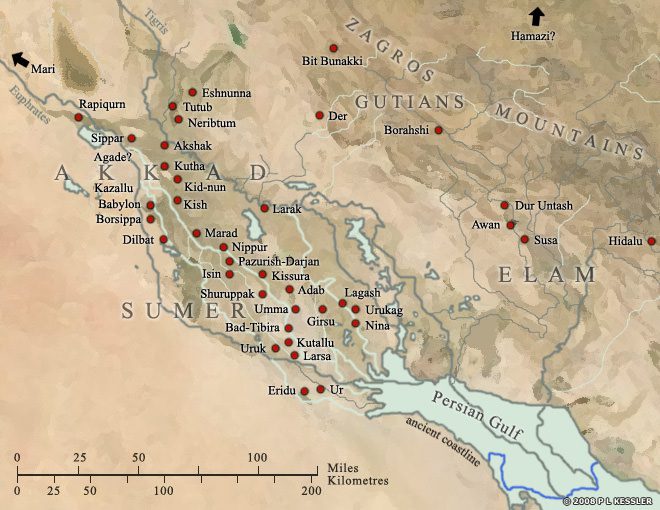
Sumer emerged around 4500 BCE in what is now southern Iraq — the flat alluvial plain between the Tigris and Euphrates rivers. By 3100 BCE, cities like Uruk had populations of perhaps 50,000 people, which was genuinely unprecedented in human history. They had professional scribes, centralized granaries, formal legal codes, and a writing system that started as bookkeeping and became literature.
Life expectancy was probably 25–35 years. Infant mortality was brutal. The rivers flooded unpredictably and destroyed crops. In that context, obsessing over immortality wasn’t self-indulgence — it was the obvious pressing question. Why do we die? Why do the gods live forever? Is there anything that can be done about it?
Their answer, worked out over centuries of mythology, was essentially: no. And they wrote that answer down in extraordinary detail.
II The King List: What 28,800 Years Actually Means
This is where things get genuinely interesting — and where the math actually matters.
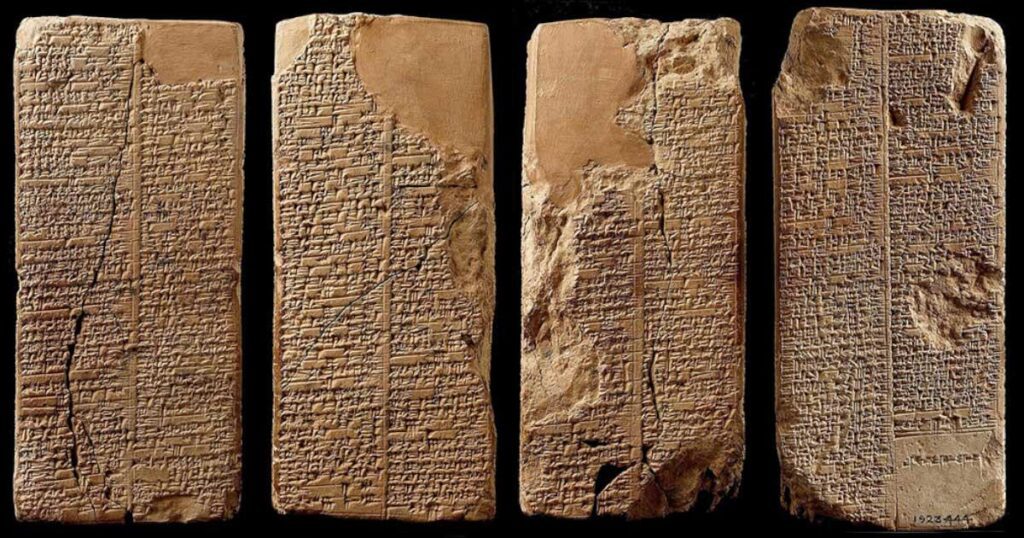
The Weld-Blundell Prism in Oxford lists eight kings before the flood with reign lengths ranging from 18,600 to 43,200 years. Alulim, the first, reigned 28,800 years. Alaljar, the second, reigned 36,000. The total for all eight: 241,200 years. Then the flood happened, kingship resumed, and reign lengths dropped to the hundreds. By the time we get to historically verifiable rulers, the numbers align with what archaeology actually supports.
So what’s going on? Scholars have a well-developed answer, and it doesn’t involve alien DNA or secret longevity elixirs.
| King | Claimed Reign | In Šar Units (÷3,600) | Scholarly Interpretation |
|---|---|---|---|
| Alulim — Eridu | 28,800 | 8 šar | Perfect base-60 multiple; likely a symbolic “first” number in the system |
| Alaljar — Eridu | 36,000 | 10 šar | Another clean sexagesimal unit — reinforces the mathematical pattern |
| En-men-lu-ana — Bad-tibira | 43,200 | 12 šar | 43,200 = 12 × 3,600. The number also appears in Hindu cosmology — possibly a shared ancient mathematical tradition |
| En-men-gal-ana — Bad-tibira | 28,800 | 8 šar | Repeated reign length signals symbolic rather than historical function |
| Divine Dumuzi — Bad-tibira | 36,000 | 10 šar | A deity on the king list — confirms this section operates in mythological time, not historical time |
The King List was a political document. Whoever held kingship held it by divine mandate — and tracing that mandate back to the dawn of time, through numbers too vast for ordinary human comprehension, made the claim more powerful. It’s similar to the genealogical lists in Genesis, which Old Testament scholars analyze with exactly the same scholarly tools. The numbers aren’t real. The authority they convey was.
III Gilgamesh: The World’s Oldest Story About Losing
If you’ve only absorbed the Gilgamesh epic through pop culture references, you might have the impression it’s a heroic adventure that ends triumphantly. It doesn’t. It ends with Gilgamesh failing to stay awake for seven days, losing a youth-restoring plant to a snake, and returning home empty-handed. The epic’s final lines describe the walls of Uruk.
The message couldn’t be clearer if it were written in neon: accept it.
The ale-wife Siduri speaks to Gilgamesh: “When the gods created mankind, they allotted death to mankind, but life they retained in their own keeping.” She tells him to eat, drink, and be merry — to look at the child who holds his hand, to let his wife delight in his embrace. This is the task of man.
This is not a text that encodes secret immortality technology. It is a text that tells the world’s most powerful king to go home and love his family.
Gilgamesh finds Utnapishtim — the flood survivor who was granted eternal life — and receives two chances at immortality. He fails the first (staying awake seven nights) by immediately falling asleep. He loses the second (the youth-restoring plant from the sea’s floor) to a snake while he’s bathing. The snake sheds its skin and vanishes.
Scholars read the snake episode as a folk-etiology — an explanation for why snakes appear to renew themselves by shedding skin while humans do not. It’s achingly human. The symbol of renewal exists right in front of you; you just can’t have it.
The journal Nature Aging published a Perspective directly titled “Why Gilgamesh Failed: the mechanistic basis of the limits to human lifespan.” The authors — writing from the Albert Einstein College of Medicine — use the myth as a framing device for a rigorous analysis of why human biological aging appears to have a ceiling. The myth, 4,000 years old, frames the right question. The science provides what progress has actually been made.
IV Adapa and the Denied Gift: The Other Side of the Coin
The Adapa myth is less famous than Gilgamesh but arguably more psychologically rich. And it has a twist.
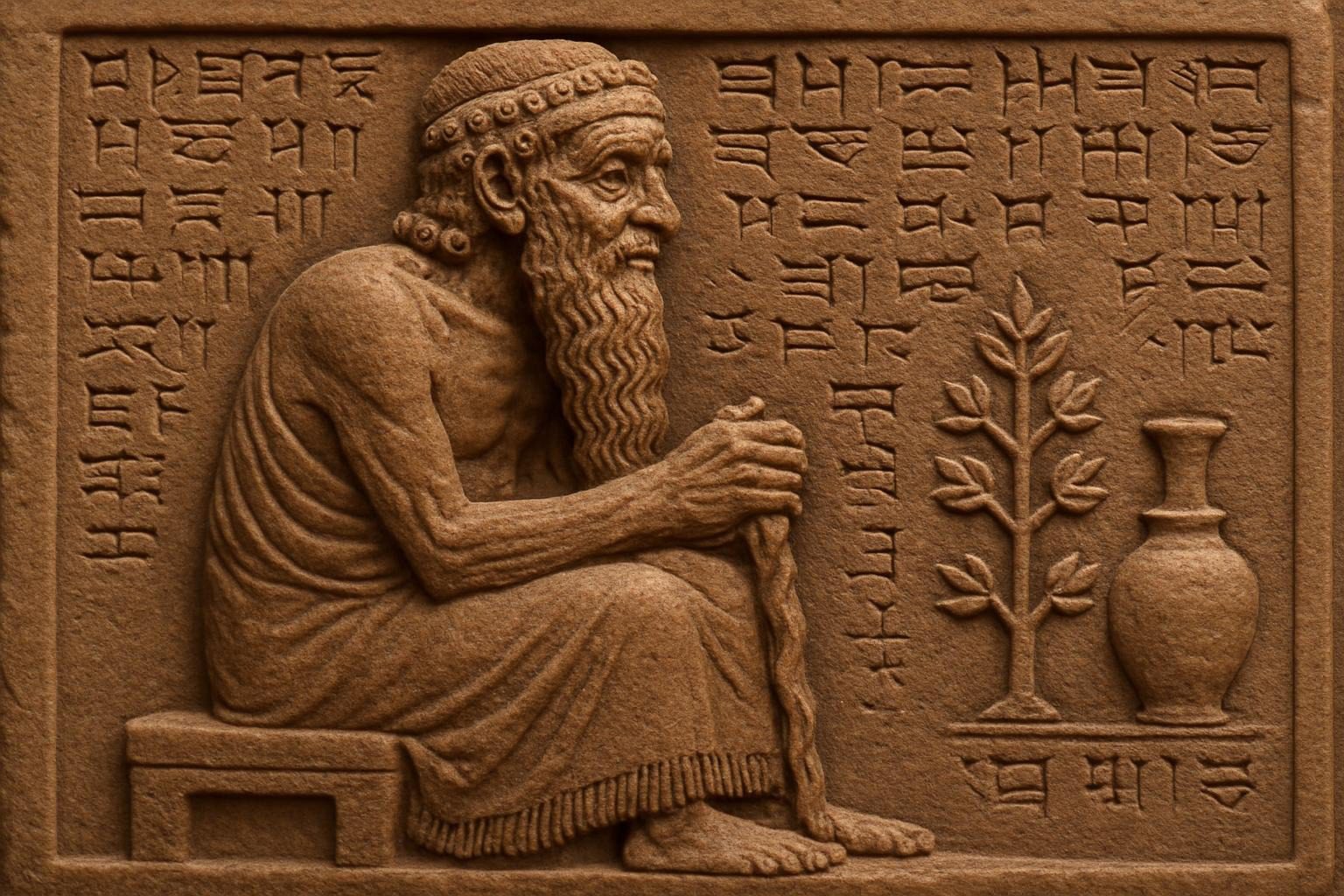
Adapa was the wisest of humans — a priest of the god Enki (also called Ea), created with extraordinary intellect but explicitly denied immortality. When he accidentally broke the wing of the south wind (while fishing — the ancient world’s first workplace accident claim), the sky-god Anu summoned him to heaven to answer for it.
Here’s where it gets strange. Enki, Adapa’s divine patron, warned him: do not eat or drink anything in Anu’s presence, or you will die. Adapa follows this advice. But the “food and water of life” that Anu actually offers him is immortality itself. By following Enki’s warning, Adapa refuses it. Humanity stays mortal.
What both myths share is the same structural conclusion: immortality was within reach, and something — divine trickery, a sleeping human, a thieving snake — prevented it. The Sumerians weren’t saying eternal life exists somewhere and can be found. They were explaining why it doesn’t exist for us. These are myths of consolation and explanation, not instructions.
V The Anunnaki: What the Texts Say vs. What the Internet Says
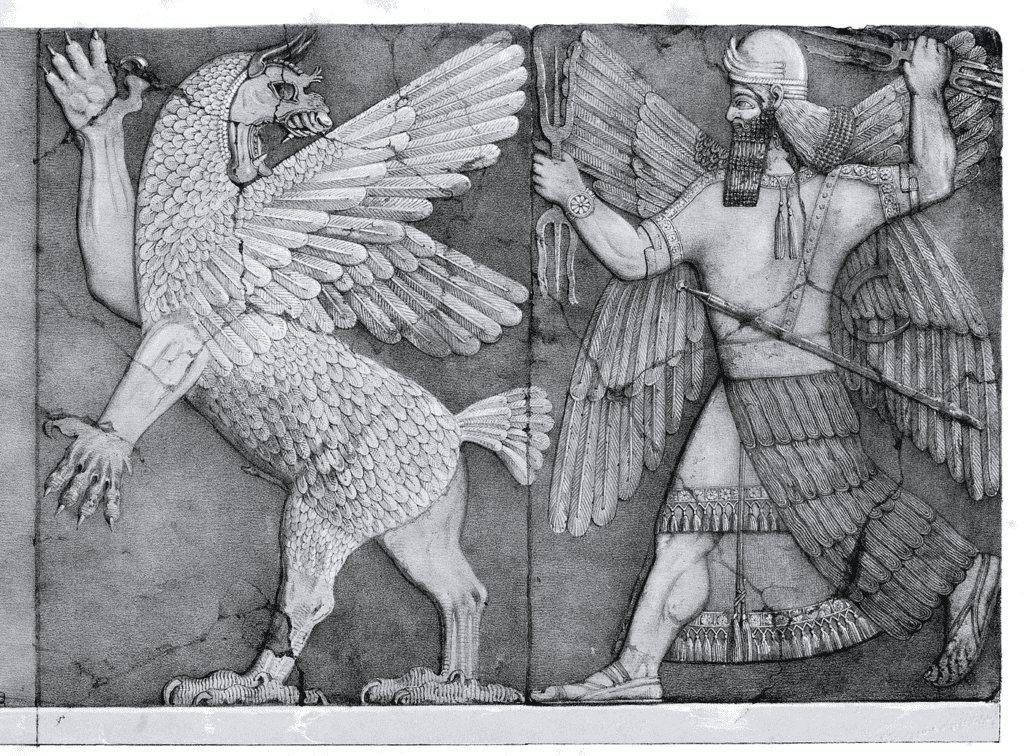
The Anunnaki are real figures in Sumerian mythology. They appear throughout the cuneiform corpus — in the Enuma Elish (the Babylonian creation epic), in various hymns, and in administrative texts. They’re the great gods of the Mesopotamian pantheon, responsible for cosmic order, divine judgment, and human fate.
What they are not, according to any cuneiform text ever found, is extraterrestrials from the planet Nibiru sharing advanced longevity technology.
That specific claim originates with Zecharia Sitchin’s “Earth Chronicles” series, beginning with The 12th Planet (1976). Sitchin, who had no formal training in Akkadian or Sumerian, made a series of specific translation errors that professional Assyriologists have documented in detail. The word he translates as “rocket ship” means “bright, shining object” in context. His “Nibiru” appears in astronomical texts as the planet Jupiter — or sometimes as a celestial position associated with the equinox, not a hidden planet.
The Anunnaki myths are genuinely interesting without the pseudoscience. They describe a divine bureaucracy that mirrors human administrative hierarchies, complete with councils, hierarchies, and squabbling over authority. The gods created humans from clay and divine blood — in the Atrahasis epic — specifically to do agricultural labor so gods wouldn’t have to. That’s the creation story: humans as labor-saving devices. It’s darkly funny, and it’s all in the original texts, no aliens required.
VI From Myth to Lab: What Modern Longevity Science Actually Looks Like
Here’s the genuine connection between Sumerian mythology and 2026 science — and it’s not the one the fringe claims. The connection is the question. Humans have been asking how to extend healthy life for at least 4,000 documented years. The question is now being answered, slowly, by biology.
The framing from Nature Aging is useful: gains in human life expectancy over the 20th century came from eliminating causes of early death — infectious disease, malnutrition, acute trauma. Life expectancy rose from 47.3 years in 1900 to 68.2 by 1950, and reached approximately 79 by 2024 per CDC data. But the fundamental biology of aging — what researchers now call its “hallmarks” — remained largely unchanged. That’s the current frontier.
Senolytics: Compounds like dasatinib + quercetin show promise in 70+ age-related conditions by inducing apoptosis in senescent cells. Clinical trials are ongoing as of 2026.
NAD+ Boosters: Nicotinamide riboside and NMN raise NAD+ levels — a coenzyme essential for cellular energy metabolism. Lifespan extension demonstrated in animal models; human trials are evaluating translation.
AI-Assisted Drug Discovery: A 2025 Scripps Research study showed AI achieving a 70% success rate in identifying potential life-extending compounds — compared to low single digits for traditional screening.
SGLT2 Inhibitors: Originally diabetes drugs, 2025 research linked them to telomere-length preservation and reduced senescence markers — a surprising repositioning finding now heading to dedicated longevity trials.
Important caveat: Every one of these is promising at preclinical or early clinical stage. None are proven human lifespan extenders yet. The gap between animal model results and human application has ended many a longevity research avenue before.
The parallel to Gilgamesh is real — and researchers notice it. The question the myth asks (“is there something that could restore youth?”) is now a legitimate laboratory question with real experimental answers accumulating. The Sumerians couldn’t have imagined the mechanism of telomere attrition. But they identified the phenomenon — that living things deteriorate in ways that seem unnecessary — and asked why. That’s the right question. It took 4,000 years to develop tools adequate to begin answering it.
VII What Responsible Engagement with These Myths Looks Like
There’s a version of this topic that does serious harm. When pseudoscientific claims about Anunnaki longevity technology gain traction, they divert genuine curiosity away from the real science (which is interesting!) and toward unfalsifiable conspiracy theories. People invest emotional energy in claims that can’t be tested, which is precisely why they’re compelling and precisely why they’re useless.
The actual Sumerian record is both more honest and more moving than the alien-intervention version. These were real people, writing in the world’s first script, trying to make sense of why we die. They didn’t find the answer. Their myths are beautiful precisely because they’re about failure and acceptance, not triumph.
The genuine connection between Sumerian myths and modern science isn’t a secret technology hidden in cuneiform. It’s continuity of purpose — the same question asked across 4,000 years, with increasingly sophisticated tools being brought to bear on it. The Epic of Gilgamesh is relevant not because it contains longevity secrets but because it is the earliest surviving record of the question that senolytics researchers, telomere biologists, and epigenetic reprogramming labs are still trying to answer today.
- Electronic Text Corpus of Sumerian Literature (ETCSL) — University of Oxford: Primary Sumerian texts in translation
- Ashmolean Museum, Oxford: Weld-Blundell Prism (AN1923.444) — Most complete Sumerian King List
- Academia.edu: Reinvestigating the Antediluvian Sumerian King List — Sexagesimal analysis
- Nature Aging (PMC11922162): “Why Gilgamesh Failed: the mechanistic basis of the limits to human lifespan” — Milholland & Vijg, Albert Einstein College of Medicine
- PMC / Biol Sport (2026): “Aging reimagined: Bridging clinical modulation and scientific breakthroughs” — telomerase, epigenetic reprogramming, autophagy review
- MDPI IJMS (2025): “Rewinding the Clock: Emerging Pharmacological Strategies for Human Anti-Aging Therapy” — senolytics, NAD+ precursors, senomorphics
- HealthSpan: Top 10 Longevity Breakthroughs of 2025 — SGLT2 inhibitors, telomere research, clinical trials
- Outside Online (April 2026): The Modern History of Our Obsession with Longevity
- Liv Hospital (March 2026): Anti-Ageing Tech — 2026 Innovations including Scripps AI compound discovery
- History & Myths (Jan 2026): Antediluvian Kings in the Sumerian King List — Myth or History?
- British Museum Collection: Anunnaki — cuneiform primary sources
- World History Encyclopedia: Sumer — Overview and archaeology
https://www.neuralgrimoire.com/blog/