


AI for Trauma & PTSD:
What the Clinical Trials Actually Show
The first landmark RCT of a generative AI therapy chatbot published in March 2025. Here’s what the data means—and what it doesn’t—for the 13 million Americans living with PTSD.
Here’s the honest version of this story: a lot of what gets written about AI and mental health is either techno-optimist hype or reactionary panic. Both camps tend to skip the actual trial data. So let’s start there instead.
In March 2025, researchers at Dartmouth’s Geisel School of Medicine published the first-ever randomized controlled trial of a generative AI therapy chatbot. The results landed in NEJM AI—a journal of The New England Journal of Medicine. That’s not a small deal. It’s the same publication standard that cardiovascular drugs have to clear. And the numbers were genuinely striking.
Those figures come from Therabot: a generative AI chatbot trained specifically on psychotherapy and CBT best practices, built at Dartmouth and tested in a national, randomized controlled trial. [1] Participants interacted with it for four weeks. Some came back for an eight-week check-in. The results held.
A randomized controlled trial is the gold standard in clinical evidence. Participants are split randomly into treatment and control groups. The control group—here, a waitlist who got no app access during the study—provides the baseline to measure against. Without this design, you can’t tell if improvement is from the treatment or just from time passing.
Most mental health app claims are based on user self-reports or pre/post studies with no control group. The Therabot trial cleared a much higher bar.
Why the Access Problem Is the Starting Point
Before we talk about what AI can do, it’s worth sitting with why any of this matters at all.
Roughly 70% of people globally will experience a traumatic event during their lifetime. [2] In the United States, over 13 million adults meet criteria for PTSD in any given year. Evidence-based treatments exist—prolonged exposure therapy, cognitive processing therapy, EMDR—and they work. The problem is that fewer than half of people with a diagnosed mental disorder actually receive treatment. Wait times of months are common. Cost is prohibitive. Stigma is real. And there simply aren’t enough trained clinicians to meet demand. [3]
That gap—not the technology itself—is why AI mental health tools are worth taking seriously. They’re not trying to be better than a skilled trauma therapist. The more defensible case is that they can reach people who currently have nothing.
The Therabot Study: What the Data Shows
Dartmouth’s Geisel School of Medicine ran the trial. Lead researchers Michael Heinz and Nicholas Jacobson built Therabot specifically for this purpose—not a repurposed general-purpose LLM, but a model fine-tuned on psychotherapy training data. [4]
The 210 participants were spread across three groups: major depressive disorder (MDD), generalized anxiety disorder (GAD), and clinically high-risk feeding and eating disorders (CHR-FED). Half got four weeks of Therabot access; half went on a waitlist. Symptoms were measured at baseline, week four, and week eight.
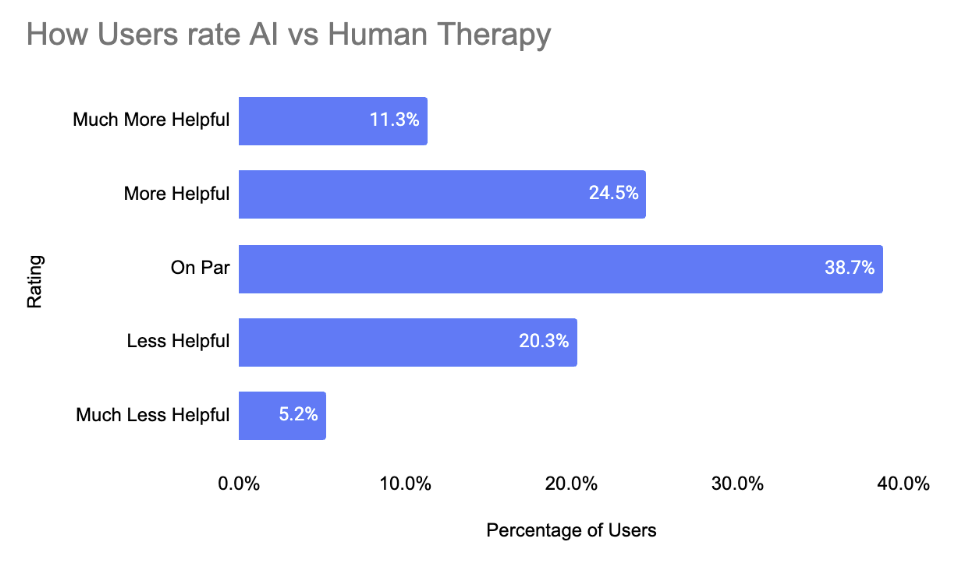
What stood out—beyond the symptom numbers—was the therapeutic alliance data. Participants reported trusting and communicating with Therabot at levels comparable to working with a human mental health professional. That’s not a small thing. Therapeutic alliance is one of the strongest predictors of treatment outcome across all forms of psychotherapy.
Important caveat: the control was a waitlist, not human therapy. We don’t yet have a head-to-head trial of generative AI chatbot versus trained therapist for PTSD. That research is needed. But for evaluating whether AI is better than having nothing—which is the actual situation for millions of people—the Therabot results are the best evidence we’ve had.
Therabot was not tested specifically for PTSD from trauma—participants had MDD, GAD, and eating disorder risk. Extrapolating these results directly to complex PTSD, combat trauma, or childhood abuse survivors requires caution. More targeted trials are ongoing and needed.
Older Tools With Stronger Evidence Trails
Therabot gets the headlines right now because it’s the first generative AI RCT. But two older tools—Woebot and Wysa—actually have deeper evidence bases, built over years of systematic study.
Built by Stanford clinical psychologists, Woebot uses a rule-based (not generative) CBT framework delivered through 10-minute daily check-ins. Rule-based means it’s predictable and clinically consistent—it won’t go off-script. A 2023 RCT found it non-inferior to clinician-led therapy for reducing depressive symptoms in teenagers. It has 14 published RCTs and peer-reviewed studies behind it. Limitations: text only, scripted feel, primarily built around younger users’ needs.
Wysa combines an AI conversational agent with 150+ CBT, DBT, and mindfulness tools. It received FDA Breakthrough Device designation in 2025 and has 45+ peer-reviewed studies covering chronic pain, maternal mental health, anxiety, and trauma-adjacent conditions. A 2022 study at Stony Brook University found users developed a meaningful therapeutic alliance with Wysa. Among 527 healthcare workers given access, 80% returned for multiple sessions, averaging 10.9 sessions per user. [5] NICE in the UK is actively assessing it for NHS Talking Therapies.
An emotional coaching app focused on structured CBT tools and mood tracking. A 2024 systematic review published in PMC found Youper showed a 48% decrease in depression scores across its study sample. [5] Wearable sync and personalized tracking are its main differentiators. More evidence is needed compared to Woebot and Wysa, but the early results are promising.
Where AI Trauma Tools Genuinely Help (And Where They Don’t)
The 2025 systematic review by Ali et al. in SAGE Open Medicine synthesized the state of research through June 2025 and identified consistent patterns in where AI mental health tools succeed and where they struggle. [6] The picture is nuanced.
Where AI has demonstrated real impact
- Bridging waitlists. Between referral and first appointment—often months—AI tools provide structured CBT exercises, mood tracking, and psychoeducation that would otherwise be absent.
- Mild-to-moderate anxiety and depression. The evidence base here is the strongest. Multiple RCTs show meaningful symptom reduction for non-crisis presentations.
- Reducing stigma barriers. Studies consistently show users engage more honestly with AI about mental health symptoms than they might in an initial human intake. The absence of judgment—perceived or real—lowers the threshold.
- Between-session support. In hybrid models, AI tools serve as a daily touchpoint between weekly therapy sessions, extending the effective treatment surface.
- Chronic pain and burnout. Wysa’s evidence here is particularly strong—users with chronic pain conditions showed meaningful engagement and symptom improvement.
Where AI falls short (honestly)
A 2025 review published in Behavioural Sciences specifically analyzing AI for PTSD found that while publications have increased sharply since 2017, the evidence for complex trauma remains thin. [7] The same review identified bias in training datasets—most studies were conducted in high-income English-speaking countries—and noted gaps in clinical validation for diverse populations.
AI cannot assess lethality. This is the single most important thing to understand. No current AI system can reliably evaluate suicide risk, identify escalating crisis signals the way a trained clinician can, or provide the human judgment required for acute safety planning. For complex PTSD, self-harm risk, or suicidal ideation: human clinical care is not optional.
The clinical research community is explicit about this. NICE guidance in the UK, APA guidance in the US, and the published literature all agree on the same boundary.
| Scenario | AI Tool Role | Evidence Quality | Human Oversight Needed? |
|---|---|---|---|
| Mild anxiety / stress | Primary support tool | Strong (multiple RCTs) | Recommended but not mandatory |
| Moderate depression | Adjunct / bridging | Strong (Therabot RCT 2025) | Quarterly check-in minimum |
| Trauma / PTSD (non-complex) | Between-session support | Emerging (more trials needed) | Yes — human therapist primary |
| Complex / childhood trauma | Psychoeducation only | Limited evidence | Yes — specialist required |
| Acute crisis / self-harm risk | Crisis line referral only | AI not appropriate | Mandatory — immediate care |
| Combat / veteran PTSD | Supplement to group therapy | Pilot data promising | Yes — specialist required |
How to Actually Start: A Practical Framework
Forget the 15-step checklists. Here’s what actually matters if you’re considering an AI mental health tool for trauma support.
Step one: Establish where you sit on the severity spectrum. AI tools are validated for mild-to-moderate presentations. If you’re in crisis, experiencing suicidal thoughts, or have been diagnosed with complex PTSD or a dissociative disorder, start with a human clinician—use the 988 Suicide & Crisis Lifeline (call or text 988 in the US) or text HOME to 741741.
Step two: Choose tools with actual clinical evidence. The market is full of wellness apps that use the word “AI” without any peer-reviewed validation behind them. Woebot and Wysa both have FDA Breakthrough Device designations and published RCT evidence. Therabot doesn’t yet have a commercial release but its trial data is the current benchmark for generative AI. Any tool you consider should be able to point to peer-reviewed studies—not just user testimonials.
Step three: Treat it as a bridge, not a destination. The best outcomes in the literature come from hybrid models—AI tools used alongside human therapy, not instead of it. If you’re on a waitlist, use an evidence-based app in the interim. If you’re in active therapy, consider whether a daily AI check-in could extend your between-session work. But keep moving toward human clinical care for anything complex.
Step four: Check the privacy policy before you type anything personal. Not all apps are HIPAA-aligned. Wysa sessions are anonymous; it doesn’t require a login. Woebot is HIPAA-aligned. Verify before you share sensitive information.
- Confirm the app has published peer-reviewed evidence (not just press releases)
- Verify HIPAA compliance or equivalent privacy protection before sharing personal history
- Set a calendar reminder to check in with a human clinician if using AI solo for more than 4 weeks
- Share AI session summaries with your therapist if you’re in hybrid care—it helps continuity
- Know your crisis resources before you need them: 988 (US), Crisis Text Line (text HOME to 741741)
The Ethical Landscape in 2026
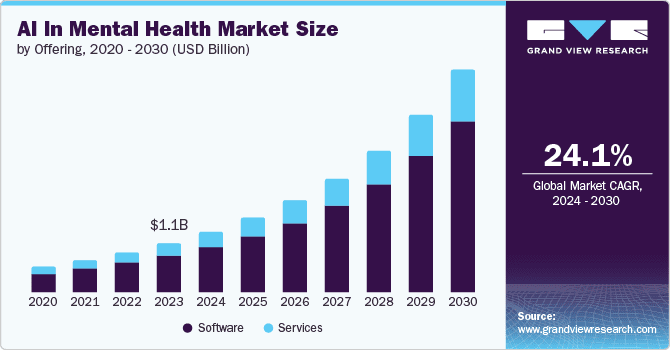
The clinical evidence is maturing. The regulatory and ethical picture is still catching up, and that gap matters.
A 2025 narrative review in SAGE Open Medicine identified three persistent challenges in AI mental health: dataset bias (most training data overrepresents high-income, English-speaking populations), algorithmic performance variation across age groups and ethnicities, and the absence of consistent clinical oversight standards across commercial apps. [6]
NICE in the UK has taken the most systematic regulatory approach so far—its Evidence Standards Framework provides a graded benchmark that digital health tools must meet before NHS deployment. [8] The US regulatory environment is still more fragmented, though FDA Breakthrough Device designations for Woebot and Wysa signal increasing scrutiny.
The 2025 Journal of Traumatic Stress paper on generative AI in PTSD treatment was blunt about the risks: bias in training data, threats to patient privacy, and the question of how to maintain clinical oversight when patients use AI tools independently. [3] These aren’t hypothetical concerns—they’re documented gaps that researchers are actively working to close.
What’s Coming: The Honest Forecast
The research trajectory is clear. Publications on AI in PTSD specifically have increased sharply since 2017, [7] and the Dartmouth/Therabot trial will likely catalyze a wave of similar RCTs with more targeted populations—veterans, childhood trauma survivors, conflict-exposed individuals.
VR-assisted exposure therapy is one of the more promising adjacent developments. A clinicaltrials.gov-registered study at Dartmouth used biometric monitoring (heart rate, skin conductance) integrated with Prolonged Exposure protocols to identify predictors of treatment response in real time. [9] The combination of physiological data and adaptive AI represents a logical next step beyond pure conversational therapy.
But the fundamental constraint won’t change: AI tools will get better, more personalized, and more widely available. They will not replace the human therapeutic relationship for complex trauma. The people who benefit most will be those who use both—and who understand clearly what each brings.
Sources & Further Reading
- [1]Heinz, M. et al. (2025). Randomized Trial of a Generative AI Chatbot for Mental Health Treatment. NEJM AI. ai.nejm.org/doi/full/10.1056/AIoa2400802
- [2]AI-guided digital intervention with physiological monitoring reduces intrusive memories after experimental trauma. (2025). arXiv preprint. arxiv.org/pdf/2507.01081
- [3]Held, P. et al. (2025). Generative artificial intelligence in posttraumatic stress disorder treatment: Exploring five different use cases. Journal of Traumatic Stress. onlinelibrary.wiley.com/doi/10.1002/jts.23188
- [4]Dartmouth University. (2025, March 27). First Therapy Chatbot Trial Yields Mental Health Benefits. home.dartmouth.edu/news/2025/03/first-therapy-chatbot-trial…
- [5]Systematic Review: AI-Powered CBT Chatbots (Woebot, Wysa, Youper). (2025). PMC / Tehran University of Medical Sciences. pmc.ncbi.nlm.nih.gov/articles/PMC11904749/
- [6]Ali, M. et al. (2025). Artificial intelligence for mental health: A narrative review. SAGE Open Medicine. journals.sagepub.com/doi/10.1177/20552076251395548
- [7]Behavioural Sciences. (2024/2025). Current Status and Future Directions of AI in PTSD. mdpi.com/2076-328X/15/1/27
- [8]Tytler, K. (2025). AI in mental health: what patients and practitioners need to know. iatroX Clinical AI Insights. iatrox.com/blog/ai-mental-health-wysa-limbic-woebot-nice-guidance-uk
- [9]Intelligent Biometrics for PTSD (IB-PE). ClinicalTrials.gov NCT04471207. clinicaltrials.gov/study/NCT04471207
- [10]American Psychological Association. (2025, April 30). Study demonstrates utility of GenAI chatbot for treating mental health conditions. apaservices.org/practice/…/mental-health-chatbot