



Can You Manifest a Dead Relative?
The Truth and the Dangers
What grief science, spiritual traditions, and psychological research actually say — and why the answer is more complicated than any manifesting guru will admit.
The short answer: You cannot “manifest” a dead relative back into the physical world. Full stop. But that is not actually the question most people are asking.
What many grieving people really mean is: Can I feel their presence again? Can I communicate with them? Can I find closure? Those questions have genuine, nuanced answers rooted in both psychological research and cross-cultural spiritual practice — but the manifesting-culture framing of this topic often creates more harm than comfort.
The real danger is not supernatural. It is what happens when grief gets dressed up as a spiritual technology and sold back to the bereaved as a productivity problem.
Should You Even Do This?
Before going further, be honest with yourself about why you are here. The answer genuinely determines whether this article is useful or actively harmful for you to read right now.
Decision Gate — Read Before Proceeding
- Intellectually curious about the topic
- Months or years past a significant loss
- Seeking to understand an experience you already had
- Researching for spiritual or therapeutic practice
- Grieving but emotionally stable enough to engage critically
- Acutely bereaved (loss within the past weeks or months)
- Searching obsessively for a way to “bring them back”
- Struggling to accept the reality of the death
- Using manifestation to avoid processing grief
- Experiencing suicidal ideation or wanting to join the deceased
If anything in the right column resonated, please reach out to a grief counselor or mental health professional before using spiritual practice as your primary coping tool. The HelpGuide bereavement resource is a solid starting point. This article will still be here when you are in a steadier place.
What “Manifesting a Dead Relative” Actually Means
The word “manifest” is doing enormous, problematic work in this sentence. Let us pull it apart.
In the modern manifesting tradition — descended from New Thought philosophy, popularized by The Secret, and now deeply embedded in wellness culture — to “manifest” something means to will it into physical reality through focused intention, visualization, and energetic alignment. The premise is that thought and emotion attract corresponding reality.
Applied to a dead person, this framework implies you can restore a deceased relative’s presence or communication by thinking hard enough in the right direction. That is the version of this question that deserves a direct answer: no, and here is why the framing itself is the problem.
What the Research Shows
There is no empirical scientific evidence supporting the Law of Attraction as a mechanism for influencing physical reality. Peer-reviewed psychology classifies it as pseudoscience — a belief system framed in the language of physics and neuroscience without meeting their evidentiary standards.
But here is the important nuance: there is a different, far older version of this question hiding underneath the manifesting language. Across virtually every human culture and across recorded history, the bereaved have reported sensing, seeing, dreaming of, and feeling in contact with the deceased. These experiences are real — not in the supernatural sense, but in the deeply human, psychologically verified sense.
The question underneath the question is usually: Is it possible to meaningfully reconnect with someone who has died?
That question has a much more honest, more useful, and more nuanced answer.
What the Science of Grief Actually Shows
Grief research has produced genuinely surprising findings over the past three decades, particularly around what researchers call Sensory and Quasi-Sensory Experiences of the Deceased (abbreviated as SED in the literature).
The Prevalence of Post-Bereavement Contact Experiences
Studies consistently find that a substantial proportion of bereaved people report some form of perceived contact with the deceased — sensing their presence, hearing their voice, seeing them, smelling a characteristic scent, or dreaming of them in unusually vivid detail. A 2020 cross-cultural review published in Schizophrenia Bulletin examined decades of prevalence data and found that these experiences are far more common than the clinical mainstream once acknowledged.
“Bereaved individuals often report a sense of the deceased’s presence as a source of comfort in dealing with the stress over the loss. Reports of such experiences well after the death have been cited as evidence that the attachment bond to the deceased loved one does not end with death but continues on.” — National Institutes of Health, PMC (NCBI)
The key finding is that these are normal experiences, not pathological ones. They are classified as bereavement hallucinations in the clinical literature — not a sign of mental illness, but a well-documented feature of the human grief process, especially in the early and middle stages of loss.
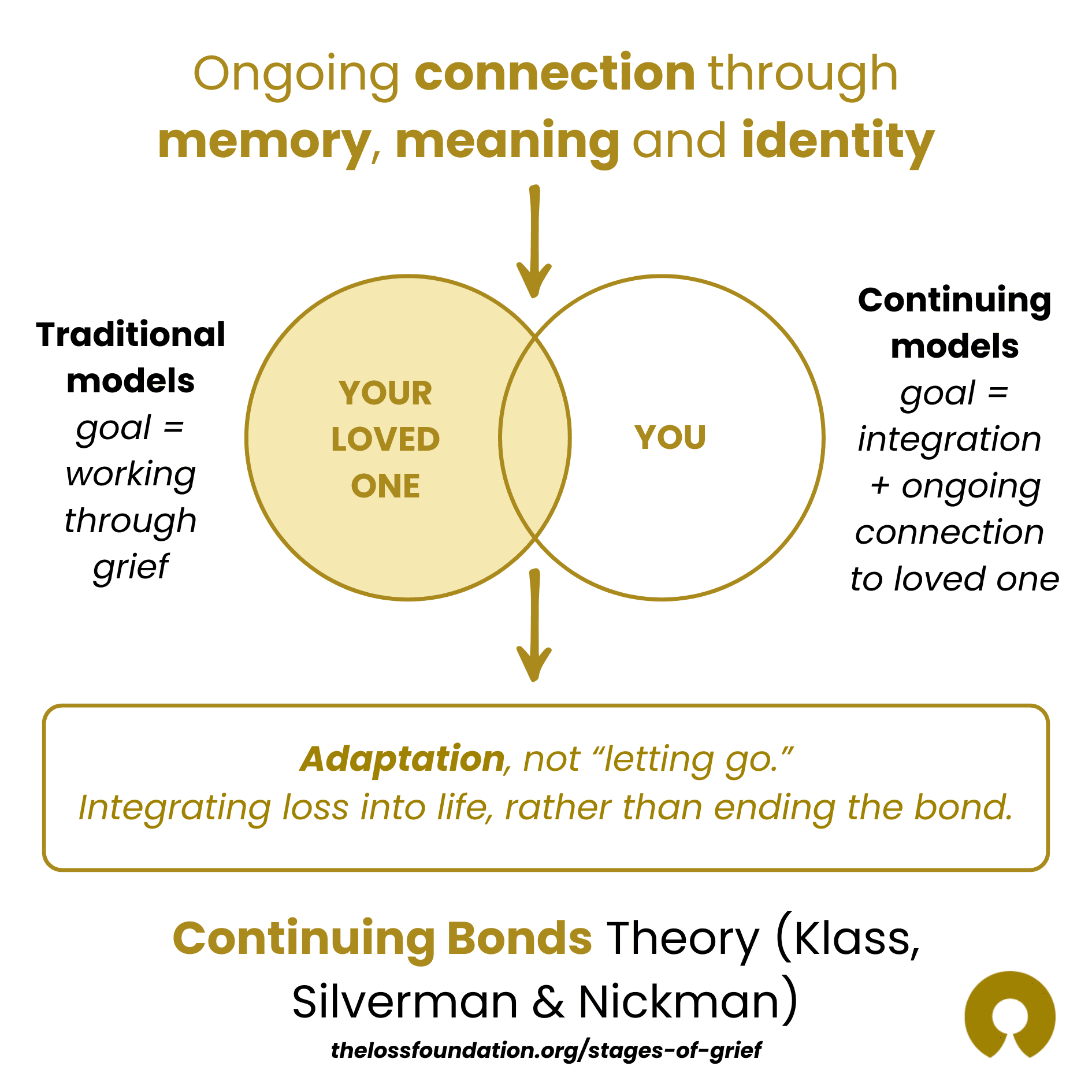
The Continuing Bonds Theory
The dominant model in grief research for much of the 20th century was essentially: grieve, detach, move on. Continuing to feel connected to the deceased was considered maladaptive — a failure to complete the grief process properly.
That model has been significantly revised. Beginning in the 1990s, researchers Dennis Klass, Phyllis Silverman, and Steven Nickman developed the Continuing Bonds framework, which argues that maintaining an ongoing inner relationship with the deceased is not only normal but often adaptive. Rather than severing the bond, healthy grief involves transforming it.
Framework: Two Types of Continuing Bonds — What the Research Distinguishes
A landmark study published in the journal Death Studies distinguished two categories of continuing bond expression with very different psychological outcomes:
This distinction matters enormously for the manifesting question. Most of what the manifesting community describes — rituals to summon a sign, obsessive visualization to bring someone’s presence back — falls squarely in the externalized category. The research suggests this increases, not reduces, the risk of complicated grief: a clinical condition in which intense grief symptoms fail to lessen over time and begin to interfere significantly with daily functioning.
“The danger is not that you will summon something. The danger is that you will keep yourself from healing by framing grief as a problem that manifestation can solve.”
The Real Dangers — Ranked
Most articles on this topic focus on theoretical supernatural dangers — “you might attract a malevolent entity,” “you could open a portal.” Those concerns belong to specific spiritual worldviews and are addressed below. But the empirically documented dangers are far more immediate and far less discussed.
| Danger | Type | Severity | Who Is Most at Risk |
|---|---|---|---|
| Complicated grief / Prolonged Grief Disorder | Psychological | High | Anyone using manifestation to avoid grief processing |
| LOA guilt spiral — blaming yourself for the death or for “failing to manifest” them back | Psychological | High | People in acute grief exposed to Law of Attraction content |
| Exploitation by psychics, mediums, or spiritual content creators | Financial / Social | High | Bereaved people actively seeking contact — a targeted and vulnerable market |
| Misinterpreting normal grief symptoms as supernatural contact | Cognitive | Medium | People with no prior context for bereavement hallucinations |
| Delayed acceptance of the death | Psychological | Medium | Those who lost someone unexpectedly or traumatically |
| Spiritual destabilization / crisis of meaning | Existential | Medium | People with rigid religious frameworks being exposed to conflicting beliefs |
| Attracting a non-benevolent entity (per traditional spiritual worldviews) | Spiritual / Esoteric | Context-Dependent | Those working within traditions that acknowledge these risks |
The Grief + LOA Combination Is Particularly Toxic
The Law of Attraction teaches that negative emotions attract negative outcomes. Applied to grief, this creates a devastating trap: you are told to suppress your sadness (because sadness “attracts more sadness”) at the exact moment when allowing yourself to feel sadness is the psychologically healthy and necessary thing to do.
Research published at the intersection of psychology and New Thought critique identifies this as one of the LOA framework’s most concrete harms — it pathologizes the grief response itself, adding a layer of shame and anxiety onto an already painful process.
What Spiritual Traditions Really Teach — vs. What TikTok Says
This is where the gap between viral manifesting content and actual spiritual tradition becomes stark.
Virtually every serious spiritual or religious tradition that acknowledges communication with the dead does so within a framework of boundaries, preparation, and purpose — not casual or frequent contact driven by personal desire.
Ancient Practices: Oracles of the Dead
In ancient Greece, contact with the dead was not casual. Those seeking to communicate with deceased relatives visited a Necromanteion — a specialized oracle site — and underwent elaborate multi-day rituals including fasting, specific dietary rites, and prolonged preparation. The most famous, the Necromanteion of Ephyra, was staffed by trained priests. The implicit message embedded in the practice: this is not something you do at home on a Tuesday because you miss someone.
Mediumship Traditions
Reputable contemporary mediumship traditions — as distinct from commercial psychics — consistently emphasize that the living cannot reliably force contact. The deceased, if they communicate at all, do so on their own terms and timeline. Experienced practitioners note that heavily grieving individuals are often the least likely to receive clear communication, because intense grief creates an emotional static that is difficult for subtle impressions to penetrate.
What Most Traditions Agree On
Cross-Traditional Consensus: What Serious Spiritual Traditions Actually Teach
The manifesting framework, by contrast, positions the practitioner as fully in control — as the agent who creates reality through desire and focus. This is almost the exact opposite of how mature spiritual traditions approach the subject.
The Continuing Bonds Model: A Better Framework
If the goal underneath “manifesting a dead relative” is to maintain a meaningful connection with someone you loved, the Continuing Bonds framework offers something the manifesting approach cannot: an evidence-grounded, ethically sound, and emotionally honest path.
The framework does not promise that you will receive signs or that your deceased loved one is actively sending you messages. What it does say, backed by decades of bereavement research, is that the relationship does not have to end — it changes form.
The Continuing Bonds Approach: What It Actually Looks Like
The research evidence on Continuing Bonds is nuanced — it is not universally beneficial. A 2023 systematic review in Mortality found that outcomes depend significantly on how the bond is expressed and in what cultural context. The form that consistently correlates with better adjustment is internal and integrative. The form that correlates with poor outcomes is external, compulsive, and resistance-based — in other words, the behavior that manifesting culture encourages.
What Actually Works: A Practical Framework
If you are navigating grief and looking for practices that have both cultural depth and psychological legitimacy, here is an honest map of the territory.
80% Solution: Practices That Have Genuine Grounding
These are not guarantees of contact. They are practices with documented psychological benefit and/or deep roots in serious spiritual tradition.
1. Dream Work
Across virtually every tradition and in psychological research, dreams are the most commonly reported medium for perceived contact with the deceased. They are also the context where the boundary between memory, grief processing, and what some call “visitation” is least fraught. If you are going to invite a connection, cultivating a dream practice — journaling, pre-sleep intention, regular sleep hygiene — is the approach with the lowest psychological risk and deepest cultural precedent.
2. Directed Letter Writing
Writing to the deceased — expressing what went unsaid, asking questions, sharing updates — is widely used in grief therapy. It is not magic; the letter goes nowhere. But the psychological research on expressive writing for grief is substantial, and many people report a quality of felt response or internal shift that they interpret as meaningful. This is internally validated by your own experience rather than dependent on an external sign appearing.
3. Grief-Informed Ritual
Structured ritual — an anniversary practice, a seasonal remembrance, a dedicated object or space — gives grief a container. This is categorically different from obsessive, unstructured attempts to manifest signs. The ritual is bounded in time and place, entered intentionally and exited intentionally. That boundary is protective psychologically and is one of the features that distinguishes healthy continuing bonds from complicated grief.
4. Working With a Grief Therapist Who Understands Spiritual Experience
This is underutilized. Grief therapists who are trained in both evidence-based bereavement work and spiritually sensitive practice are increasingly common, and can help you process the full complexity of post-bereavement experiences — including perceived contact — without either pathologizing or uncritically reinforcing them.
What to Avoid
Paying for psychic or medium services while in acute grief. This is a highly lucrative industry that specifically targets the most emotionally vulnerable population. That does not mean all practitioners are fraudulent — but the business model creates structural incentives toward telling you what you need to hear rather than what is true. If you choose to pursue this, wait until you are past acute grief, bring a skeptical friend, and never pay for ongoing “sessions” that promise to develop a channel of communication.
Honest Limitations of This Article
This article approaches the question primarily from psychological and cultural-anthropological frameworks. It does not resolve theological or metaphysical questions about whether consciousness persists after death, whether communication across that boundary is possible, or what form such communication might take. Those are genuinely open questions that science does not — and by its own nature cannot — definitively answer.
What science can speak to is how people experience grief, what practices are associated with better or worse outcomes, and which psychological dangers are empirically documented. That is the scope this article operates within. For readers working within specific spiritual or religious traditions, those traditions’ own teachings on this subject deserve weight alongside the psychological research.
FAQ
I keep seeing signs — their favorite bird, a song that comes on at the right moment. Is that real contact or just wishful thinking?
Probably both, and that is not a dismissal. The human brain is extraordinarily good at finding meaningful patterns, especially around someone we loved intensely. What is also true is that many of these experiences feel genuinely significant and provide real comfort. Whether they constitute literal communication from the deceased is a metaphysical question you will have to answer according to your own framework. What the psychology says is: if these experiences bring comfort without impeding your grief process, they are not harmful. If they are becoming obsessive or preventing you from accepting the death, that is worth paying attention to.
Is there a spiritual risk to trying to contact the dead — could I attract something dangerous?
Within serious esoteric and traditional spiritual frameworks — many of which have sophisticated views on what exists in liminal states — yes, this concern has significant precedent. The consistent teaching across traditions is that not everything that responds to an invitation is who you think it is, and that working without proper preparation, grounding, or guidance increases that risk. The pragmatic takeaway even for skeptics: ad hoc, emotionally desperate attempts to contact the deceased are not a recommended practice in any serious tradition, for reasons both psychological and (within those traditions) spiritual.
Why do so many people feel like they are contacted spontaneously, but when they try to force it, nothing happens?
This is one of the most consistent observations in both the psychological literature and spiritual traditions. Bereavement researchers note that spontaneous contact experiences — which occur without effort, usually in relaxed states — are far more common than experiences produced through deliberate ritual. Whether interpreted psychologically (the relaxed, non-effortful brain processes grief differently and produces these experiences more readily) or spiritually (the deceased communicate on their own initiative, not on demand), the practical conclusion is the same: the trying itself often blocks the experience.
My grief is making it hard to function. What should I actually do?
Please speak with a mental health professional, specifically one with grief specialization. What you are describing may be complicated grief (Prolonged Grief Disorder), which is a recognized clinical condition that responds well to targeted treatment — including evidence-based therapies designed specifically for it. The ABCT Complicated Grief fact sheet is a reliable starting resource. Grief this severe needs professional support, not spiritual technique.
Final Thoughts
Here is the uncomfortable truth that most content on this topic avoids.
The impulse to “manifest” a dead relative is not irrational. It is one of the most human impulses that exists. The desire to reach through death and touch someone again — to hear their voice once more, to feel their presence — is not a spiritual failing or a psychological weakness. It is what love looks like when it has nowhere left to go.
The problem is not the desire. The problem is what the manifesting industry does with it: it takes that raw, legitimate longing and packages it as a technique problem. You are not in contact with them because you are not vibrating at the right frequency. You need to clear your limiting beliefs. You have to visualize with enough intensity.
This framing is, in a quiet way, cruel. It places the failure of contact on your shoulders — your negative emotions, your insufficient belief, your flawed technique — at the precise moment when you have already lost enough.
The serious spiritual traditions, whatever their other differences, tend to agree on this: the dead are not available on demand. Mature grief is not about summoning what you lost. It is about learning to carry it differently.
The Continuing Bonds research points toward something real and quietly radical: you do not have to choose between holding on and letting go. The relationship can continue — transformed, internal, woven into who you are becoming. That is not a consolation prize for people who could not manifest their loved one back. It is, in many ways, the deeper gift that loss makes possible.
That work is slower, harder, and less monetizable than manifesting rituals. It is also the one that actually helps.
Primary Sources
- Kamp, K. et al. (2019). “Sensory and Quasi-Sensory Experiences of the Deceased in Bereavement.” Schizophrenia Bulletin, 46(6). Oxford Academic →
- Field, N.P. & Filanosky, C. (2009). “Continuing Bonds, Risk Factors for Complicated Grief, and Adjustment to Bereavement.” Death Studies. Taylor & Francis →
- Association for Behavioral and Cognitive Therapies. “Complicated Grief Fact Sheet.” ABCT →
- PMC / NIH. “Reported Contact with the Dead, Religious Involvement, and Death Anxiety in Late Life.” PubMed Central →
- Perucchini, M. & colleagues. “Perceiving Those Who Are Gone: Cultural Research on Post-Bereavement Hallucination.” Frontiers in Psychology, 2023. PMC →
Secondary Sources
- HelpGuide. “Coping with Grief and Loss.” HelpGuide.org →
- Life After Dogma. “The Law of Attraction’s Psychological and Spiritual Harms.” lifeafterdogma.org →
- Wikipedia. “Continuing Bonds.” Wikipedia →